


The role of coronary artery calcium scoring in the prediction of coronary artery disease based on non-contrast non-cardiac chest CT scans in airline pilots
- PMID: 40342972
- PMCID: PMC12058765
- DOI: 10.3389/fcvm.2025.1511358
The role of coronary artery calcium scoring in the prediction of coronary artery disease based on non-contrast non-cardiac chest CT scans in airline pilots
Abstract
Background: The aim of the present study was to explore the value of coronary artery calcium score (CACS) using non-gated, non-contrast chest computed tomography (NCCT) to predict coronary artery disease (CAD) in airline pilots.
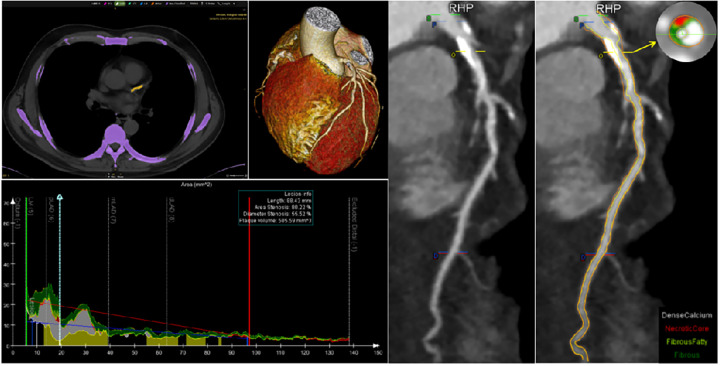
Methods: Pilots with coronary calcification found on NCCT were consecutively enrolled into this study. All received a coronary computed tomography angiography (CCTA) examination. The coronary artery calcium score (CACS) was evaluated on NCCT using the Agatston method. CCTA images were analyzed using a semi-automated software. Coronary Artery Disease Reporting and Data System (CAD-RADS) scoring categorized coronary stenosis.
Results: A total of 217 male pilots were included, of which 49 were diagnosed with significant CAD (CAD-RADS category 3 or higher). Pilots with significant CAD had much higher CACS (324.28 ± 389.02 vs. 39.16 ± 68.88; p < 0.001). Plaque volumetric measurements showed that total plaque volume (1,103.50 ± 285.51 mm3 vs. 913.18 ± 277.45 mm3; p < 0.001) and calcified plaque volume (149.77 ± 160.71 mm3 vs. 36.42 ± 26.86 mm3; p < 0.001) were more pronounced in individuals in the significant CAD group than those in the non-significant CAD group. A multivariate analysis demonstrated that CACS (odds ratio 1.01; 95% confidence interval 1.005-1.014; p < 0.001) was the only independent risk factor of significant CAD but traditional cardiovascular risk factors, pre-existing medication regimens, or prolonged flight duration were not. CACS positively correlated with total plaque volume (r = 0.156; p = 0.027) and calcified plaque volume (r = 0.434; p < 0.001). Receiver operating characteristic curve analysis showed the area under the curve for the CACS in diagnosing significant CAD was 0.891 (p < 0.001).
Conclusions: CACS assessed using NCCT was significantly associated with CAD-RADS category 3 or higher, as confirmed by CCTA, which indicates that it may serve as a robust predictor for diagnosing significant CAD among airline pilots.
Keywords: Agatston; airline pilots; coronary artery calcium score (CACS); coronary computed tomography angiography (CCTA); non-contrast non-gated computed tomography (NCCT).
© 2025 Zhang, Liu, Zhu, Xu, Chen, Duan, Li, Gao, Song, Shen, Zhu, Jin, Wen, Feng, Lu, Du, Ren and Zhang.
Conflict of interest statement
YL was employed by China Eastern Airlines Co., Ltd. The remaining authors declare that the research was conducted in the absence of any commercial or financial relationships that could be construed as a potential conflict of interest.
Figures



References
-
- Cury RC, Leipsic J, Abbara S, Achenbach S, Berman D, Bittencourt M, et al. CAD-RADS™ 2.0–2022 coronary artery disease - reporting and data system.: an expert consensus document of the Society of Cardiovascular Computed Tomography (SCCT), the American College of Cardiology (ACC), the American College of Radiology (ACR) and the North America Society of Cardiovascular Imaging (NASCI). J Am Coll Radiol. (2022) 19(11):1185–212. 10.1016/j.jacr.2022.09.012 - DOI - PubMed
LinkOut - more resources
Full Text Sources
Miscellaneous
