


Oxidative Stress-related Gene Signature: A Prognostic Tool for Predicting Survival in ST-elevation MI
- PMID: 40343143
- PMCID: PMC12060176
- DOI: 10.15420/ecr.2024.58
Oxidative Stress-related Gene Signature: A Prognostic Tool for Predicting Survival in ST-elevation MI
Abstract
Background: This study aimed to identify differentially expressed oxidative stress-related genes (DEOSRGs) in ST-elevation MI (STEMI) patients and examine their connection to clinical outcomes.
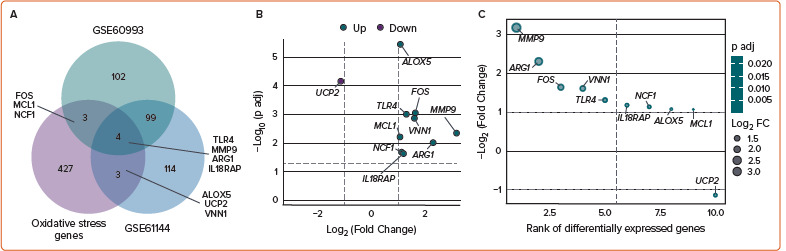
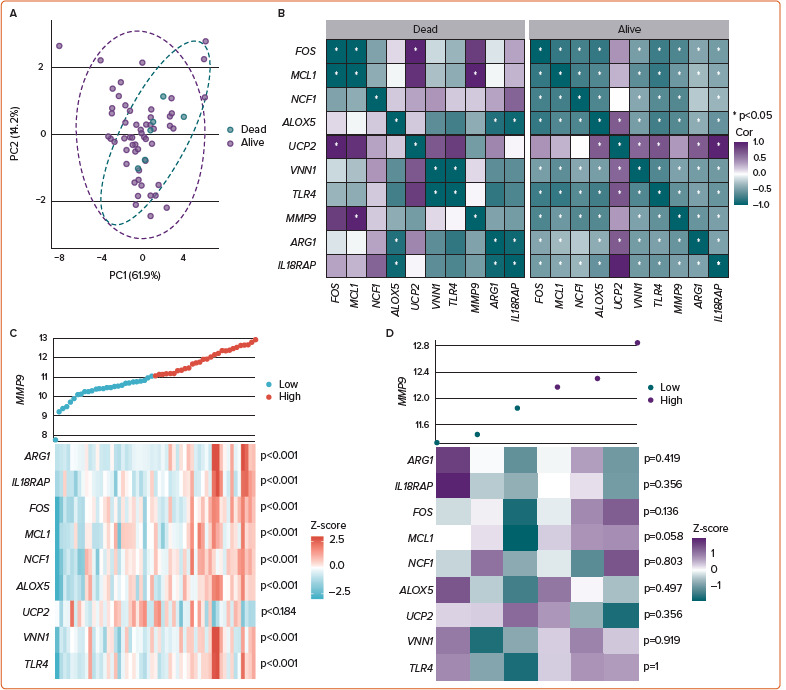
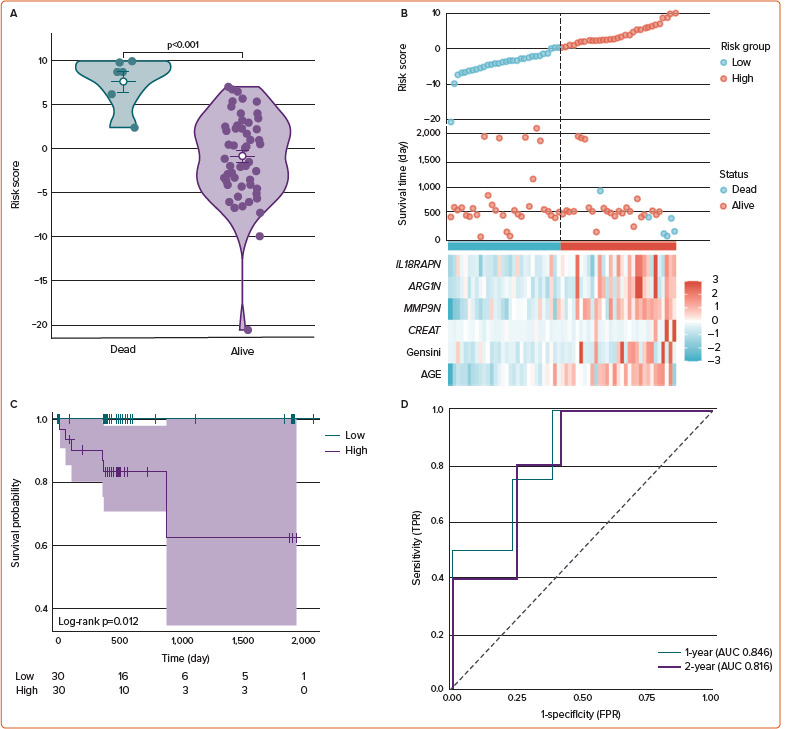
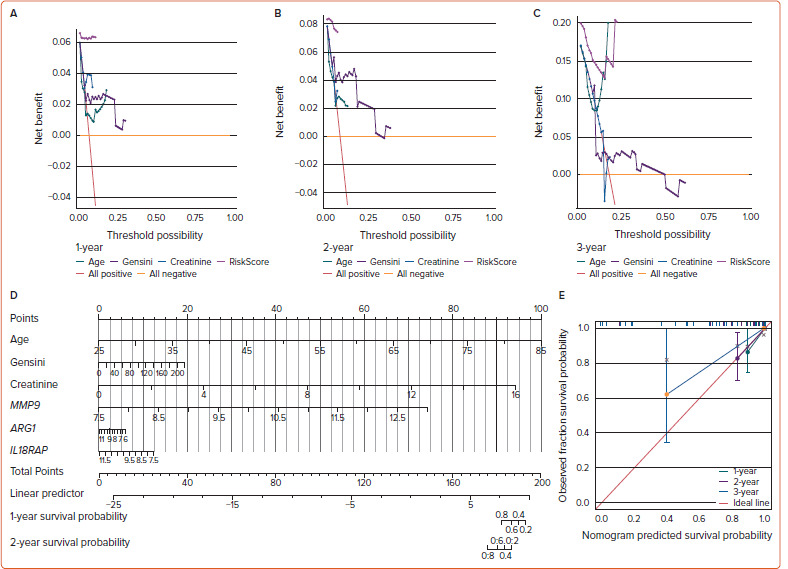
Methods: We conducted a systematic review of Gene Expression Omnibus datasets, selecting GSE49925, GSE60993 and GSE61144 for analysis. DEOSRGs were identified using GEO2R2, overlapping across the selected datasets. Functional enrichment analysis was performed to understand the biological roles of the DEOSRGs. An optimal model was constructed using Least Absolute Shrinkage and Selection Operator penalised Cox proportional hazards regression. The clinical utility of the signature was assessed through survival analysis, receiver operating characteristic (ROC) curve and decision curve analysis. A prognostic nomogram was developed to predict survival risk, with the signature being externally validated using our own plasma samples.
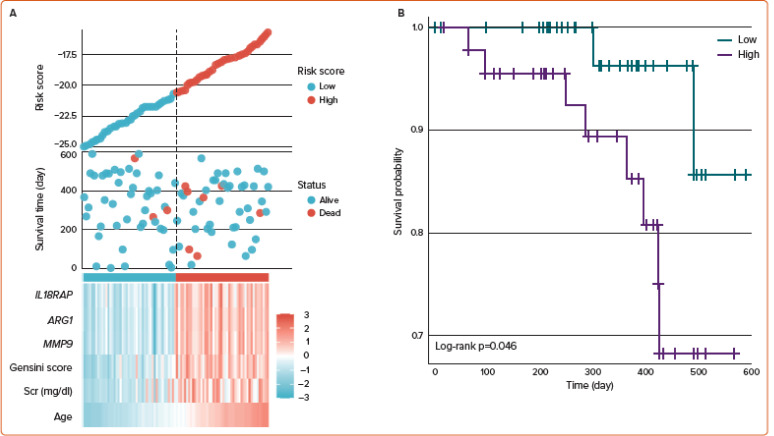
Results: A prognostic signature was formulated, incorporating three upregulated DEOSRGs (matrix metalloproteinase-9, arginase 1, interleukin 18 receptor accessory protein) and three clinical variables (age, serum creatinine level, Gensini score). This signature successfully stratified patients into low- and high-risk groups. Survival analysis, ROC curve analysis and decision curve analysis demonstrated the signature's robust predictive performance and clinical utility within 2 years post-disease onset. External validation confirmed significant outcome differences between the risk groups.
Conclusion: This study identified DEOSRGs in STEMI patients and developed a prognostic signature integrating gene expression levels and clinical variables. While the signature showed promising predictive performance and clinical utility, the findings should be interpreted considering the limitations of small sample size and control group selection.
Keywords: MI; acute coronary syndrome; bioinformatics; oxidative stress; prognosis; transcriptome.
Copyright © The Author(s), 2025. Published by Radcliffe Group Ltd.
Conflict of interest statement
Disclosures: The authors have no conflicts of interest to declare. Data availability: The datasets generated and/or analysed during the current study are available in the GEO repository https://www.ncbi.nlm.nih.gov/geo/query/acc.cgi?acc=GSE60993; https://www.ncbi.nlm.nih.gov/geo/query/acc.cgi?acc=GSE61144; https://www.ncbi.nlm.nih.gov/geo/query/acc.cgi?acc=GSE49925 Authors’ contributions: Conceptualisation: SS, LH, MH; methodology: SS, LH, MH; software: SS, LH, MH; validation: SS, LH, MH; formal analysis: SS, LH, MH; investigation: SS, LH, XW, RY; resources: LH, MH; data curation: SS, LH, MH; writing—original draft preparation: SS, LH, MH; writing—review and editing: SS, LH, MH; visualisation: SS, LH; supervision: LH, MH; project administration: SS, LH, XW, RY, MH; funding acquisition: LH, MH. Ethics: The study was conducted in accordance with the Declaration of Helsinki and approved by the Institutional Review Board of Tianjin Chest Hospital (protocol code 2024LW-034, date of approval 28/10/2024). Consent: All patients have given written informed consent.
Figures
References
LinkOut - more resources
Full Text Sources
Research Materials
