


Association of serum A20 levels with stroke-associated pneumonia, early neurological deterioration, and poor neurological prognosis following acute supratentorial intracerebral hemorrhage: a prospective cohort study
- PMID: 40343186
- PMCID: PMC12059376
- DOI: 10.3389/fneur.2025.1546934
Association of serum A20 levels with stroke-associated pneumonia, early neurological deterioration, and poor neurological prognosis following acute supratentorial intracerebral hemorrhage: a prospective cohort study
Abstract
Background: A20 is an endogenous protective protein. We quantified serum A20 levels following acute intracerebral hemorrhage (ICH) and assessed their association with the severity of illness and clinical outcomes of patients.
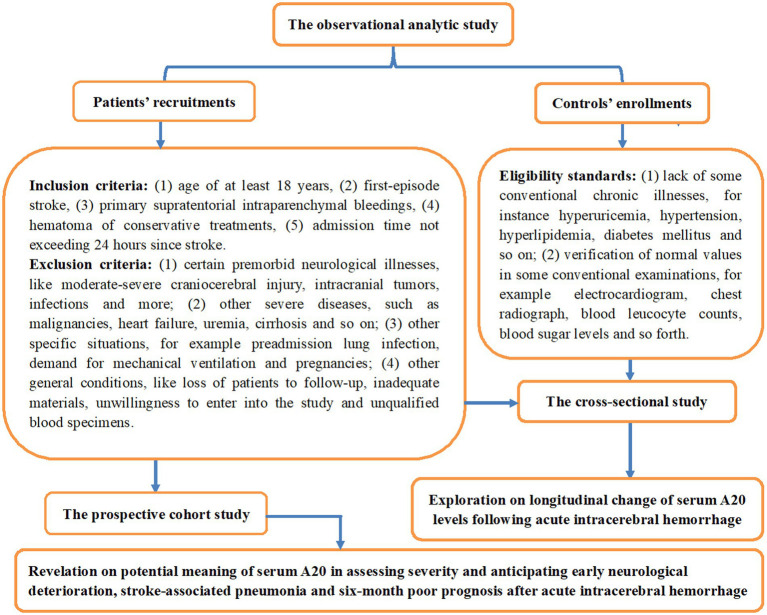
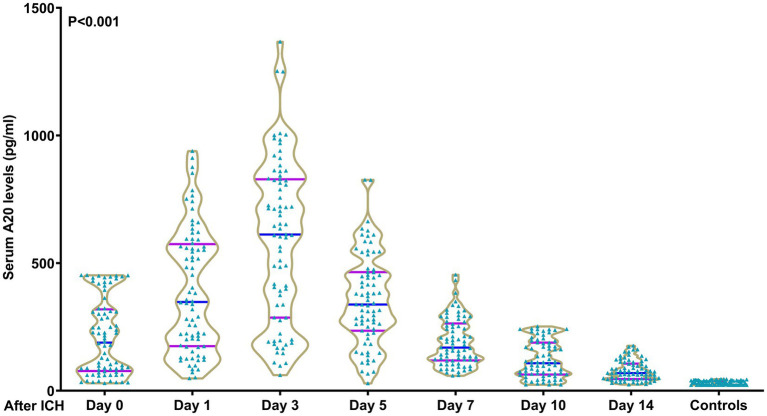
Methods: In total, 243 patients with acute supratentorial ICH and 76 controls were included in this prospective cohort study. Serum A20 levels were measured at admission in all patients, at study entry in all controls, and on post-ICH days 1, 3, 5, 7, 10, and 14 in 76 patients. The National Institutes of Health Stroke Scale (NIHSS) scores and hematoma volume were used to estimate the severity. Stroke-associated pneumonia (SAP), early neurological deterioration (END), and post-ICH 6-month poor prognosis (modified Rankin Scale scores: 3-6) were considered as the three outcome variables of interest.
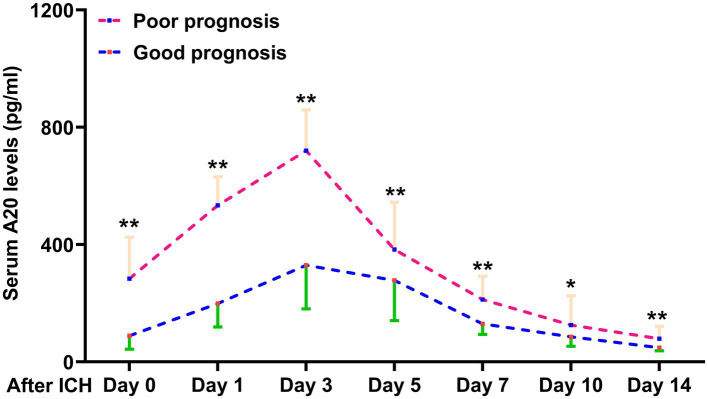
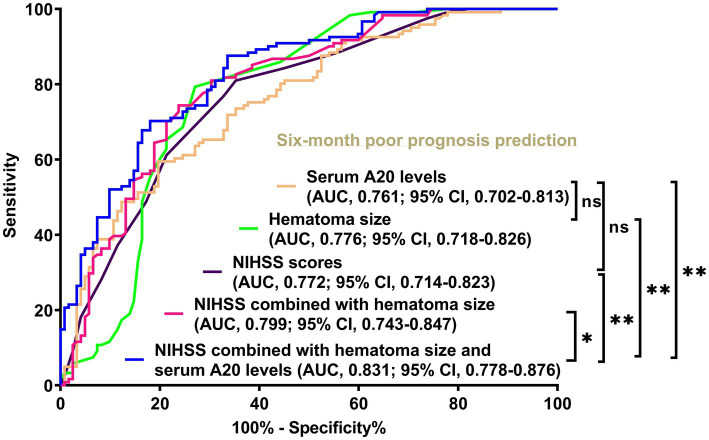
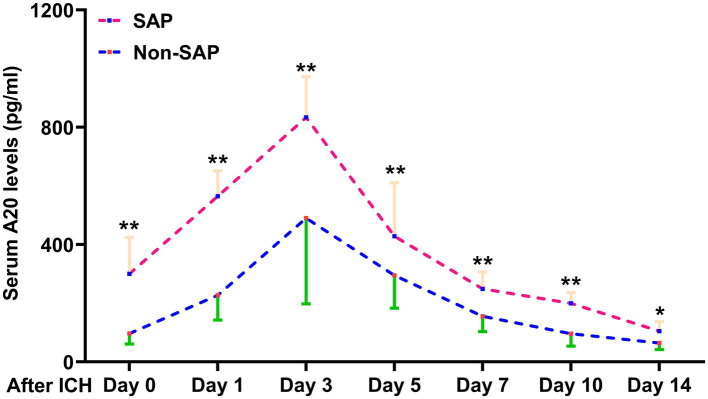
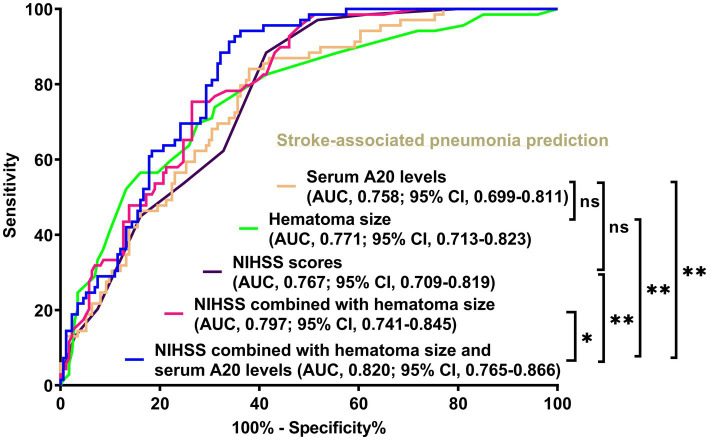
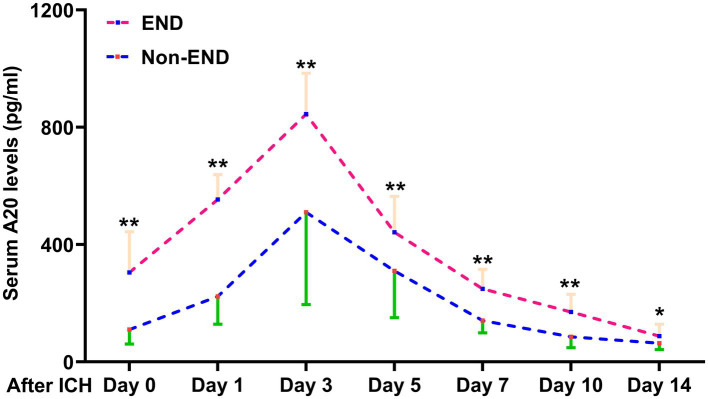
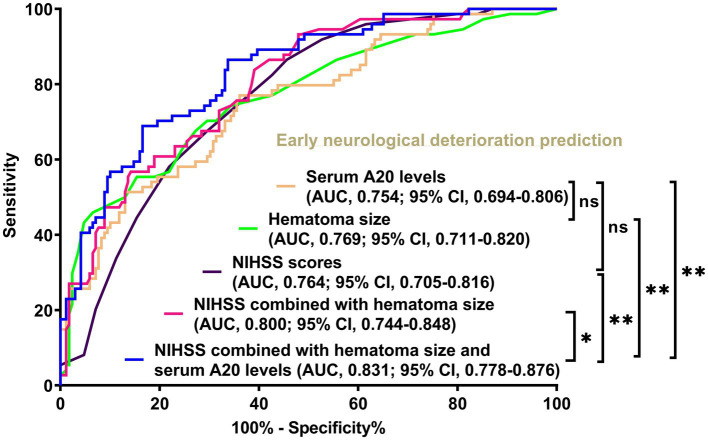
Results: Patients, as opposed to controls, exhibited significantly heightened serum A20 levels from admission until 14 days following ICH, with a peak value at day 3. Serum A20 levels at all-time points after ICH, which were significantly correlated with NIHSS scores and hematoma volume, were significantly higher in patients with END, SAP, or poor prognosis than in those without the corresponding one. Serum A20 levels at admission possessed similar predictive ability of these clinical outcomes to those at other time points. Serum A20 levels at admission, along with initial NIHSS scores and hematoma volume, remained independent predictors of clinical outcomes among patients. As confirmed by numerous statistical approaches, their conjunctions comprised three prediction models: satisfactory stability, clinical validity, and discrimination efficiency.
Conclusion: Serum A20 levels were significantly increased following ICH and may accurately reflect hemorrhagic severity and effectively predict END, SAP, and poor neurological prognosis, suggesting that serum A20 may be a promising prognostic biomarker for ICH.
Keywords: A20; biomarkers; intracerebral hemorrhage; outcome; severity.
Copyright © 2025 Tang, Li, Zhu, Zhang, Xiong and Lin.
Conflict of interest statement
The authors declare that the research was conducted in the absence of any commercial or financial relationships that could be construed as a potential conflict of interest.
Figures
References
-
- Greenberg SM, Ziai WC, Cordonnier C, Dowlatshahi D, Francis B, Goldstein JN, et al. 2022 guideline for the management of patients with spontaneous intracerebral hemorrhage: a guideline from the American Heart Association/American Stroke Association. Stroke. (2022) 53:e282–361. doi: 10.1161/STR.0000000000000407, PMID: - DOI - PubMed
LinkOut - more resources
Full Text Sources
Research Materials
Miscellaneous
