


Genetic Diversity of Carbapenemases-producing Acinetobacter baumannii Isolates at a Tertiary Teaching Hospital in Western India
- PMID: 40343241
- PMCID: PMC12058048
- DOI: 10.4103/ijabmr.ijabmr_498_24
Genetic Diversity of Carbapenemases-producing Acinetobacter baumannii Isolates at a Tertiary Teaching Hospital in Western India
Abstract
Background: Acinetobacter baumannii is an alarming pathogen in hospital-acquired infections, particularly in the intensive care units (ICUs). Carbapenemases production and biofilm formation contribute significantly to the pathogenicity of the organism. Carbapenem resistance in A. baumannii is primarily due to the production of carbapenemases.
Aim: The study was conducted to detect the presence of carbapenemase-encoding genes in A. baumannii along with their ability to form biofilm. In addition, this study also investigated the association between biofilm formation and carbapenemase genes harboring A. baumannii isolates.
Materials and methods: One hundred and forty isolates of A. baumannii were collected from the various specimens. Of these, this study included 36 isolates that were carbapenem-resistant, metallo-β-lactamases (MBLs) producing, and extensively drug-resistant (XDR) obtained from ICUs. Identification and antibiotic susceptibility determination was done using VITEK 2. Further, the isolates were confirmed by detecting the bla OXA-51 carbapenemase gene intrinsic to A. baumannii. Polymerase chain reaction was performed to detect carbapenemase-encoding genes, and biofilm formation was examined using the tube method.
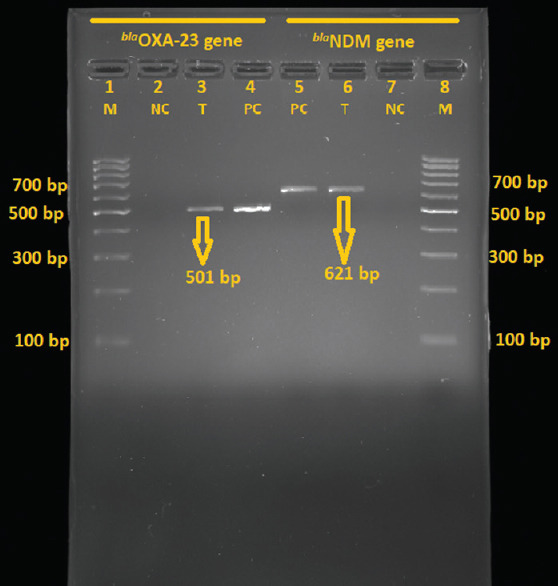
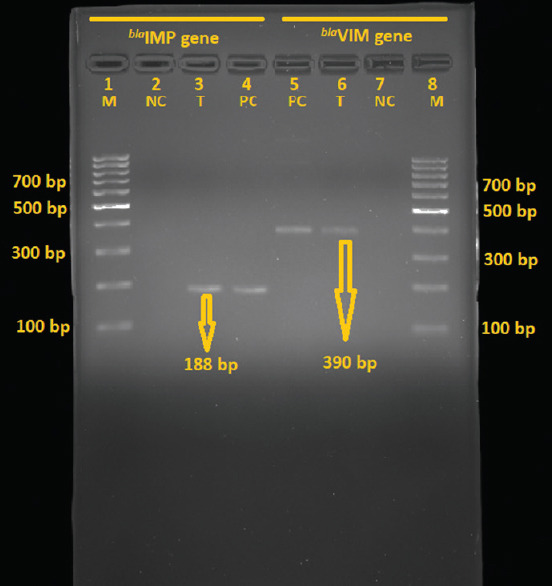
Results: The bla OXA-51 gene was present in all isolates (n = 36). A. baumannii showed highest sensitivity against colistin (100%) and minocycline (25%). Out of 36 isolates, acquired carbapenemase encoding genes were detected in 35 (97.22%) isolates, as follows: bla OXA-23 (35/36, 97.22%), bla NDM (18/36, 50%), bla IMP (1/36, 2.78%), and bla VIM (28/36, 77.78%). In 33 (91.67%) isolates, oxacillinase (OXA) and MBL genes coexisted. Among the 36 isolates, 30 (83.33%) formed biofilm.
Conclusion: The study highlights that colistin and minocycline are the viable antibiotics for treating carbapenem-resistant MBL-producing XDR A. baumannii infections. bla OXA-23 is the commonest carbapenemase gene, and bla VIM is the most frequently found MBL gene prevalent in our hospital and contributes to carbapenem resistance in A. baumannii. The study also showed a higher frequency of co-occurrence of multiple carbapenemase genes in single isolates, and most of these isolates formed biofilm. However, no statistically significant association was found between biofilm formation and carbapenemase genes in A. baumannii. This study emphasizes the molecular diagnostic value of carbapenemase gene detection to reduce the resistance rate in A. baumannii isolates.
Keywords: Acinetobacter baumannii; carbapenem resistance; carbapenemase genes; hospital-acquired infections; metallo-β-lactamases; oxacillinases.
Copyright: © 2025 International Journal of Applied and Basic Medical Research.
Conflict of interest statement
There are no conflicts of interest.
Figures
References
-
- Hu YF, Hou CJ, Kuo CF, Wang NY, Wu AY, Leung CH, et al. Emergence of carbapenem-resistant Acinetobacter baumannii ST787 in clinical isolates from blood in a tertiary teaching hospital in Northern Taiwan. J Microbiol Immunol Infect. 2017;50:640–5. - PubMed
LinkOut - more resources
Full Text Sources
Miscellaneous