The fourspine stickleback (Apeltes quadracus) has an XY sex chromosome system with polymorphic inversions on both X and Y chromosomes
- PMID: 40344089
- PMCID: PMC12121912
- DOI: 10.1371/journal.pgen.1011465
The fourspine stickleback (Apeltes quadracus) has an XY sex chromosome system with polymorphic inversions on both X and Y chromosomes
Abstract
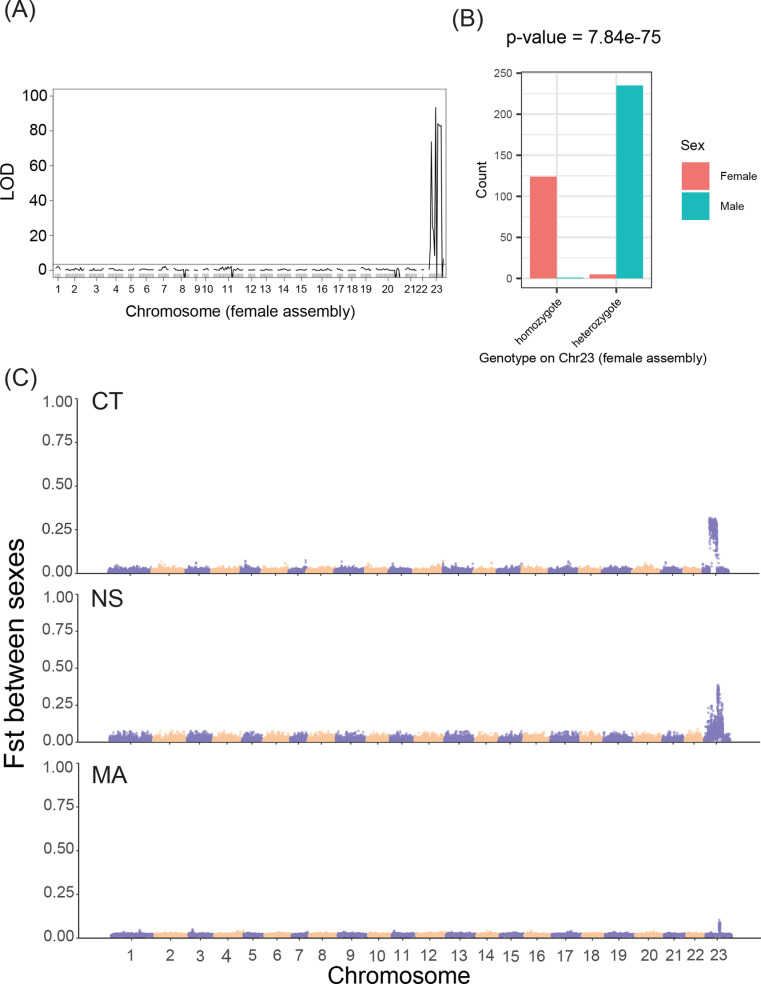
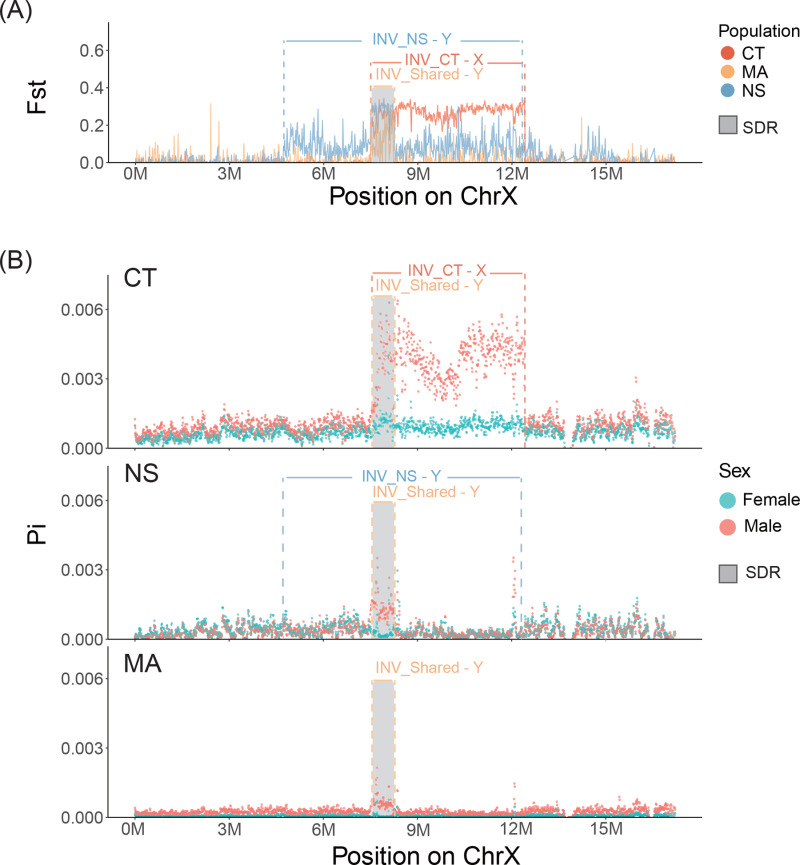
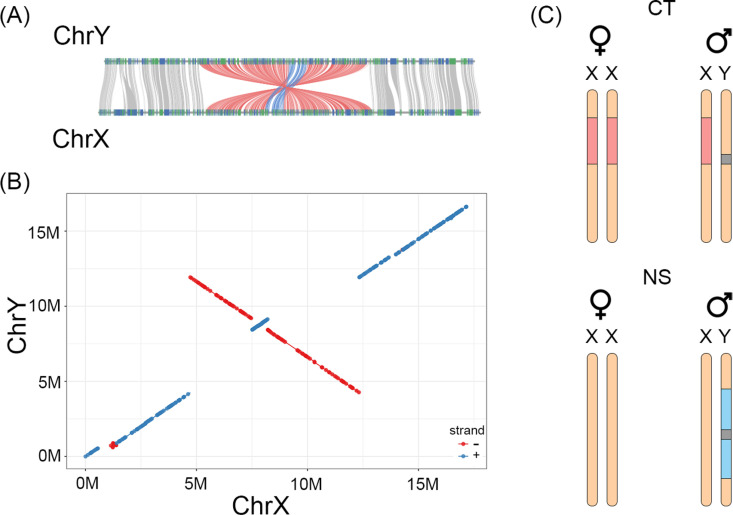
Teleost fish are well-known for possessing a diversity of sex chromosomes and for undergoing frequent turnovers of these sex chromosomes. However, previous studies have mainly focused on variation between species, while comparatively little attention has been given to sex chromosome polymorphisms within species, which may capture early stages of sex chromosome changes. To better understand the evolution of sex chromosomes, we used the fourspine stickleback (Apeltes quadracus) as a model organism. Previous cytogenetic studies suggested that females of this species possessed a ZW heteromorphic sex chromosome system. However, genetic crosses and our whole-genome sequencing of three geographically distinct wild populations revealed that A. quadracus has an XY sex chromosome on chromosome 23. This chromosome has not previously been identified as a sex chromosome in any other stickleback species, indicating a recent sex chromosome turnover. We also identified two genes - rxfp2a and zar1l - as novel candidate sex determination genes. Notably, we observed inversions on both the X and Y chromosomes in different populations, resulting in distinctive patterns of differentiation between the X and Y chromosomes across populations. The new sex chromosome and intraspecies inversion polymorphisms observed in A. quadracus provide an excellent system for future work assessing the relative fitness effects of the inversions, which will enable testing theoretical models about the drivers of sex chromosome evolution and turnover.
Copyright: © 2025 Liu et al. This is an open access article distributed under the terms of the Creative Commons Attribution License, which permits unrestricted use, distribution, and reproduction in any medium, provided the original author and source are credited.
Conflict of interest statement
The authors have declared that no competing interests exist.
Figures