


Application of the C-reactive protein-triglyceride glucose index in predicting the risk of new-onset diabetes in the general population aged 45 years and older: a national prospective cohort study
- PMID: 40346472
- PMCID: PMC12063391
- DOI: 10.1186/s12902-025-01947-8
Application of the C-reactive protein-triglyceride glucose index in predicting the risk of new-onset diabetes in the general population aged 45 years and older: a national prospective cohort study
Abstract
Objective: Triglyceride-to-glucose index (TyG index) and inflammation are both independent risk factors for diabetes. However, only a few studies have combined TyG index with inflammation indices to predict diabetes risk. C-reactive protein-triglyceride-to-glucose index (CTI index), as a new type of lipid and inflammation marker, can comprehensively assess the severity of insulin resistance and inflammation. This study explores the association between CTI index and diabetes risk.
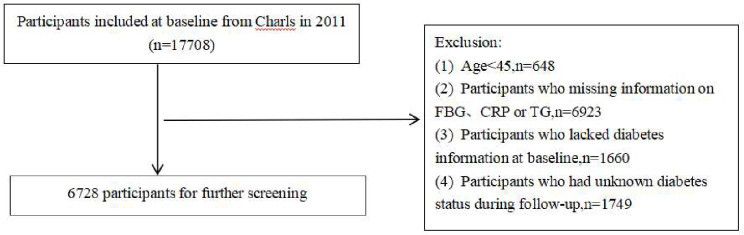
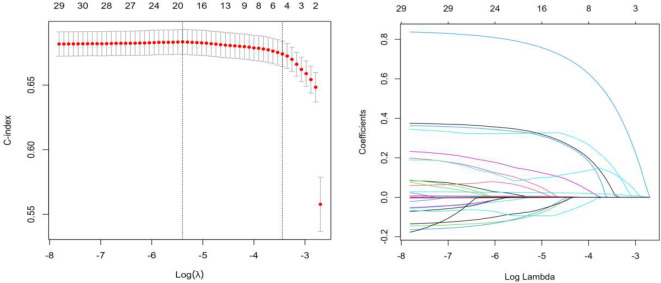
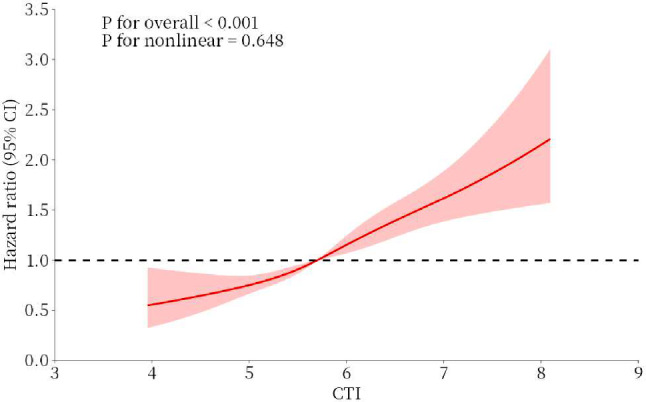
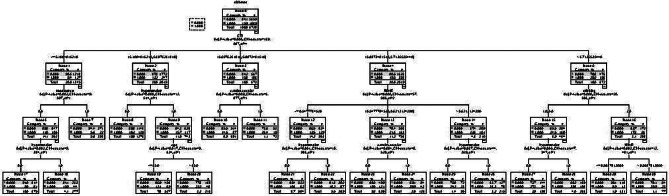
Methods: We recruited a total of 6,728 participants from the China Health and Retirement Longitudinal Study (CHARLS) who had no history of diabetes at baseline. After determining the key predictors using the least absolute shrinkage and selection operator (LASSO) technique, the relationship between the CTI index and the risk of new-onset diabetes was assessed using multivariate COX regression, the mediating effect between insulin resistance and inflammatory indicators was explored, and restricted cubic splines (RCS) were applied to explore the association between the CTI index and the risk of new-onset diabetes. In addition, we used decision tree analysis to identify people at high risk of diabetes, calculated time-dependent Harrell's C index (95% CI) to assess the predictive ability of TyG, CRP, CTI and CRP + TyG for new-onset diabetes, and further calculated IDI and NRI to assess the predictive ability of CTI and TyG. Finally, we performed subgroup analyses for different subgroups using stratified COX proportional hazard regression models; and a series of sensitivity analyses were performed to verify the robustness of our results.
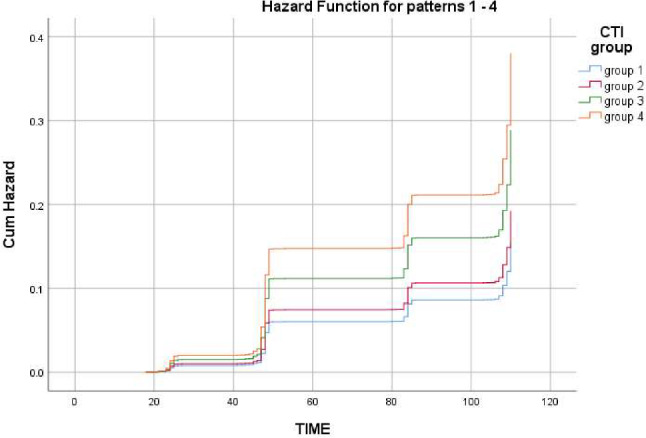
Results: The incidence of diabetes was 15.9% during the 9-year follow-up. COX regression analysis showed that the risk ratio for diabetes increased gradually with an increase in the CTI index. The RCS curve confirmed the existence of a linear relationship between the CTI index and the risk of diabetes. Decision tree analysis showed that the CTI index was a key indicator of diabetes risk. In addition, the CTI index is a much better predictor of the onset of diabetes risk than the TyG index, as demonstrated by the integrated discrimination improvement (IDI) and net reclassification improvement (NRI).
Conclusion: An increase in CTI levels is closely related to diabetes risk, and the CTI index may become a unique predictor of diabetes risk.
Clinical trial number: Not applicable.
Keywords: Aged 45 years and older; C-reactive protein-triglyceride glucose; CHARLS; Cohort study; New-onset diabetes.
© 2025. The Author(s).
Conflict of interest statement
Declarations. Ethics approval and consent to participate: This study was conducted and approved by the Biomedical Ethics Review Committee of Peking University in accordance with the principles of the Declaration of Helsinki. In addition, all participants provided written informed consent to participate in the study (IRB approval number IRB00001052-11015). This study does not disclose any personal privacy of the participants and does not violate data protection laws.The research has been performed in accordance with the Declaration of Helsinki. Consent for publication: Not applicable. Competing interests: The authors declare no competing interests.
Figures
References
-
- Tegegne BA, Adugna A, Yenet A, Yihunie Belay W, Yibeltal Y, Dagne A, Hibstu Teffera Z, Amare GA, Abebaw D, Tewabe H, Abebe RB, Zeleke TK. A critical review on diabetes mellitus type 1 and type 2 management approaches: from lifestyle modification to current and novel targets and therapeutic agents. Front Endocrinol (Lausanne). 2024;15:1440456. 10.3389/fendo.2024.1440456. PMID: 39493778; PMCID: PMC11527681. - DOI - PMC - PubMed
-
- Xiao S, Zhang Q, Yang HY, Tong JY, Yang RQ. The association between triglyceride glucose-body mass index and all-cause and cardiovascular mortality in diabetes patients: a retrospective study from NHANES database. Sci Rep. 2024;14(1):13884. 10.1038/s41598-024-63886-z. PMID: 38880806; PMCID: PMC11180665. - DOI - PMC - PubMed
-
- Goldney J, Barker MM, Thomas M, Slater T, Mickute M, Sargeant JA, Khunti K, Davies MJ, Zaccardi F. Age at onset of type 2 diabetes and prevalence of vascular disease and heart failure: systematic review and dose-response meta-analysis. J Diabetes Complications. 2024;38(10):108849. 10.1016/j.jdiacomp.2024.108849. Epub 2024 Aug 22. PMID: 39213715. - DOI - PubMed
-
- Li B, Yang Z, Liu Y, Zhou X, Wang W, Gao Z, Yan L, Qin G, Tang X, Wan Q, Chen L, Luo Z, Ning G, Gu W, Mu Y. Clinical characteristics and complication risks in data-driven clusters among Chinese community diabetes populations. J Diabetes. 2024;16(8):e13596. 10.1111/1753-0407.13596. PMID: 39136497; PMCID: PMC11320751. - DOI - PMC - PubMed
MeSH terms
Substances
LinkOut - more resources
Full Text Sources
Medical
Research Materials
Miscellaneous
