


Epidemiological characteristics of respiratory tract infections during and after the pandemic of COVID-19 from 2021 - 2023 in Shenzhen, southern China
- PMID: 40346486
- PMCID: PMC12063367
- DOI: 10.1186/s12889-025-22884-0
Epidemiological characteristics of respiratory tract infections during and after the pandemic of COVID-19 from 2021 - 2023 in Shenzhen, southern China
Abstract
Objective: It is now understood that the COVID-19 pandemic and its associated containment measures have affected the epidemiology of other respiratory viruses. This study aimed to investigate respiratory pathogen infections in Shenzhen during and after the COVID-19 pandemic.
Methods: A retrospective analysis was conducted on test data from 24,814 patients at Shenzhen Third People's Hospital between January 2021 and December 2023. The analysis focused on changes in detection rates, epidemiological characteristics, and clinical features of respiratory pathogens, including three viruses and eight bacteria.
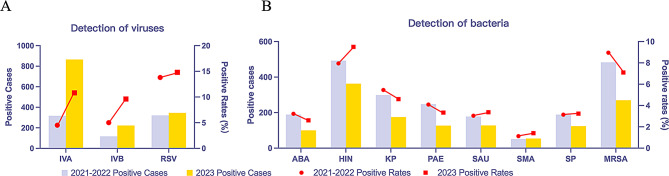
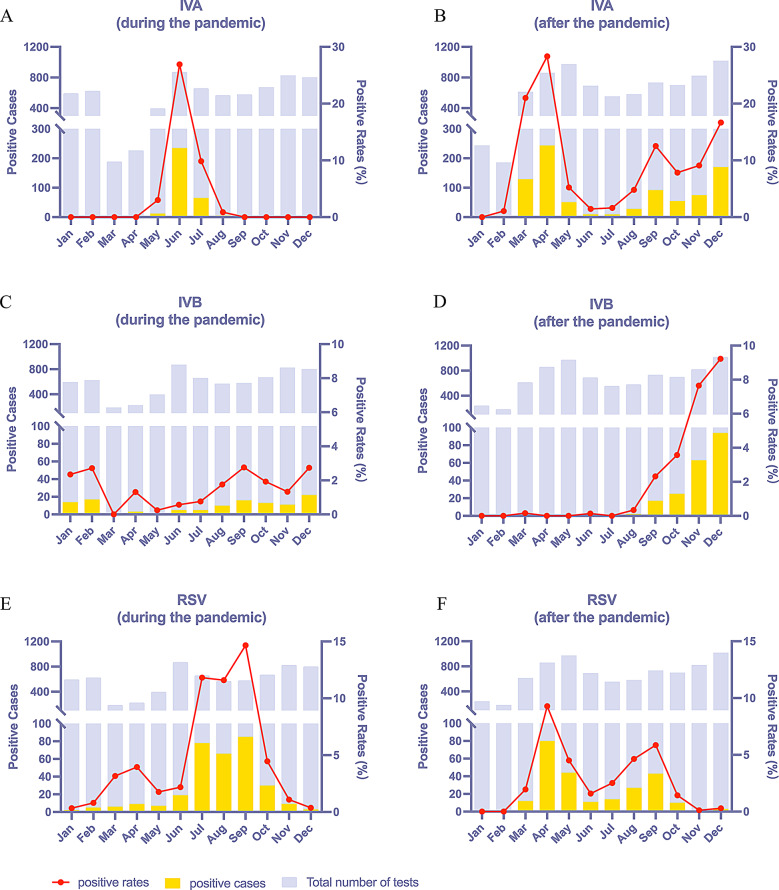
Results: The overall positivity rate for respiratory viruses increased after the COVID-19 epidemic (P < 0.05), whereas no significant difference was detected in the overall positivity rate of most respiratory bacteria. Notably, the detection rates of influenza A and B increased after the COVID-19 epidemic, with influenza A showing the most significant increase from 4.5 to 10.8% (P < 0.05). Conversely, the detection rates of PAE and MRSA decreased significantly (P < 0.05), whereas those of HIN and SMA increased significantly (P < 0.05). The seasonal patterns of influenza A changed markedly, with a shift in peak occurrence and extended periods of high positivity. The age distribution of infections also shifted, with adults showing higher detection rates after the pandemic than school-aged children and elderly individuals did.
Conclusion: The removal of non-pharmaceutical interventions following the COVID-19 pandemic has significantly affected the epidemiological and seasonal patterns of certain respiratory pathogens in Shenzhen. These findings highlight the need for continuous surveillance of multiple respiratory pathogens and adaptive public health strategies in the post-pandemic era.
Keywords: COVID-19 pandemic; Epidemiology; Non-pharmaceutical interventions; Respiratory infections; Seasonal patterns.
© 2025. The Author(s).
Conflict of interest statement
Declarations. Ethical approval: This retrospective study was approved by the Ethics Committee of Shenzhen Third People’s Hospital and was conducted in accordance with the 1964 Helsinki Declaration and its later amendments or comparable ethical standards. The requirement for informed consent was waived by the Institutional Review Board due to the retrospective nature of the study. Consent for publication: Not applicable. Competing interests: The authors declare no competing interests.
Figures
References
-
- World Health Organization (WHO). WHO Director-General’s Opening Remarks at the Media Briefing on COVID-19. Available online: https://www.who.int/dg/speeches/detail/who-director-general-s-opening-re... (accessed on 11 March 2020).
MeSH terms
Grants and funding
LinkOut - more resources
Full Text Sources
Medical
