


Effect of PUFAs-ω3 and ω6 on oxidative stress of sheep erythrocytes
- PMID: 40346594
- PMCID: PMC12065388
- DOI: 10.1186/s12917-025-04762-4
Effect of PUFAs-ω3 and ω6 on oxidative stress of sheep erythrocytes
Abstract
Background: In recent years, the use of long-chain polyunsaturated fatty acids (PUFA) ω3 and ω6, as food supplements in livestock has increased due to their beneficial properties related to their antioxidant activity. It has been demonstrated however that a high intake of these substances has prooxidant and cell-damaging effects, especially if their circulating concentrations are unbalanced. Starting from these premises, and taking advantage of previous findings, the present study aimed at defining the optimal circulating concentrations and PUFAs ω3/ω6 ratio, to ensure the antioxidant/oxidant balance in sheep RBCs.
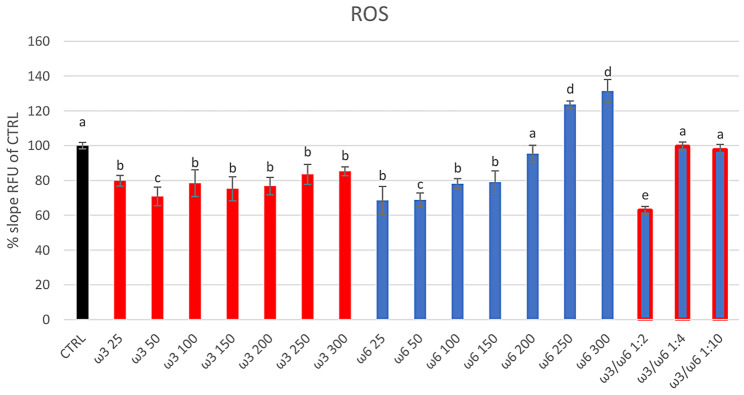
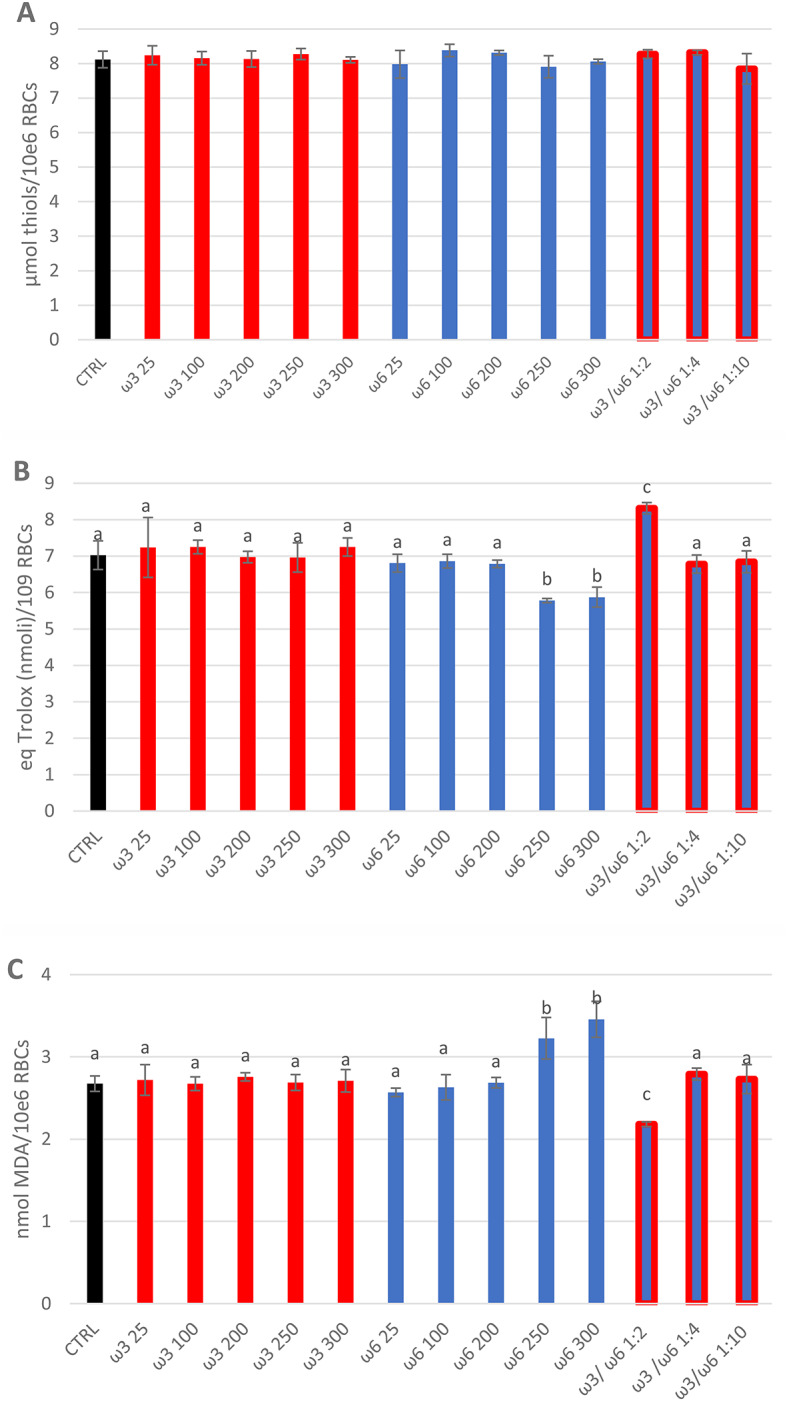
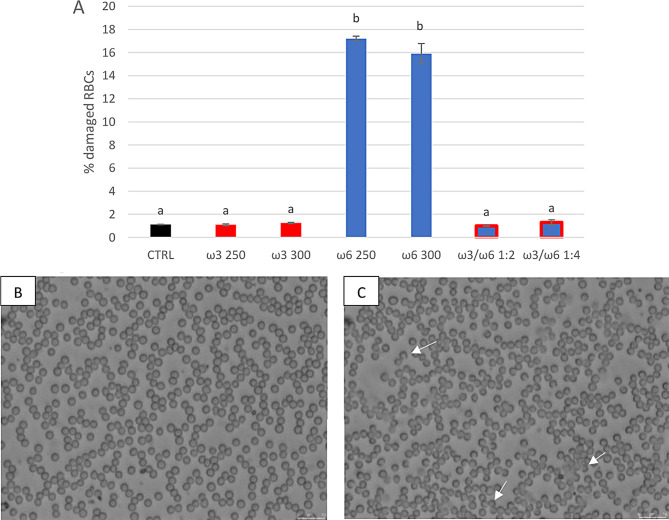
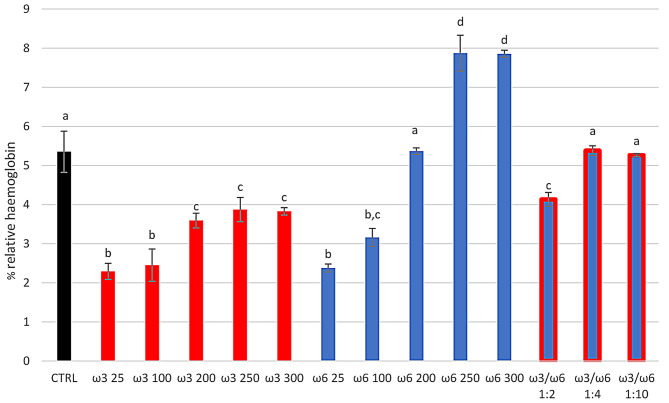
Results: All tested concentrations (25-300 µg/mL in PBS) of PUFAs-ω3 after 4 h of treatment on sheep RBCs, showed antioxidant properties with a significant decrease in reactive oxygen species (ROS) versus the control group (CTRL) (p < 0.05). Furthermore, ω6 showed an antioxidant effect at low concentrations (25-200 g/mL) but a pro-oxidant effect at the highest concentrations (250 and 300 µg/mL) with a significant increase in ROS production (123.6 ± 2.1 and 131.4 ± 6.5% sloope RFU of CTRL respectively p < 0,001), malondialdehyde (MDA) (p < 0.01), and haemolysis (p < 0.01) versus CTRL group (1.1 ± 0.1%), and, also with a decrease of Trolox equivalent antioxidant capacity (TEAC) (p < 0,05). The ratio ω3/ω6 of 1:10 (25/250 µg/mL) and 1:4 (25/100 µg/mL) showed an intracellular ROS level like the CTRL group whereas, the ratio 1:2 (100/200 µg/mL) resulted in a significant decrease in ROS production (62.71 ± 2.31% slope RFU of CTRL, p < 0.001) and MDA (p < 0.001), with an increase in TEAC (p < 0.05), and a decrease haemolysis versus the control group (p < 0,01).
Conclusions: Our results showed that a beneficial effect on the oxidative state of sheep RBCs was obtained with in vitro administration of low concentrations of ω6 and with all tested concentrations of ω3. The addition of ω6 at high concentrations leads to an imbalance in the PUFA ω3/ω6 ratio, compromising the oxidative state and viability of the RBCs. The maximum antioxidative effect was found at ω3/ω6 ratio 1:2).
Keywords: Antioxidant assays; Oxidative stress; PUFAs-ω3; PUFAs-ω6; Reactive oxygen species; Sheep erythrocytes.
© 2025. The Author(s).
Conflict of interest statement
Declarations. Ethics approval and consent to participate: All procedures involving animals in this study were approved by the Local Animal Care and Use Committee (Authorization code: 2899 of 17/01/2018). Consent for publication: All authors have read and agreed to the published version of the manuscript. Competing interests: The authors declare no competing interests.
Figures
References
-
- Román GC, Jackson RE, Gadhia R, Román AN, Reis J. Mediterranean diet: the role of long-chain ω-3 fatty acids in fish; polyphenols in fruits, vegetables, cereals, coffee, tea, Cacao and wine; probiotics and vitamins in prevention of stroke, age-related cognitive decline, and alzheimer disease. Rev Neurol (Paris). 2019;175:724–41. 10.1016/j.neurol.2019.08.005. - DOI - PubMed
MeSH terms
Substances
Grants and funding
LinkOut - more resources
Full Text Sources
