


GLP-1 receptor agonists show no detrimental effect on sperm quality in mouse models and cell lines
- PMID: 40347306
- PMCID: PMC12289847
- DOI: 10.1007/s12020-025-04245-4
GLP-1 receptor agonists show no detrimental effect on sperm quality in mouse models and cell lines
Abstract
Purpose: Glucagon-like peptide-1 receptor (GLP-1R) agonists exert multiple beneficial effects. However, their effects on reproduction system are controversial. Here, we aimed to investigate their effects on male reproduction and provide safety evidence for future clinical use.
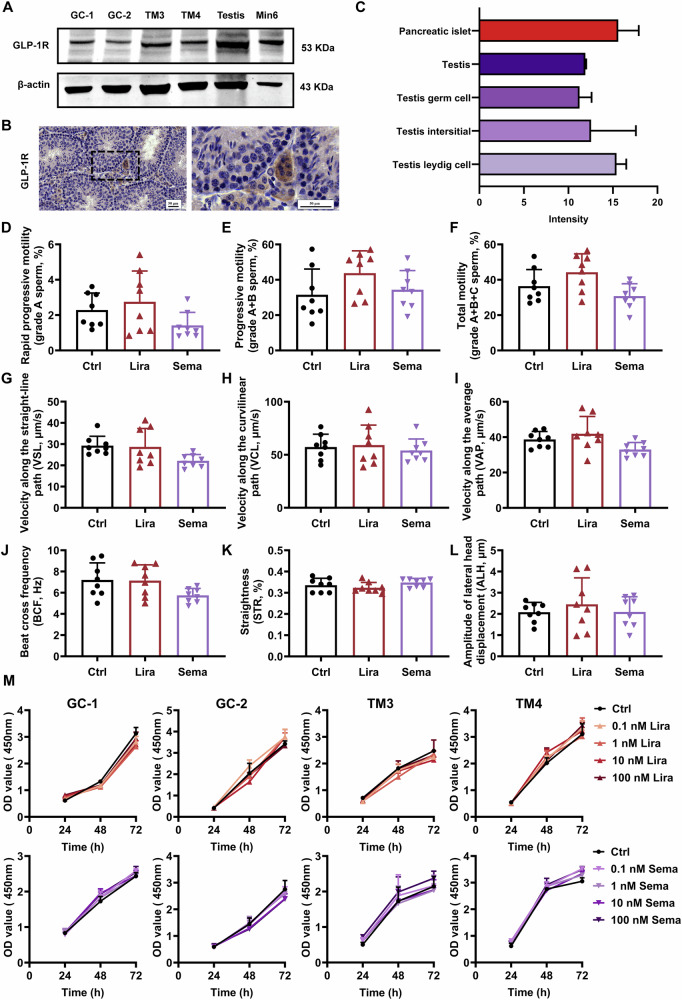
Methods: Male diabetic mice and aged mice were treated with liraglutide or vehicle, and sperm concentration and motility were assessed. The expression and location of GLP-1R in testicular tissues and in four testicular cell lines (spermatogonia, spermatocytes, Leydig cells, and Sertoli cells) were detected. Cauda epididymis and testicular cells were treated with liraglutide, semaglutide or vehicle, and sperm motility and cell proliferation were detected to determine the direct effect of GLP-1R agonists. Global Glp1r knockout mice were constructed, and testicular morphology, sperm concentration and motility were detected to confirm the effects of GLP-1R signaling on male reproduction.
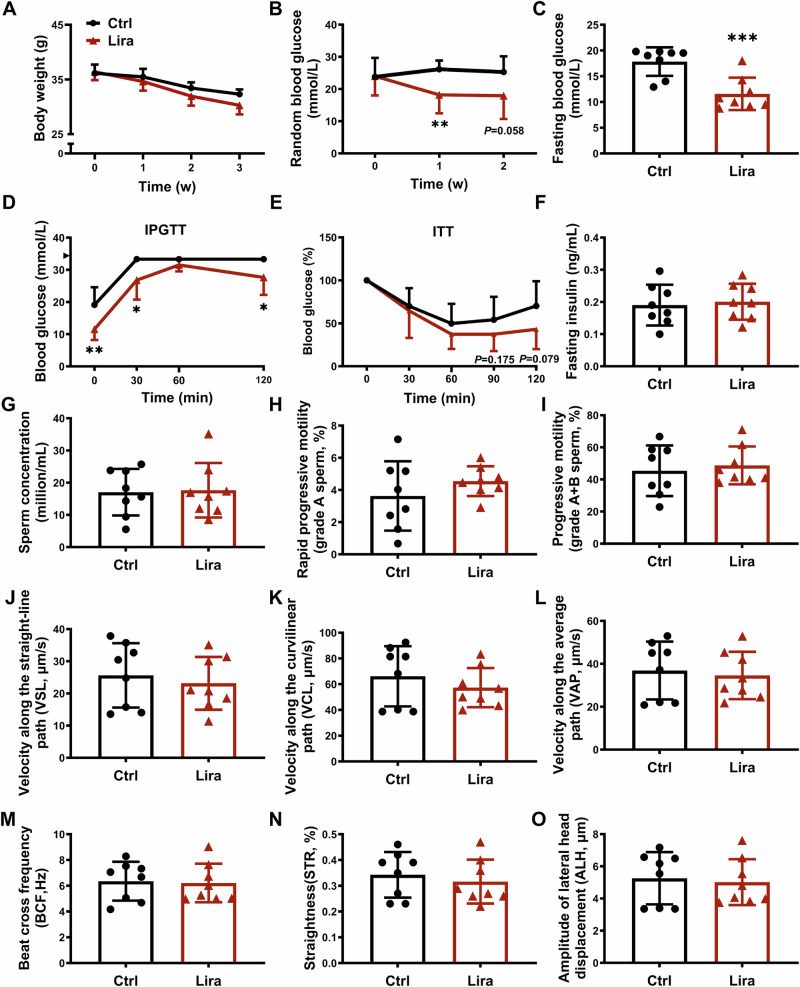
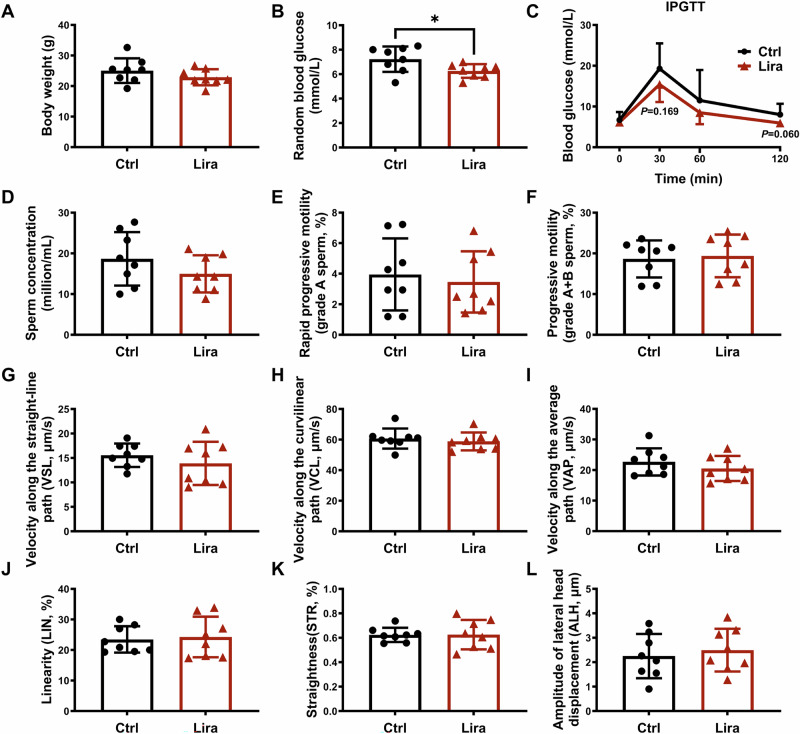
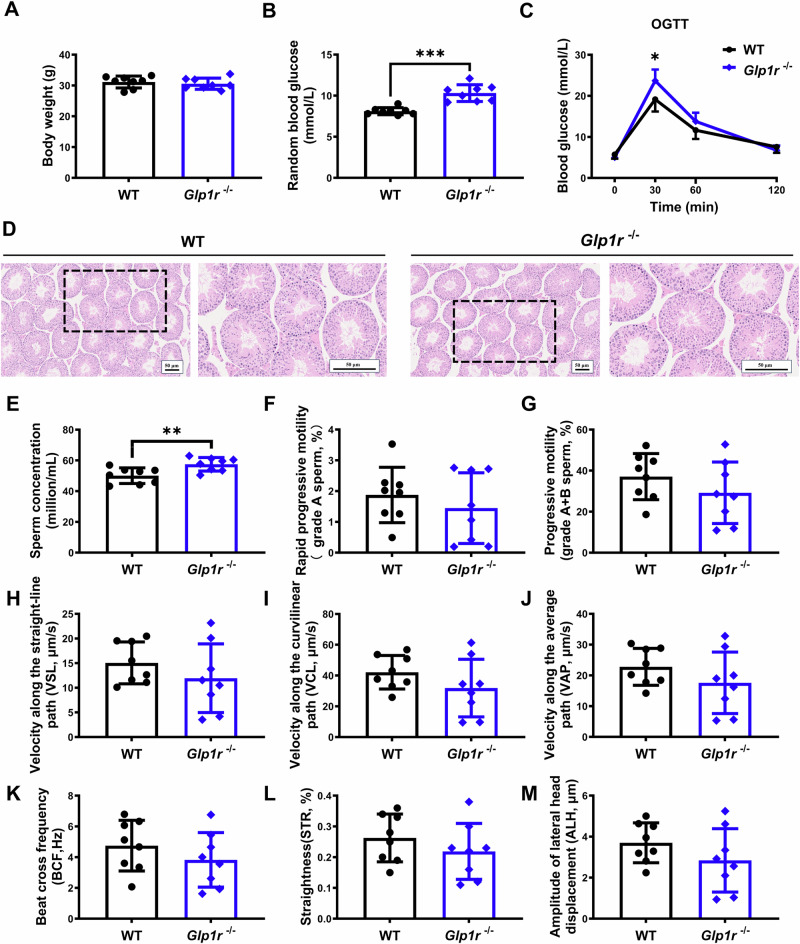
Results: Liraglutide significantly reduced blood glucose levels, but did not improve sperm parameters in diabetic mice. No significant differences were observed between liraglutide and control group in aged mice. GLP-1R was expressed in testicular tissues and all four cell lines, with the highest expression in Leydig cells. Liraglutide or semaglutide had no impacts on sperm count and motility in vitro, and had no effects on cell proliferation in four cell lines. The Glp1r knockout mice exhibited higher blood glucose levels and preserved normal testicular morphology, but their sperm concentration was higher than that in wildtype mice.
Conclusion: GLP-1R agonists have no detrimental effect on sperm concentration and motility in vivo and in vitro, while GLP-1R absence increase the sperm concentration.
Keywords: Aging; Diabetes; Glucagon-like peptide-1; Sperm concentration; Sperm motility.
© 2025. The Author(s).
Conflict of interest statement
Compliance with ethical standards. Ethics approval and consent to participate: The study protocol was reviewed and approved by the Ethics Committee of Peking University (Approval No. PUIRB-LA2023522). Conflict of interest: The authors declare no competing interests.
Figures
References
-
- Y. Cao, Z. Jin, Y. Xi, J. Cheng, Z. Fang, Q. Zhao et al., Roles of ferroptosis in type 1 diabetes induced spermatogenic dysfunction. Free Radic. Biol. Med 214, 193–205 (2024). 10.1016/j.freeradbiomed.2024.02.006. - PubMed
-
- M.L. Eisenberg, S.C. Esteves, D.J. Lamb, J.M. Hotaling, A. Giwercman, K. Hwang et al., Male infertility. Nat Rev. Dis. Prim. 9, 49 (2023). 10.1038/s41572-023-00459-w. - PubMed
-
- D.F. Carrageta, B. Guerra-Carvalho, M.A. Spadella, M. Yeste, P.F. Oliveira, M.G. Alves, Animal models of male reproductive ageing to study testosterone production and spermatogenesis. Rev Endocr. Metab. Disord. 23, 1341–1360 (2022). 10.1007/s11154-022-09726-9. - PubMed
-
- B. Kreymann, G. Williams, M.A. Ghatei, S.R. Bloom, Glucagon-like peptide-1 7-36: a physiological incretin in man. Lancet 2, 1300–1304 (1987). 10.1016/s0140-6736(87)91194-9. - PubMed
MeSH terms
Substances
Grants and funding
LinkOut - more resources
Full Text Sources
Medical
