


An interpretable machine learning model for predicting mortality risk in adult ICU patients with acute respiratory distress syndrome
- PMID: 40351465
- PMCID: PMC12061690
- DOI: 10.3389/fmed.2025.1580345
An interpretable machine learning model for predicting mortality risk in adult ICU patients with acute respiratory distress syndrome
Abstract
Background: Acute respiratory distress syndrome (ARDS) is a clinical syndrome triggered by pulmonary or extra-pulmonary factors with high mortality and poor prognosis in the ICU. The aim of this study was to develop an interpretable machine learning predictive model to predict the risk of death in patients with ARDS in the ICU.
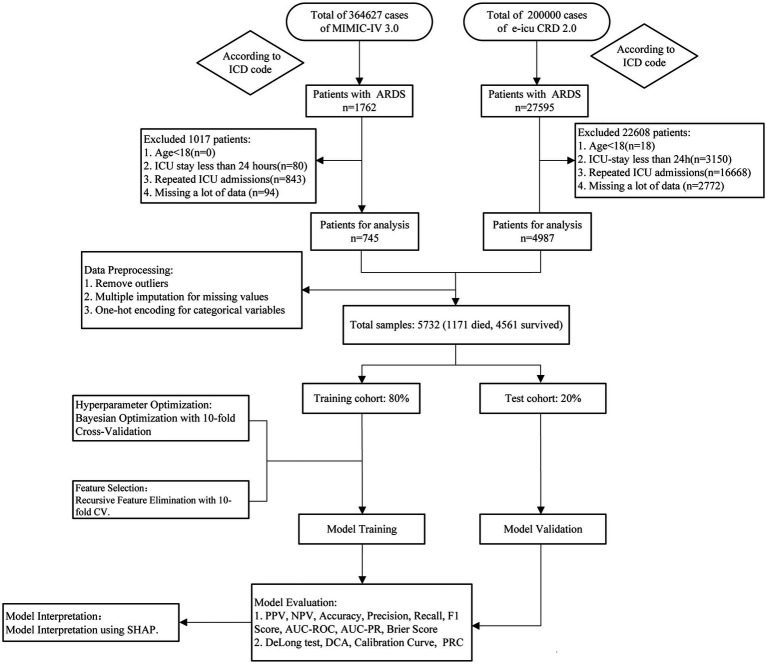
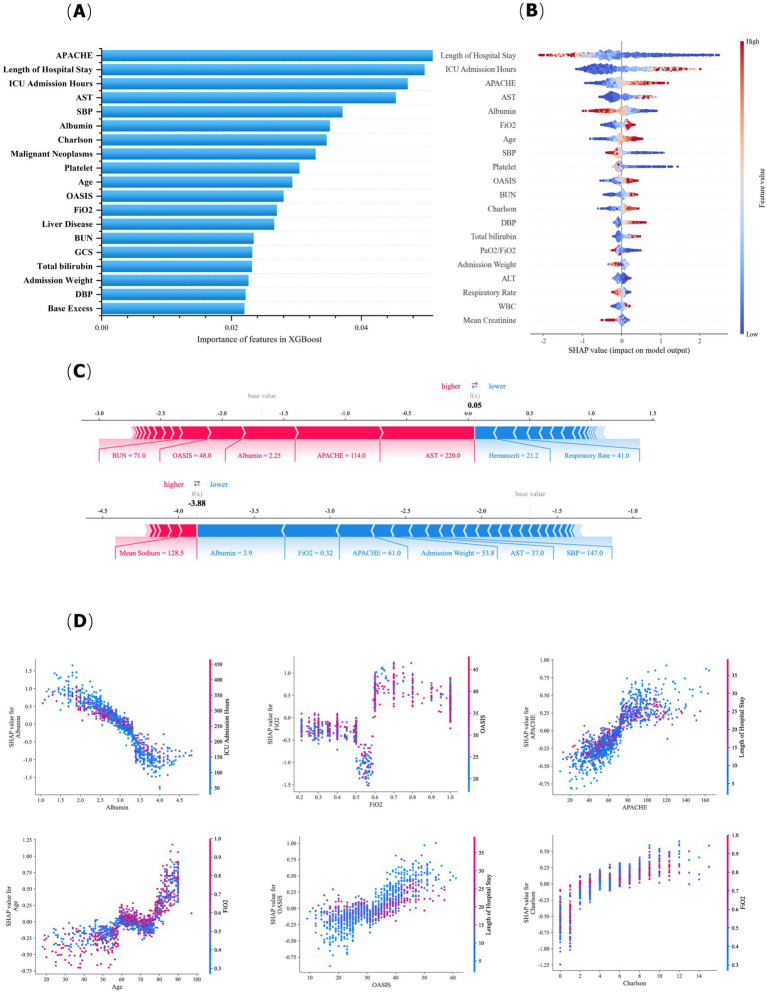
Methods: The datasets used in this study were obtained from two independent databases: Medical Information Mart for Intensive Care (MIMIC) IV and eICU Collaborative Research Database (eICU-CRD). This study used eight machine learning algorithms to construct predictive models. Recursive feature elimination with cross-validation is used to screen features, and cross-validation-based Bayesian optimization is used to filter the features used to find the optimal combination of hyperparameters for the model. The Shapley additive explanations (SHAP) method is used to explain the decision-making process of the model.
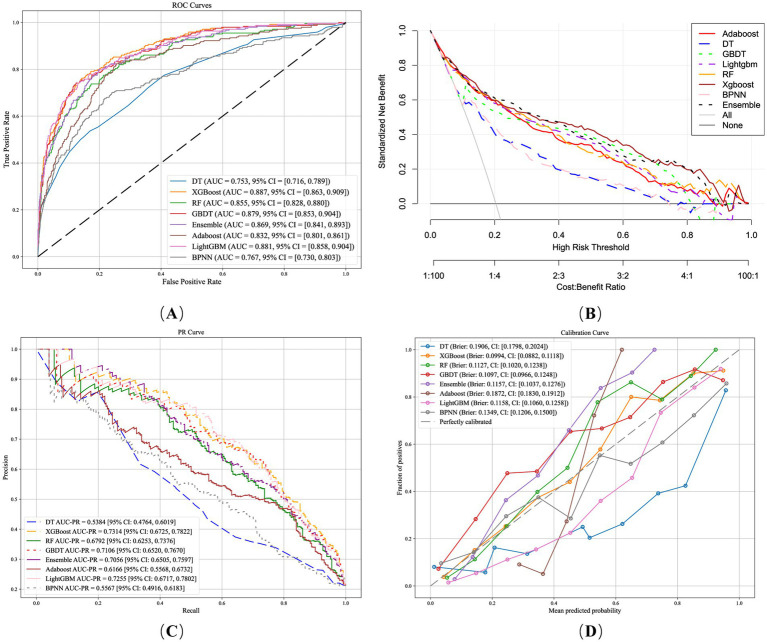
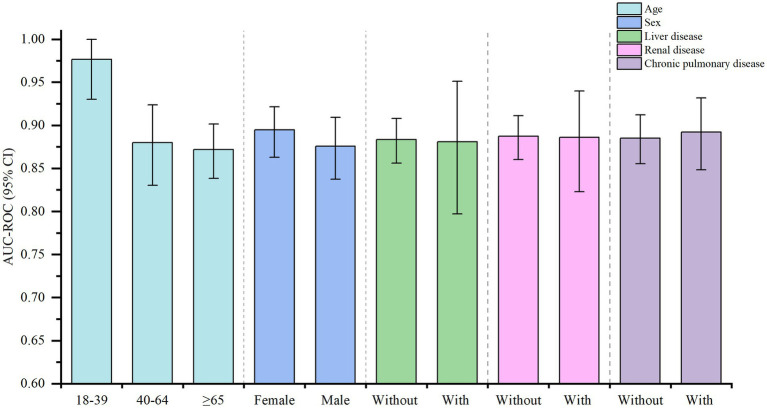
Results: A total of 5,732 patients with severe ADRS were included in this study for analysis, of which 1,171 patients (20.4%) did not survive. Among the eight models, XGBoost performed the best; AUC-ROC was 0.887 (95% CI: 0.863-0.909) and AUPRC was 0.731 (95% CI: 0.673-0.783).
Conclusion: We developed a machine learning-based model for predicting the risk of death of critically ill ARDS patients in the ICU, and our model can effectively identify high-risk ARDS patients at an early stage, thereby supporting clinical decision-making, facilitating early intervention, and improving patient prognosis.
Keywords: ICU; acute respiratory distress syndrome; machine learning; mortality; prediction model.
Copyright © 2025 Li, Zhou and Zou.
Conflict of interest statement
The authors declare that the research was conducted in the absence of any commercial or financial relationships that could be construed as a potential conflict of interest.
Figures
References
LinkOut - more resources
Full Text Sources
