


Effect of Prone Position on Intraocular Pressure in Patients Undergoing Nonocular Surgery: A Systematic Review
- PMID: 40351490
- PMCID: PMC12061788
- DOI: 10.7759/cureus.83617
Effect of Prone Position on Intraocular Pressure in Patients Undergoing Nonocular Surgery: A Systematic Review
Abstract
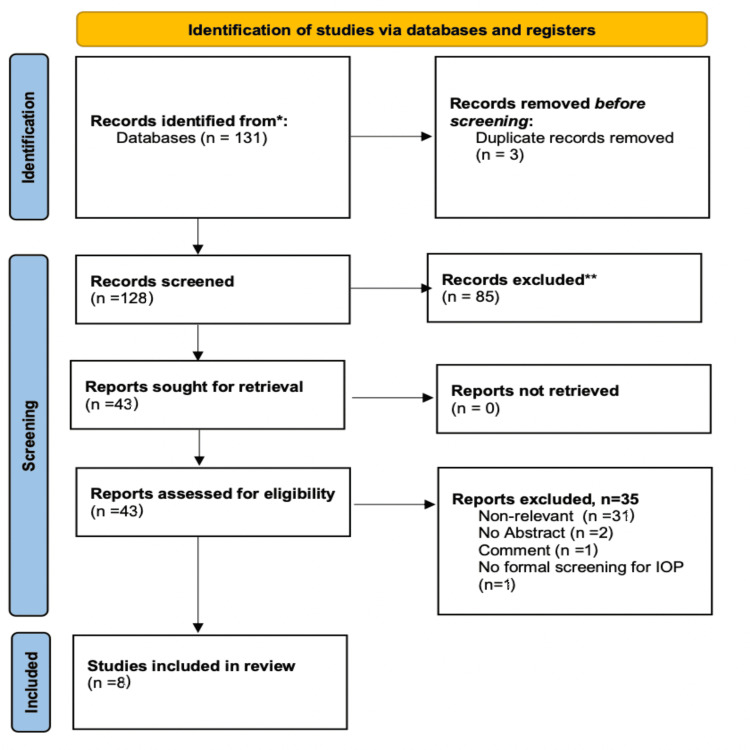
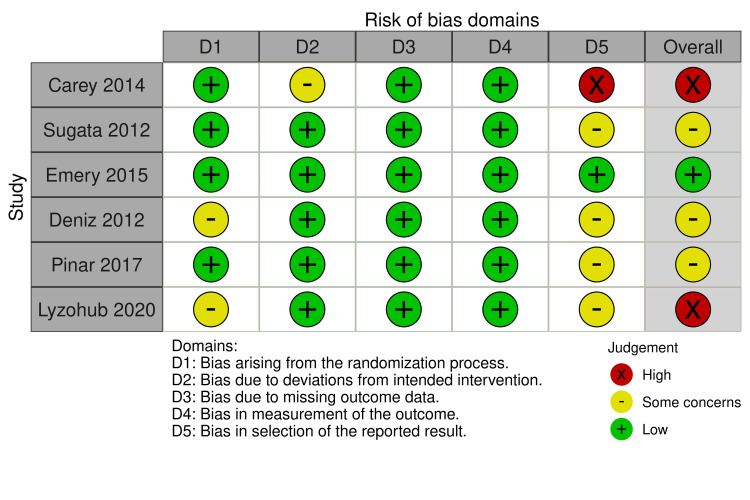
Postoperative vision loss is a rare complication following surgery in prone positioning. Waking with loss of visual acuity after an elective nonocular surgery is a catastrophic event, not only for the patient but also for the physicians. The specific pathogenesis of postoperative vision loss remains unknown in most cases. This systematic review aims to investigate the effect of prone positioning on intraocular pressure in patients undergoing surgeries and alert physicians to the potential vision loss in the postoperative period. A meticulous research of PubMed, Scopus, and Google Scholar databases was conducted for relevant articles published between January 2012 and September 2023. All relative prospective, retrospective, comparative, and non-comparative studies that investigated prone position and its effect on intraocular pressure during surgery were considered eligible for inclusion in our systematic review. A total of eight studies comprising 649 patients who underwent nonocular surgery under prone positioning were reviewed. Most patients underwent spine surgery with total intravenous anesthesia. The device most frequently used for intraocular pressure measurement was Tono-Pen® XL (Medtronic plc, Galway, Ireland). None of the patients suffered from visual loss postoperatively. Only three patients had vision disturbances after surgery due to prone positioning. There was also a significant rise in intraocular pressure from the supine to the prone position. There is a need to identify crucial factors for the prevention of postoperative vision loss.
Keywords: anesthesia; intraocular pressure; postoperative vision loss; prone position; surgery.
Copyright © 2025, Saoulidou et al.
Conflict of interest statement
Conflicts of interest: In compliance with the ICMJE uniform disclosure form, all authors declare the following: Payment/services info: All authors have declared that no financial support was received from any organization for the submitted work. Financial relationships: All authors have declared that they have no financial relationships at present or within the previous three years with any organizations that might have an interest in the submitted work. Other relationships: All authors have declared that there are no other relationships or activities that could appear to have influenced the submitted work.
Figures
References
-
- Physiology and role of intraocular pressure in contemporary anesthesia. Kelly DJ, Farrell SM. Anesth Analg. 2018;126:1551–1562. - PubMed
-
- Effect of the degree of reverse Trendelenburg position on intraocular pressure during prone spine surgery: a randomized controlled trial. Carey TW, Shaw KA, Weber ML, DeVine JG. Spine J. 2014;14:2118–2126. - PubMed
-
- Changes in intraocular pressure during prone spine surgery under propofol and sevoflurane anesthesia. Sugata A, Hayashi H, Kawaguchi M, Hasuwa K, Nomura Y, Furuya H. J Neurosurg Anesthesiol. 2012;24:152–156. - PubMed
-
- Vision loss after spine surgery: review of the literature and recommendations. Baig MN, Lubow M, Immesoete P, Bergese SD, Hamdy EA, Mendel E. Neurosurg Focus. 2007;23:0. - PubMed
Publication types
LinkOut - more resources
Full Text Sources
Medical