


Maternal cannabis use in pregnancy, perinatal outcomes, and cognitive development in offspring: a longitudinal analysis of the ALSPAC cohort using paternal cannabis use as a negative control exposure
- PMID: 40353977
- PMCID: PMC12170737
- DOI: 10.1007/s10654-025-01233-w
Maternal cannabis use in pregnancy, perinatal outcomes, and cognitive development in offspring: a longitudinal analysis of the ALSPAC cohort using paternal cannabis use as a negative control exposure
Abstract
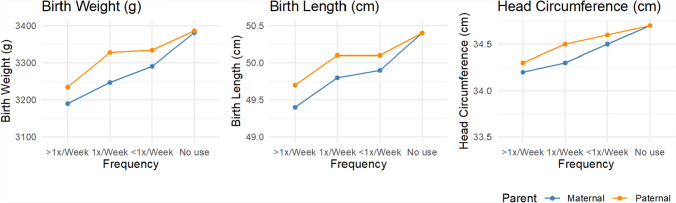
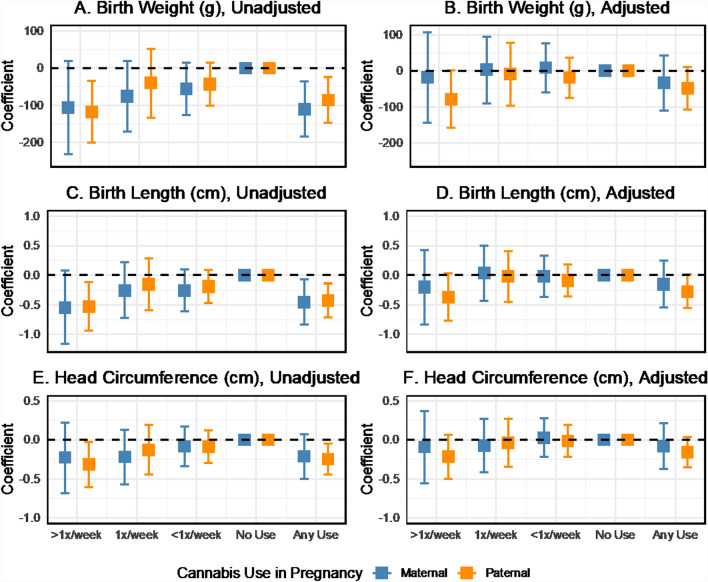
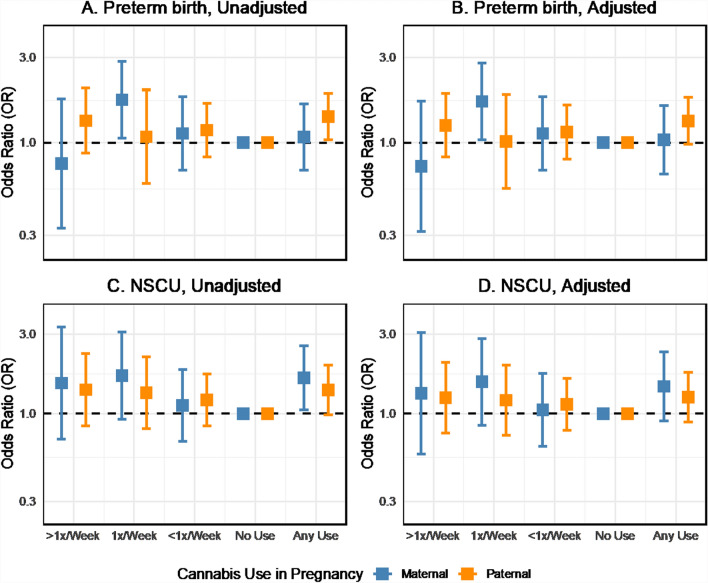
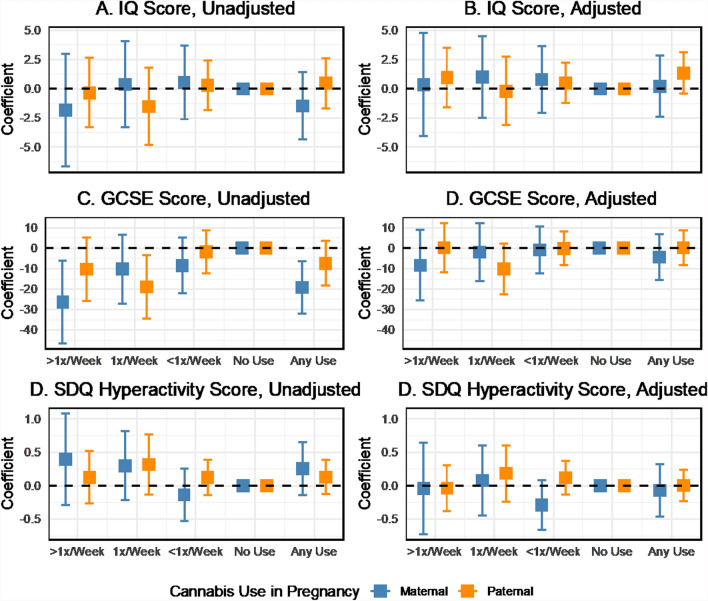
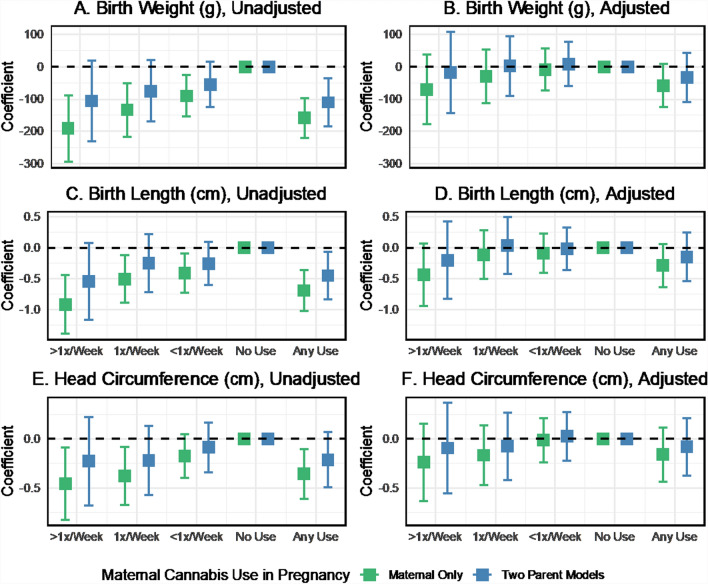
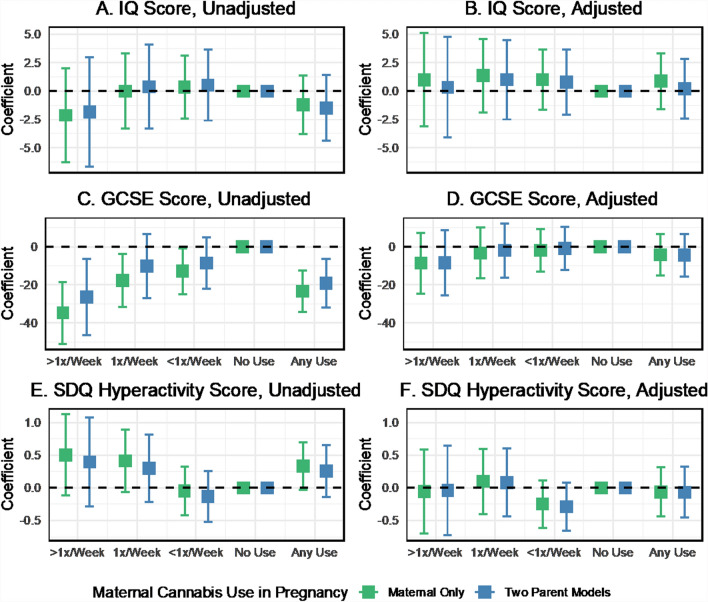
Maternal cannabis use in pregnancy is reported to be associated with perinatal and neurodevelopmental outcomes in offspring. Such associations, however, may be biased by residual confounding by socioeconomic position (SEP). To assess confounding, we use paternal cannabis use in pregnancy as a negative control exposure. We use data from 15,013 mother-father-child trios from the ALSPAC birth cohort, with participants initially recruited between 1990 and 1992. Exposures were maternal and paternal cannabis use during pregnancy. Neonatal anthropometry, perinatal, cognitive, and neurodevelopmental outcomes were modelled as a function of maternal and paternal cannabis use in pregnancy, adjusting for household-level SEP markers and maternal and paternal tobacco, alcohol, and drug use in pregnancy. We compared the strength of the association between maternal and paternal cannabis on outcomes using Wald tests. 5 and 13% of mothers and fathers reported cannabis use, which was inversely related to measures of SEP. Maternal cannabis use during pregnancy was associated with decreased infant birth weight (b = - 110.2 g, 95% CI - 185.1 to - 35.3 for any cannabis use) and length (b = - 0.45 cm, 95% CI - 0.84 to - 0.07). Maternal cannabis during pregnancy was also associated with neonatal special care admission (odds ratio 1.64, 95% CI 1.05 to 2.56) and lower education achievement scores at age 16 (b = - 19.2, 95% CI - 32.0 to - 6.3). Maternal cannabis use in pregnancy was modestly associated with perinatal outcomes and markers of cognitive development. However, most associations were attenuated after controlling for potential confounders, including SEP, and associations were not quantitatively different from paternal cannabis use. The association of maternal cannabis use in pregnancy with perinatal or cognitive outcomes in offspring may be driven by residual confounding, including SEP, rather than causal biological effects.
Keywords: ALSPAC; Cannabis; Cognitive development; Epidemiology; Neurodevelopment; Perinatal; Pregnancy; Substance use.
© 2025. The Author(s).
Conflict of interest statement
Declarations. Conflict of interest: The authors have no relevant financial or non-financial interests to disclose.
Figures



References
-
- Substance Abuse and Mental Health Services Administration. National survey on drug use and health (NSDUH). SAMHSA; 2022 (cited 19 Dec 2022). https://www.samhsa.gov/data/data-we-collect/nsduh-national-survey-drug-u....
-
- Better Outcomes Registry and Network (BORN) Ontario. Cannabis use rates among pregnant individuals by age group between 2012 and 2018. BORN; 2022 (cited 19 Dec 2022). https://www.bornontario.ca/en/about-born/cannabis-use-rates-among-pregna....
MeSH terms
LinkOut - more resources
Full Text Sources
Medical
