


Treatment of Advanced HIV in the Modern Era
- PMID: 40354016
- PMCID: PMC12277976
- DOI: 10.1007/s40265-025-02181-1
Treatment of Advanced HIV in the Modern Era
Abstract
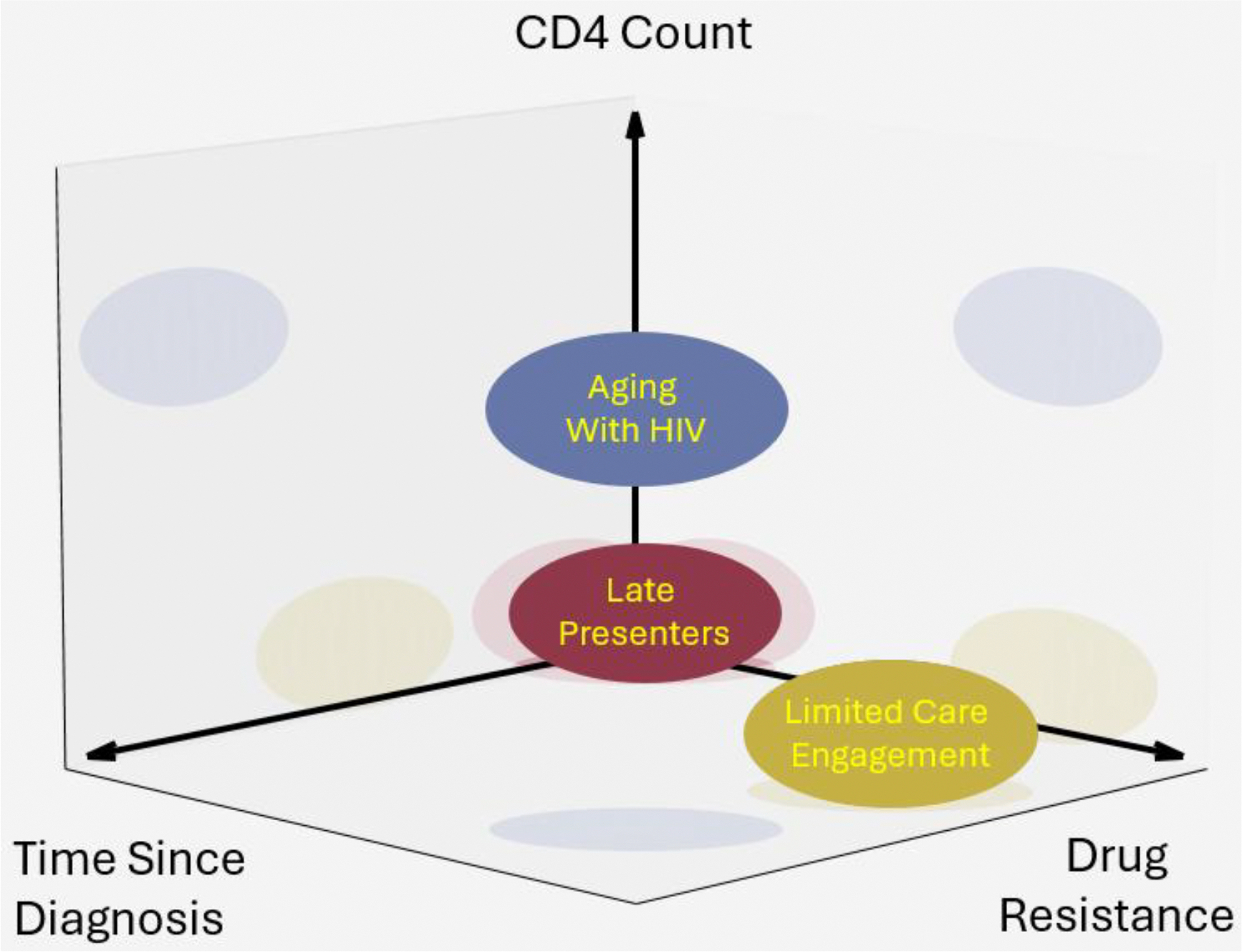
Antiretroviral therapy has transformed human immunodeficiency virus (HIV) infection from a fatal illness into a manageable chronic condition. However, despite remarkable progress, the HIV epidemic remains a global health challenge, with ambitious targets such as 95-95-95 by 2030 at risk of being unmet. While antiretroviral therapy availability has expanded worldwide, gaps persist, including unawareness of HIV status, inconsistent medication uptake, and limited engagement in care across diverse settings. Advanced HIV represents a particularly challenging yet underexplored aspect of HIV care. Its definition is complex, complicating efforts to address the needs of this vulnerable population. This review characterizes advanced HIV populations, defines them by spectra of immune suppression, antiretroviral therapy exposure, and drug resistance, and explores contemporary approaches to their management, with a particular focus on drug resistance and its clinical implications in modern HIV care. It highlights the unique challenges faced by individuals presenting late to care, those with limited care engagement, and aging populations with long-term exposure to HIV and antiretroviral therapy. By defining these populations, refining our understanding of advanced HIV, and addressing the diverse needs of affected individuals, providers can enhance outcomes and develop strategies to overcome barriers to care. Bridging these critical gaps is essential to advancing global efforts to end the HIV epidemic, both in the USA and worldwide.
© 2025. The Author(s), under exclusive licence to Springer Nature Switzerland AG.
Conflict of interest statement
Declarations. Funding: This work was partially funded by United States National Institutes of Health grants R01AI186632, K24AI134359, P30AI042853. Conflicts of Interest: None. Availability of Data and Material: Data supporting this manuscript are provided in it as well as in its citations. Ethics Approval: Not relevant. Consent to Participate: Not relevant. Consent for Publication: Not relevant. Code Availability: Not relevant. Author Contributions: The paper was conceived by R.K. and written by all authors. All authors read and approved the final version.
Figures
References
-
- UNAIDS. Fact Sheet 2024. Global HIV statistics [cited 2025 January 15]; Available from: https://www.unaids.org/sites/default/files/media_asset/UNAIDS_FactSheet_...
-
- Barre-Sinoussi F, Chermann JC, Rey F, Nugeyre MT, Chamaret S, Gruest J, et al. Isolation of a T-lymphotropic retrovirus from a patient at risk for acquired immune deficiency syndrome (AIDS). Science. 1983. May 20;220(4599):868–71. - PubMed
-
- Gallo RC, Salahuddin SZ, Popovic M, Shearer GM, Kaplan M, Haynes BF, et al. Frequent detection and isolation of cytopathic retroviruses (HTLV-III) from patients with AIDS and at risk for AIDS. Science. 1984. May 4;224(4648):500–3. - PubMed
-
- Flexner C Modern Human Immunodeficiency Virus Therapy: Progress and Prospects. Clin Pharmacol Ther. 2019. Jan;105(1):61–70. - PubMed
Publication types
MeSH terms
Substances
Grants and funding
LinkOut - more resources
Full Text Sources
Medical
