


Targeting mitochondria in bone and cartilage diseases: A narrative review
- PMID: 40354767
- PMCID: PMC12136924
- DOI: 10.1016/j.redox.2025.103667
Targeting mitochondria in bone and cartilage diseases: A narrative review
Abstract
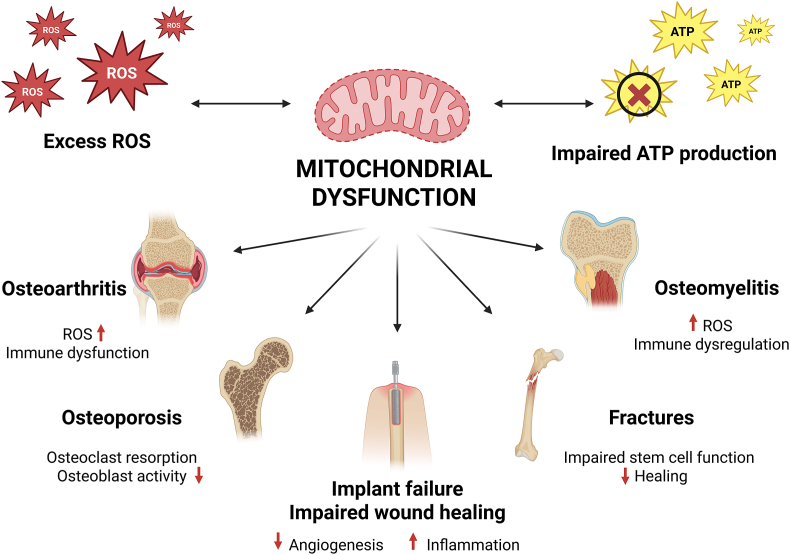
Mitochondria are essential regulators of bone health, controlling cell differentiation, cellular energy production, immune function, osteogenesis, and osteoclast activity. Their dysfunction is linked to orthopedic disorders such as osteoporosis, osteoarthritis, and osteomyelitis, contributing to impaired bone homeostasis and increased fracture risk. While mitochondrial research has been more advanced in fields such as cardiology and neurology, emerging therapeutic strategies from these areas are beginning to show potential for translation into orthopedics. These include mitochondrial biogenesis stimulation, mitochondrial fission inhibition, antioxidant therapies, mitochondrial transplantation, and photobiomodulation, which have demonstrated success in enhancing tissue repair, reducing oxidative stress, and improving overall cellular function in non-orthopedic applications. The novel inhibitor of mitochondrial fission and accumulation of reactive oxygen species Mdivi-1 offers potential to improve clinical outcomes of bone diseases by alleviating cellular dysfunction and preventing bone loss. While these treatments are still in the developmental phase, they present innovative approaches to address mitochondrial dysfunction in orthopedic conditions, potentially transforming bone disease management and enhancing patient outcomes. This report explores research regarding the involvement of mitochondrial health in bone and joint function and discusses possible future treatment strategies targeting mitochondria in orthopedic conditions.
Keywords: Bone; Cartilage; Mitochondria; Mitochondrial dynamics; Osteoarthritis; Osteomyelitis; Osteoporosis.
Copyright © 2025 The Authors. Published by Elsevier B.V. All rights reserved.
Conflict of interest statement
Declaration of competing interest The authors declare that they have no known competing financial interests or personal relationships that could have appeared to influence the work reported in this paper.
Figures


References
-
- Nalapko Y., Lakey J.R.T., Adalsteinsson O., et al. The role of mitochondria in cartilage degenerative disorders. Int J Biomed Res Prac. 2022;2(2) doi: 10.33425/2769-6294.1014. - DOI
Publication types
MeSH terms
Substances
LinkOut - more resources
Full Text Sources
Medical
