


Comparative analysis of systemic inflammatory biomarkers on dipper and non-dipper hypertension phenotypes
- PMID: 40355188
- PMCID: PMC12074142
- DOI: 10.1097/MD.0000000000042371
Comparative analysis of systemic inflammatory biomarkers on dipper and non-dipper hypertension phenotypes
Abstract
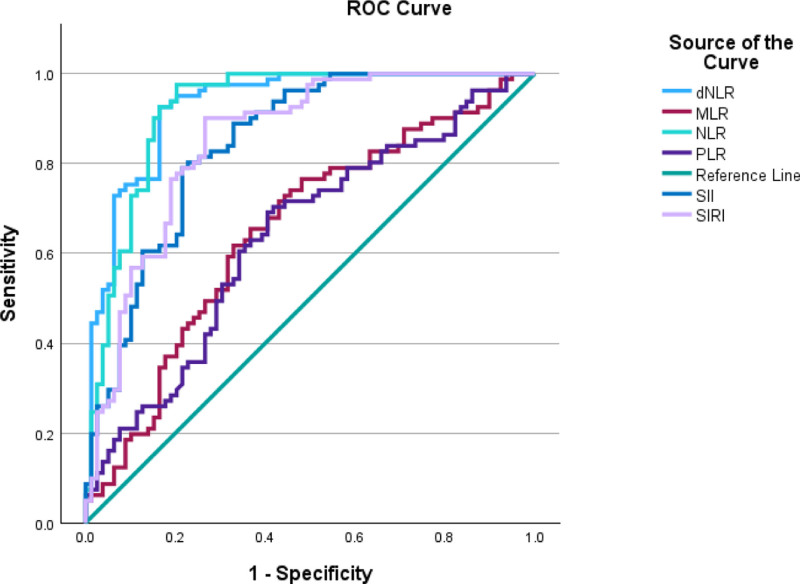
Circadian hypertension patterns, classified as dipper and non-dipper, influence cardiovascular risk and are linked to systemic inflammation. This study aimed to examine the relationship between hypertension phenotypes and inflammatory biomarkers. This retrospective cross-sectional study included 160 hypertensive patients with elevated office blood pressure (BP) who underwent 24-hour ambulatory BP monitoring and were categorized into dipper and non-dipper groups. Inclusion criteria comprised newly diagnosed, untreated individuals without hematological disorders, chronic inflammatory conditions, active infections, or moderate to severe chronic kidney disease. Inflammatory indices derived from complete blood counts were analyzed alongside demographic and clinical data. The cohort consisted of 79 dippers and 81 non-dippers, with a mean age of 46 ± 5 ± 11 ± 1 years. Non-dippers were more likely to be smokers (P = .006) and exhibited significantly higher 24-hour, awake, and sleep systolic BPs and sleep diastolic BPs than dippers (P = .001, P = .003, P < .001, and P < .001, respectively). Non-dippers also had elevated white blood cell counts, neutrophil (NEU) levels, neutrophil-to-lymphocyte ratio (NLR), derived NLR (dNLR), monocyte-to-lymphocyte ratio (MLR), platelet-to-lymphocyte ratio (PLR), systemic immune-inflammation index (SII), and systemic inflammation response index (SIRI) scores (P < .001, P < .001, P < .001, P < .001, P < .001, P = .002, P < .001, and P < .001, respectively), while dippers exhibited higher lymphocyte counts (P < .001). Logistic regression analyses indicated that NLR, dNLR, MLR, PLR, SII, and SIRI scores significantly predicted the inflammatory status of non-dipper hypertensive patients. Notably, dNLR demonstrated the highest specificity, sensitivity, and area under the curve values in the receiver operating characteristic analysis. This study identified significant differences in inflammatory status between dipper and non-dipper hypertensive groups, with inflammatory biomarkers strongly correlating with non-dipper hypertension. The dNLR score exhibited the strongest predictive value for non-dipper hypertension. Routine screening of inflammatory markers in clinical practice could facilitate early identification of at-risk patients and potentially improve treatment outcomes. However, further research is needed to validate these findings.
Keywords: ambulatory blood pressure monitoring; cardiovascular risk; hypertension; inflammation.
Copyright © 2025 the Author(s). Published by Wolters Kluwer Health, Inc.
Conflict of interest statement
The authors have no funding and conflicts of interest to disclose.
Figures
References
-
- Lawes CM, Vander Hoorn S, Rodgers A. International Society of Hypertension. Global burden of blood-pressure-related disease, 2001. Lancet. 2008;371:1513–8. - PubMed
-
- Williams B, Mancia G, Spiering W, et al. 2018 ESC/ESH guidelines for the management of arterial hypertension. Eur Heart J. 2018;3933:3021–104. - PubMed
Publication types
MeSH terms
Substances
LinkOut - more resources
Full Text Sources
Medical
Research Materials
Miscellaneous
