


Virome of Hyalomma and Rhipicephalus ticks from desert of Northwestern China
- PMID: 40356718
- PMCID: PMC12068223
- DOI: 10.1093/ve/veaf022
Virome of Hyalomma and Rhipicephalus ticks from desert of Northwestern China
Abstract
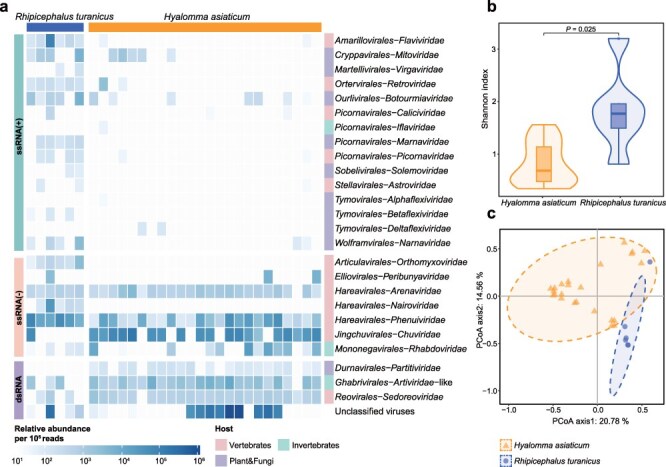
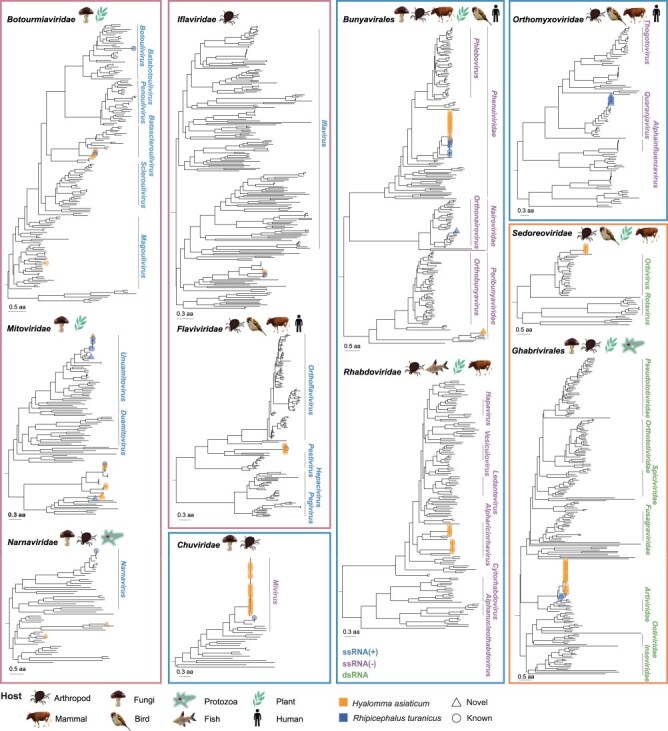
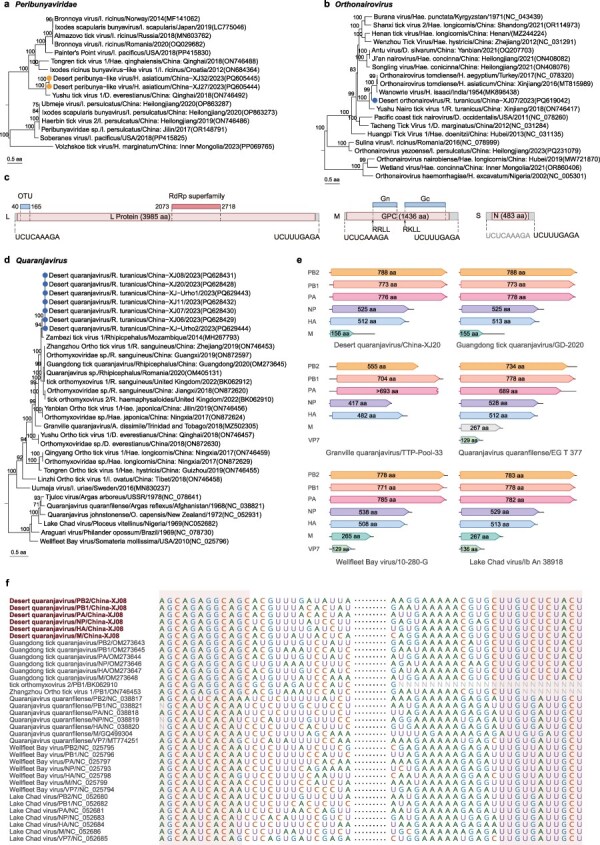
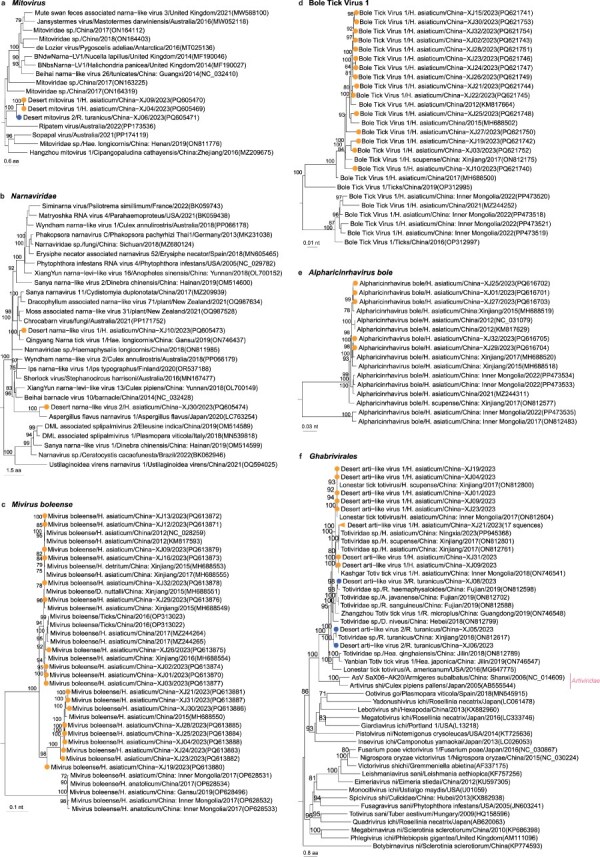
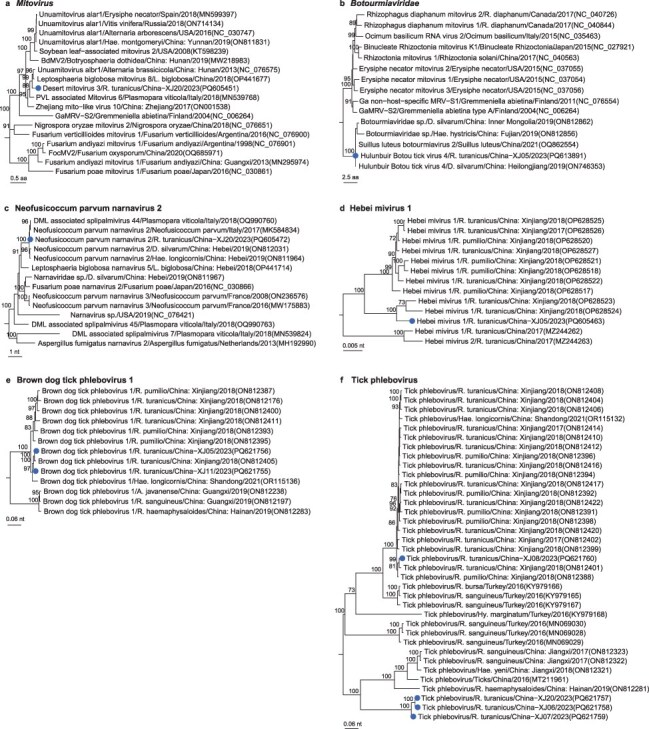
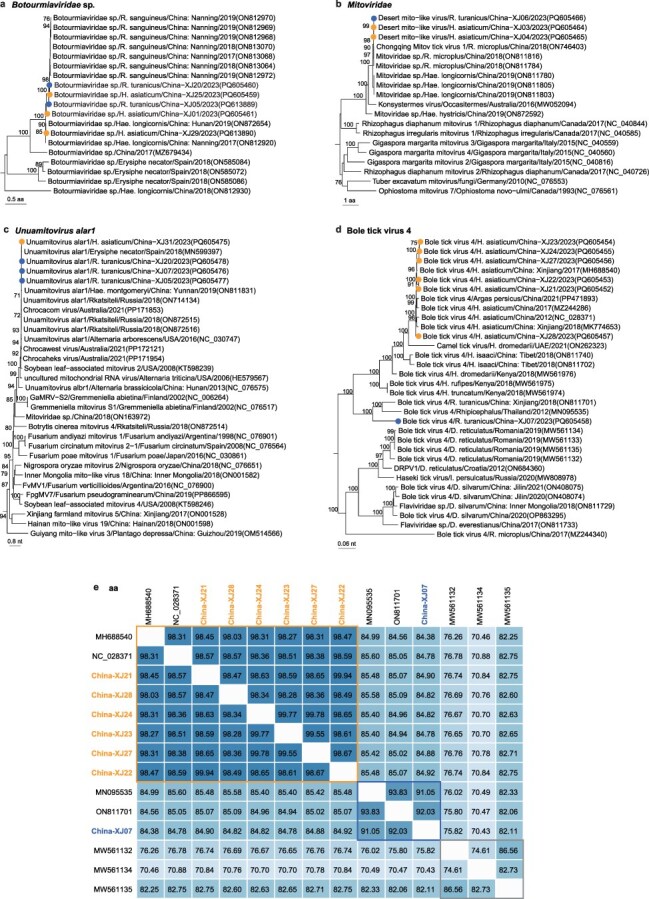
Ticks are important vectors for pathogen transmission, yet studies on the diversity and distribution of viruses carried by ticks in desert regions remain limited. This study investigated the tick virome in desert areas of Xinjiang, China, and identified two tick species, Hyalomma asiaticum and Rhipicephalus turanicus. A total of 30 meta-transcriptome sequencing libraries were constructed from ticks pooled by location, tick species, sex, and host. The proportion of viral reads ranged from 0.004% to 0.165%, and significant differences in viral alpha- and beta-diversity were observed between the two tick species. A total of 125 complete or nearly complete viral genomes were classified into 5 families of positive-sense single-stranded RNA viruses, 6 families of negative-sense single-stranded RNA viruses, and 2 families of double-stranded RNA viruses. Twenty-eight viral species were identified, including 20 known viruses and 8 novel viruses from the genera Orthonairovirus, Quaranjavirus, and Mitovirus, and families Peribunyaviridae and Narnaviridae. Notably, the discovery of Desert orthonairovirus, Desert quaranjavirus, and Desert peribunya-like virus revealed a potential new role for desert ticks as viral vectors. Among the other 25 viruses, 12 were specific to H. asiaticum, and 9 were specific to R. turanicus. This study highlights the diversity of tick-borne viruses in Xinjiang's desert regions, their distribution across different tick species, and underscores the importance of these tick species in pathogen transmission. These findings provide scientific evidence for further research into viral circulation in desert ecosystems and the potential public health threats posed by tick-borne pathogens.
Keywords: Hyalomma asiaticum; Rhipicephalus turanicus; desert; emerging tick-borne virus; tick virome.
© The Author(s) 2025. Published by Oxford University Press.
Conflict of interest statement
The authors declare no competing interests.
Figures
References
LinkOut - more resources
Full Text Sources
