


Epidemiology of second trimester induced abortion in Ethiopia: a systematic review and meta-analysis
- PMID: 40357003
- PMCID: PMC12066765
- DOI: 10.3389/fgwh.2025.1452114
Epidemiology of second trimester induced abortion in Ethiopia: a systematic review and meta-analysis
Abstract
Background: Second-trimester induced abortion refers to the termination of a pregnancy occurring between 13 and 28 weeks of gestation in Africa. These abortions are particularly concerning due to the heightened risk of complications and maternal mortality. In Ethiopia, there is a lack of nationally representative data regarding the magnitude and associated factors of second-trimester induced abortions. This systematic review and meta-analysis aimed to ascertain the pooled magnitude and identify the factors associated with second-trimester induced abortions in Ethiopia.
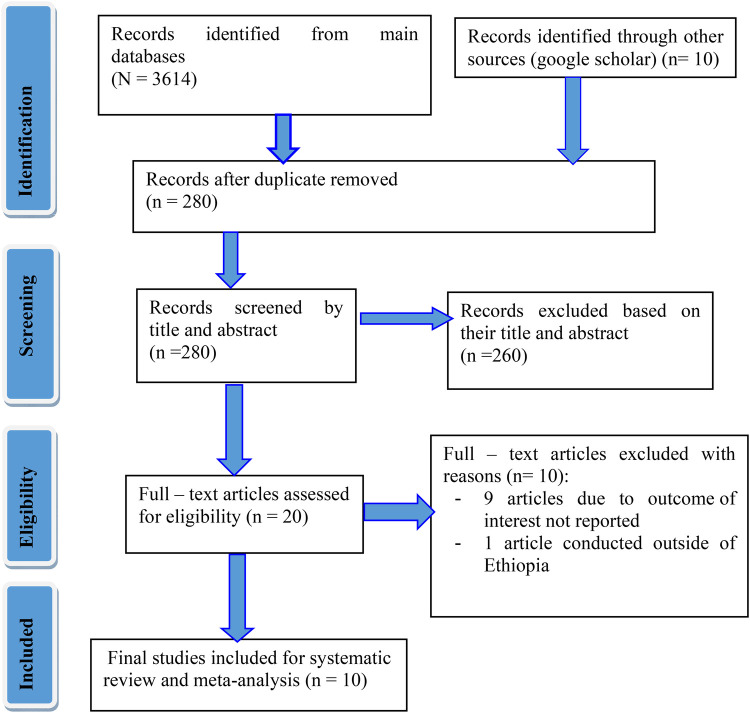
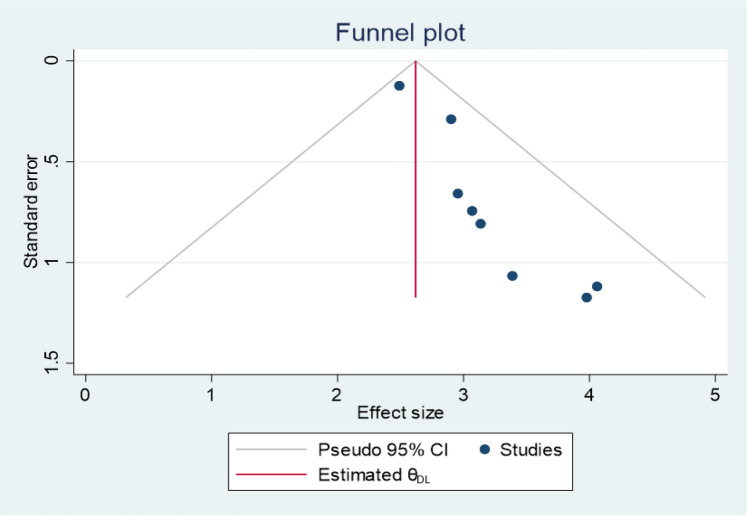
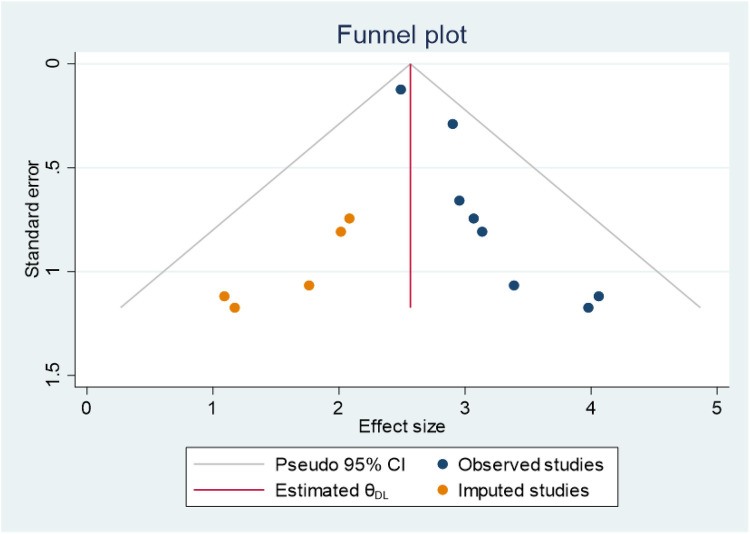
Methods: The PRISMA guidelines were used to review and report this study. A systematic literature search was conducted to identify relevant articles from online databases, including PubMed/MEDLINE, Web of Science, Google Scholar, and Ethiopian University online repositories. Data were extracted using an Excel data extraction format, and analysis was performed using Stata version 17. A meta-analysis was conducted using a random-effects model, and subgroup analysis was performed based on the year of publication and sample size to identify the source of heterogeneity. To determine publication bias, a funnel plot, and Egger's regression test were conducted.
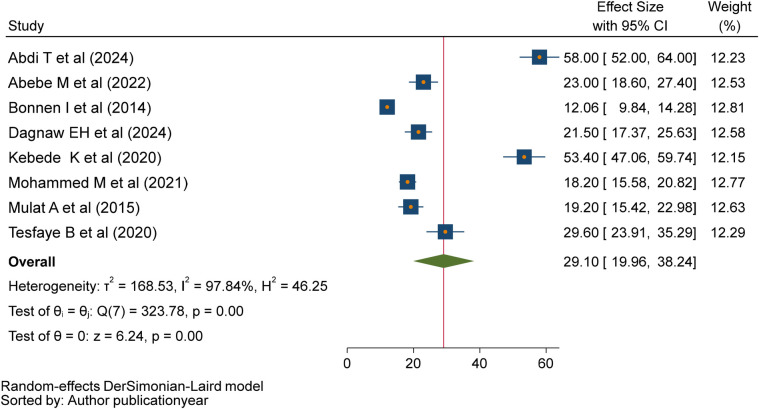
Results: In this review, a total of ten articles encompassing 4,466 participants were analyzed. The pooled prevalence of second-trimester induced abortion in Ethiopia was found to be 29.10% (95% CI: 19.96-38.24; I² = 97.84, P < 0.000). Delay in confirming pregnancy (POR = 4.33, 95% CI: 2.25, 8.32), nature of the menstrual cycle (POR = 0.32, 95% CI: 0.18, 0.56), residence (POR = 0.38, 95% CI: 0.30, 0.49), and pregnancy intention (POR = 0.28, 95% CI: 0.18, 0.42) were significantly associated with second-trimester induced abortion.
Conclusions: The magnitude of induced second-trimester abortions in Ethiopia is significantly higher than global data. This meta-analysis identifies factors associated with second-trimester abortions, including delayed pregnancy confirmation, irregular menstrual cycles, rural residency, and unplanned pregnancies. The findings highlight the urgent need for targeted interventions to address these factors and decrease the incidence of second-trimester abortions. Encouraging early pregnancy testing and confirmation to reduce delays, raising awareness about the importance of regular menstrual cycles and seeking medical advice for irregularities, improving healthcare services in rural areas to reduce disparities, and strengthening family planning and counseling services can help mitigate unplanned pregnancies and induced abortions.
Systematic review registration: PROSPERO (CRD42022383559).
Keywords: Ethiopia; epidemiology; meta-analysis; second trimester induced abortion; systematic review.
© 2025 Abebe, Tebeje, Yimer, Temesgen, Melaku and Hareru.
Conflict of interest statement
The authors declare that the research was conducted in the absence of any commercial or financial relationships that could be construed as a potential conflict of interest.
Figures
References
-
- World Health Organization. Abortion. World Health Organization; (2024). Available at: https://www.who.int/news-room/fact-sheets/detail/abortion (Accessed May 17, 2024).
-
- Bell SO, Shankar M, Moreau C. Global Epidemiology of Induced Abortion. Oxford Research Encyclopedia of Global Public Health; (2021) Available at: 10.1093/acrefore/9780190632366.013.346 (Accessed November 29, 2021). - DOI
-
- Bearak J, Popinchalk A, Ganatra B, Moller A-B, Tunçalp Ö, Beavin C, et al. Unintended pregnancy and abortion by income, region, and the legal status of abortion: estimates from a comprehensive model for 1990–2019. Lancet Glob Health. (2020) 8(9):e1152–e61. 10.1016/S2214-109X(20)30315-6 - DOI - PubMed
Publication types
LinkOut - more resources
Full Text Sources
