


Beta-band power modulation in the human amygdala during a Direct Reach arm reaching task
- PMID: 40360082
- PMCID: PMC12288141
- DOI: 10.1016/j.neures.2025.05.001
Beta-band power modulation in the human amygdala during a Direct Reach arm reaching task
Abstract
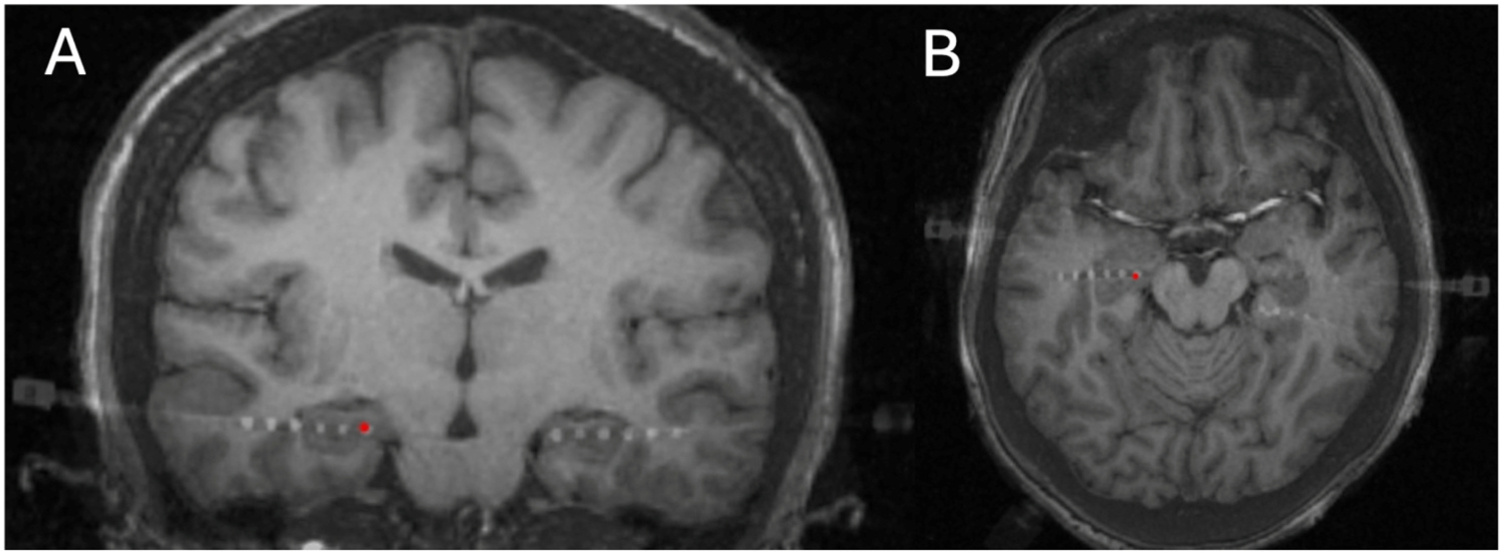
The human amygdala is primarily known for its involvement in processing emotional and fearful responses, but newer evidence has identified a role for this structure in motor processing. Our lab previously utilized an arm-reaching task and observed significant beta-band (13-30 Hz) modulation in the hippocampus. Given these results, we sought to characterize the role of beta-band modulation in the amygdala during movement execution in participants with stereoelectroencephalography (SEEG) depth electrodes in the amygdala for seizure localization. We show that 9 of 13 participants (69.2 %) showed decreased beta-band power in the amygdala during the Response (movement execution) phase of an arm-reaching task when compared to Fixation (baseline). Secondary analyses show that there are no statistically significant differences in beta-band modulation between ipsilateral and contralateral implanted electrodes, but there is a small difference between male and female participants. The decrease in beta-band power in the amygdala during the Response phase of a Direct Reach task is consistent with our previous findings in the hippocampus. Our study is the first to report beta-band modulation in the amygdala during motor processing and sets the stage for further studies into the involvement of the amygdala in motor control.
Keywords: Amygdala; Beta-band power; Center-out arm reach task; Local field potential (LFP); Non-emotional motor processing; Stereoelectroencephalography (SEEG).
Copyright © 2025 The Authors. Published by Elsevier B.V. All rights reserved.
Conflict of interest statement
Declaration of Competing Interest The authors declare that they have no known competing financial interests or personal relationships that could have appeared to influence the work reported in this paper.
Figures


References
-
- Androulidakis AG, Doyle LMF, Gilbertson TP, Brown P, 2006. Corrective movements in response to displacements in visual feedback are more effective during periods of 13–35 Hz oscillatory synchrony in the human corticospinal system. Eur. J. Neurosci 24, 3299–3304. 10.1111/j.1460-9568.2006.05201.x. - DOI - PubMed
MeSH terms
Grants and funding
LinkOut - more resources
Full Text Sources
Miscellaneous
