


The immune NIK1/RPL10/LIMYB signaling module regulates photosynthesis and translation under biotic and abiotic stresses
- PMID: 40360515
- PMCID: PMC12075613
- DOI: 10.1038/s41467-025-59571-y
The immune NIK1/RPL10/LIMYB signaling module regulates photosynthesis and translation under biotic and abiotic stresses
Abstract
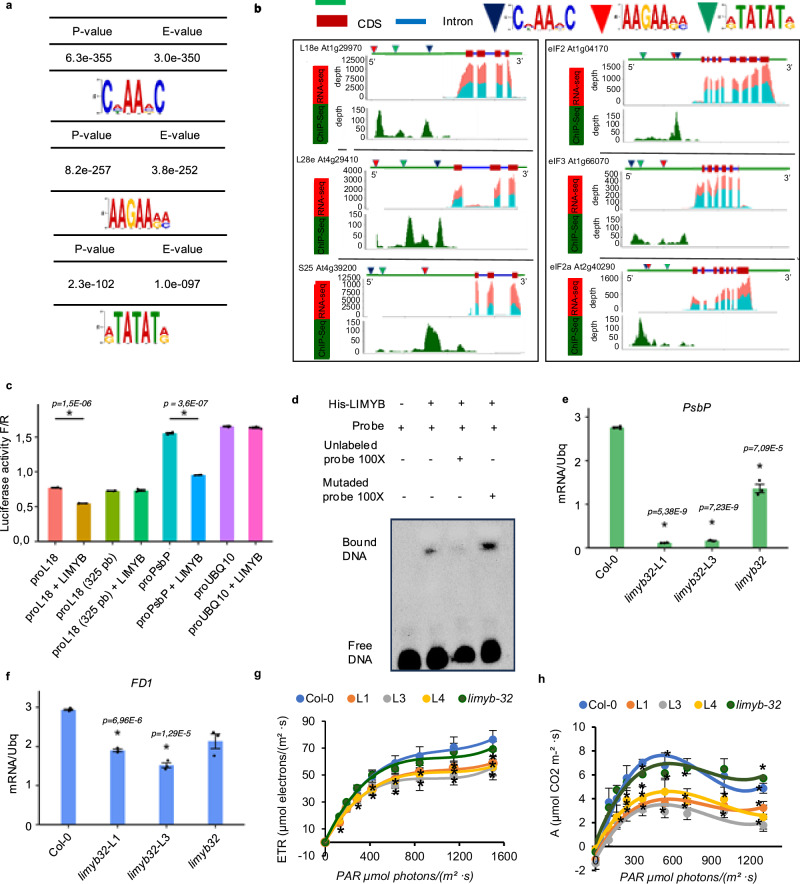
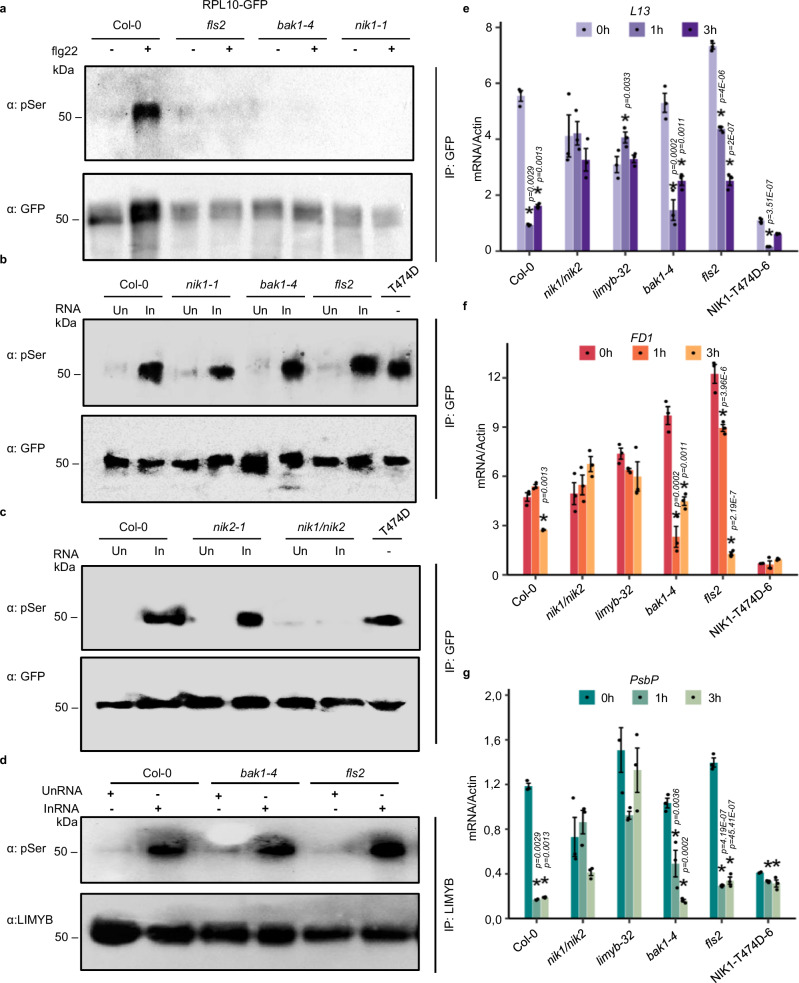
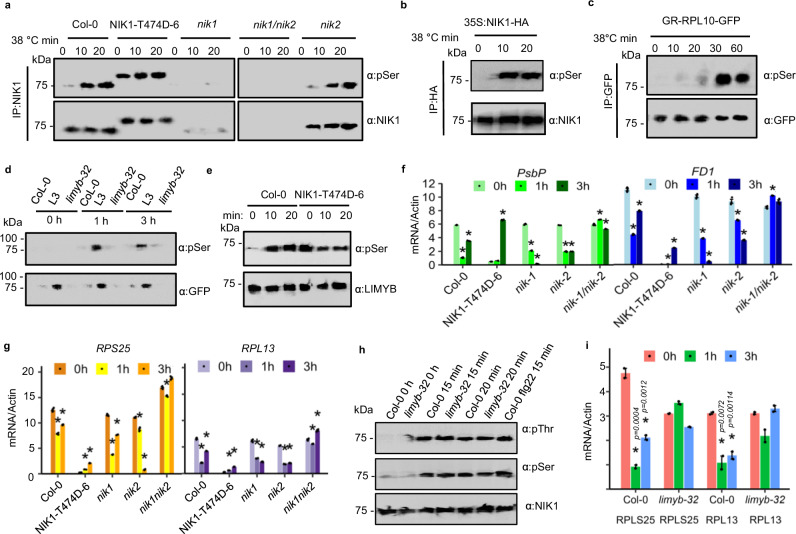
Photosynthesis and translation are targets of metabolic control and development in plants, yet how stress signals coordinately regulate these opposing energy-producing and consuming processes remains enigmatic. Here, we unravel a growth control circuit that ties photosynthesis to translational control in response to biotic and abiotic signals. Our findings reveal that the L10-INTERACTING MYB DOMAIN-CONTAINING PROTEIN (LIMYB), a key player of the NUCLEAR SHUTTLE PROTEIN-INTERACTING KINASE 1 (NIK1)/ RIBOSOMAL PROTEIN L10 (RPL10) antiviral signaling pathway, not only downregulates translation genes, but also represses photosynthesis-related genes and photosynthesis itself. LIMYB repressor activity, regulated by phosphorylation, is crucial for the decline in photosynthesis under stress. NIK1 activation by PAMPs or the phosphomimetic NIK1-T474D represses photosynthesis-related genes and photosynthesis in control but not in limyb lines. Furthermore, heat and osmotic stress also activate the NIK1/RPL10/LIMYB signaling circuit in wild type. These stresses induce NIK1 phosphorylation, but not marker gene repression, in limyb, indicating that LIMYB connects NIK1 activation to stress-mediated downregulation of translation- and photosynthesis-related genes. This coordinated repression via the NIK1/RPL10/LIMYB module may help plants adapt to changing environments.
© 2025. The Author(s).
Conflict of interest statement
Competing interests: The authors declare no competing interests.
Figures



References
MeSH terms
Substances
LinkOut - more resources
Full Text Sources
