


The Platelet Activation Signaling Pathway Regulated by Fibrinogen and Homo-Gamma-Linolenic Acid (C20:3)-Associated Lipid Metabolism Is Involved in the Maintenance of Early Pregnancy in Chinese Native Yellow Cattle
- PMID: 40362034
- PMCID: PMC12071009
- DOI: 10.3390/ani15091219
The Platelet Activation Signaling Pathway Regulated by Fibrinogen and Homo-Gamma-Linolenic Acid (C20:3)-Associated Lipid Metabolism Is Involved in the Maintenance of Early Pregnancy in Chinese Native Yellow Cattle
Abstract
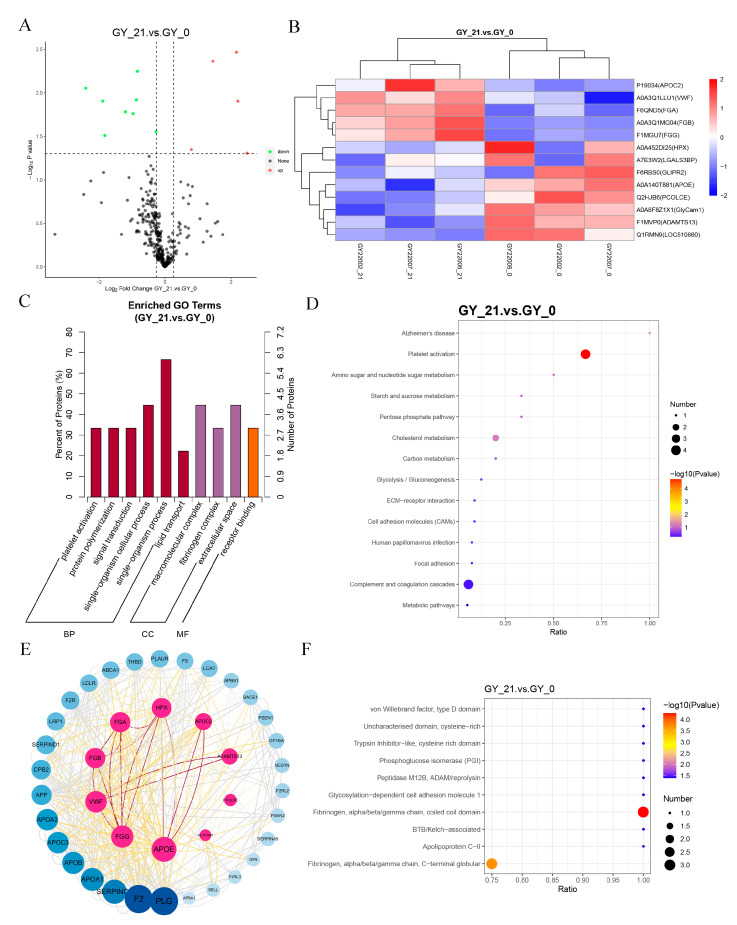
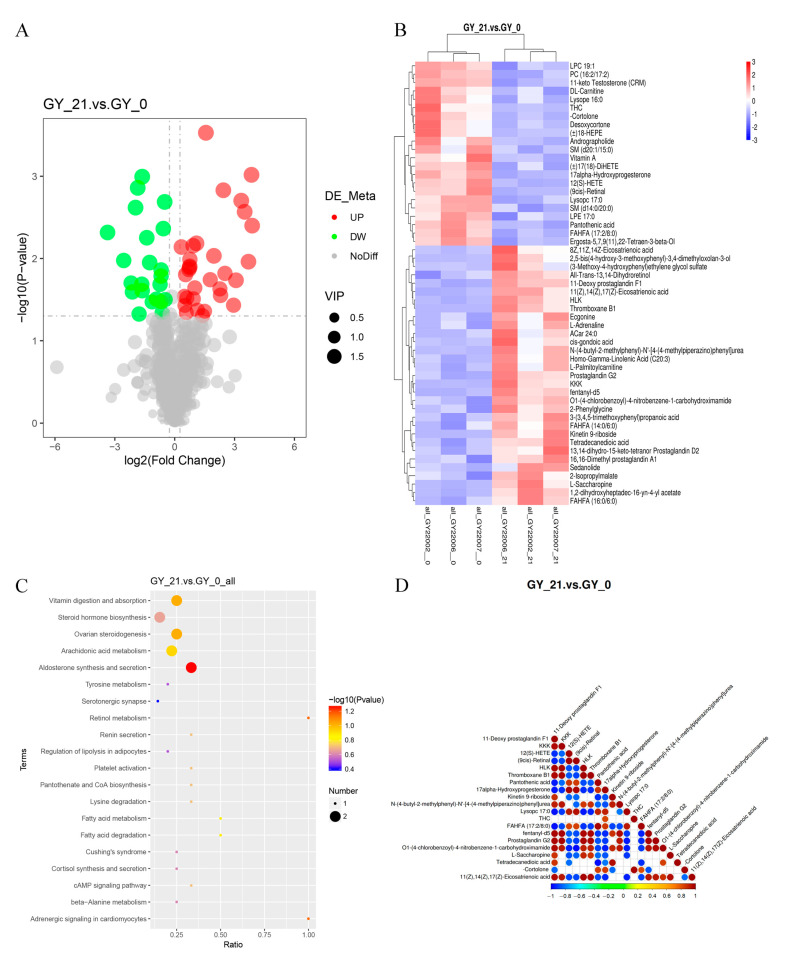
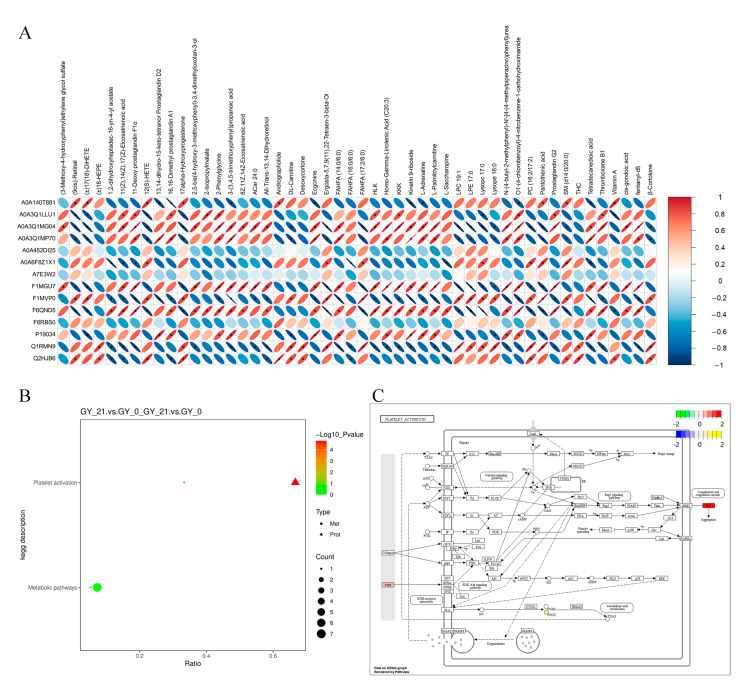
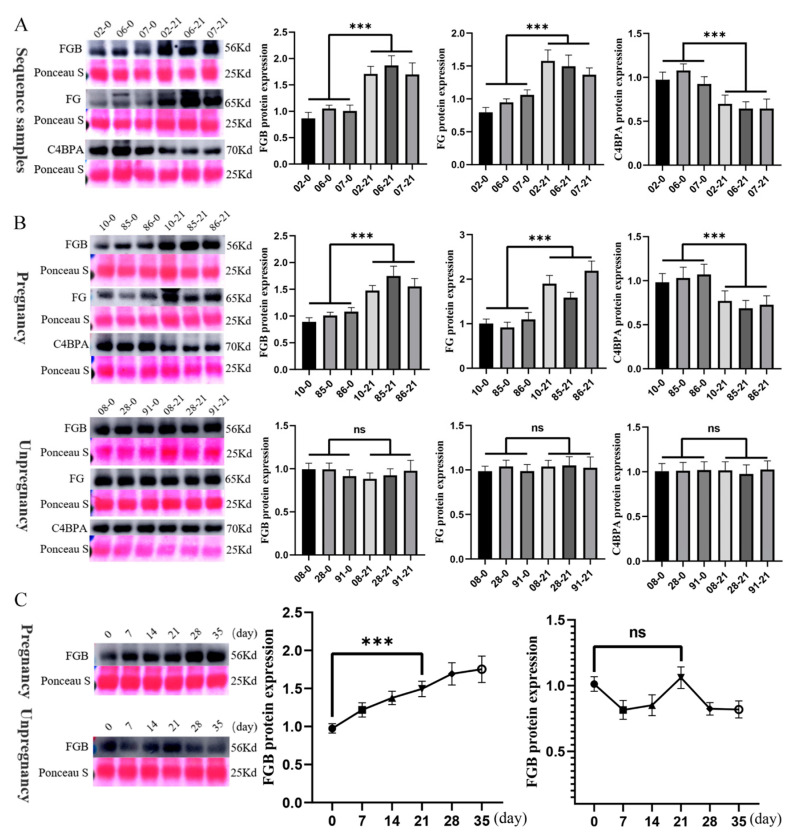
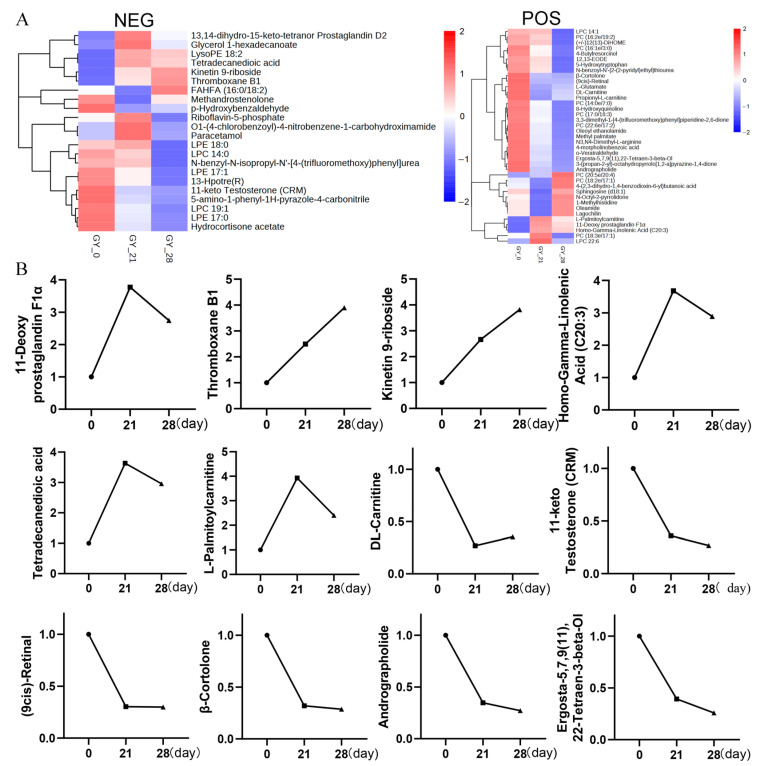
Identifying the specific factors secreted during early pregnancy is an effective method for pregnancy detection in cattle, helping to reduce empty pregnancies in the industry. To systematically investigate metabolic variations between early pregnancy and the estrous cycle and their relationship with pregnancy progression, this study utilized four-dimensional data-independent acquisition (4D-DIA) proteomics and liquid chromatography-tandem mass spectrometry (LC-MS/MS) metabolomics to analyze serum samples collected from Chinese native yellow cattle at day 0 and day 21 post-mating, combining bioinformatics analysis with experimental validation. The platelet activation signaling pathway and angiogenesis-related proteins were significantly upregulated. Among them, fibrinogen alpha/beta/gamma chains (FG) exhibited notable differences, with their branched-chain protein FGB showing highly significant upregulation (p = 0.003, Log2FC = 2.167) and tending to increase gradually during early pregnancy, suggesting that FGB could be one of the important indicators of early pregnancy in Chinese native yellow cattle. Among the differential metabolites, 11-Deoxy prostaglandin F1α (p < 0.001, Log2FC = 1.563), Thromboxane B1 (p = 0.002, Log2FC = 3.335), and Homo-Gamma-Linolenic Acid (C20:3) (p = 0.018, Log2FC = 1.781) were also increased, indicating their involvement in the regulation of the platelet activation signaling pathway. The platelet activation signaling pathway plays a crucial role in maternal immune tolerance and placental vascularization, which are essential for embryo implantation and placental development. These findings indicate that FGB has the potential to be a valuable biomarker for early cattle pregnancy detection, thereby improving pregnancy diagnosis accuracy, reducing economic losses caused by undetected empty pregnancies and enhancing reproductive efficiency in the cattle industry. Undoubtedly, our research outcomes must be validated with future studies, and a larger sample size as well as the evaluation of the potential endocrine effects induced by the synchronized estrus treatment must be considered.
Keywords: Chinese native yellow cattle; angiogenesis; early pregnancy; immune response; metabolism.
Conflict of interest statement
The authors declare no conflict of interest.
Figures
References
-
- Xia X.T., Achilli A., Lenstra J.A., Tong B., Ma Y., Huang Y.Z., Han J.L., Sun Z.Y., Chen H., Lei C.Z., et al. Mitochondrial genomes from modern and ancient Turano-Mongolian cattle reveal an ancient diversity of taurine maternal lineages in East Asia. Heredity. 2021;126:1000–1008. doi: 10.1038/s41437-021-00428-7. - DOI - PMC - PubMed
-
- Ramachandran R., Vinothkumar A., Sankarganesh D., Suriyakalaa U., Aathmanathan V.S., Kamalakkannan S., Nithya V., Angayarkanni J., Archunan G., Akbarsha M.A., et al. Detection of estrous biomarkers in the body exudates of Kangayam cattle (Bos indicus) from interplay of hormones and behavioral expressions. Domest. Anim. Endocrinol. 2020;72:106392. doi: 10.1016/j.domaniend.2019.106392. - DOI - PubMed
Grants and funding
LinkOut - more resources
Full Text Sources
Miscellaneous
