


Employing Eye Trackers to Reduce Nuisance Alarms
- PMID: 40363075
- PMCID: PMC12074377
- DOI: 10.3390/s25092635
Employing Eye Trackers to Reduce Nuisance Alarms
Abstract
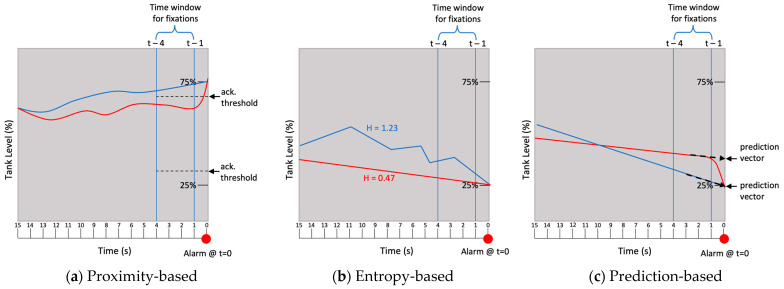
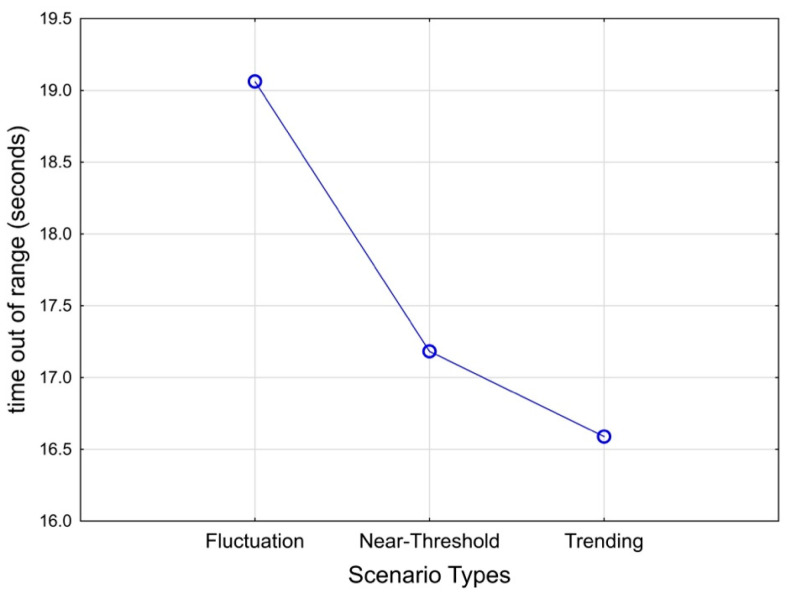
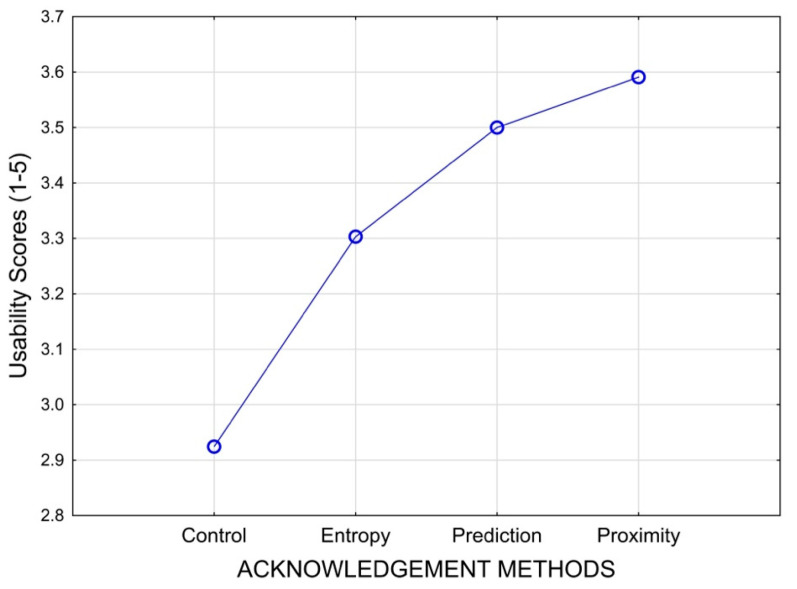
When process operators anticipate an alarm prior to its annunciation, that alarm loses information value and becomes a nuisance. This study investigated using eye trackers to measure and adjust the salience of alarms with three methods of gaze-based acknowledgement (GBA) of alarms that estimate operator anticipation. When these methods detected possible alarm anticipation, the alarm's audio and visual salience was reduced. A total of 24 engineering students (male = 14, female = 10) aged between 18 and 45 were recruited to predict alarms and control a process parameter in three scenario types (parameter near threshold, trending, or fluctuating). The study evaluated whether behaviors of the monitored parameter affected how frequently the three GBA methods were utilized and whether reducing alarm salience improved control task performance. The results did not show significant task improvement with any GBA methods (F(3,69) = 1.357, p = 0.263, partial η2 = 0.056). However, the scenario type affected which GBA method was more utilized (X2 (2, N = 432) = 30.147, p < 0.001). Alarm prediction hits with gaze-based acknowledgements coincided more frequently than alarm prediction hits without gaze-based acknowledgements (X2 (1, N = 432) = 23.802, p < 0.001, OR = 3.877, 95% CI 2.25-6.68, p < 0.05). Participant ratings indicated an overall preference for the three GBA methods over a standard alarm design (F(3,63) = 3.745, p = 0.015, partial η2 = 0.151). This study provides empirical evidence for the potential of eye tracking in alarm management but highlights the need for additional research to increase validity for inferring alarm anticipation.
Keywords: alarms; attention; eye tracking; monitoring; user interface.
Conflict of interest statement
The authors declare no conflicts of interest.
Figures
References
-
- Management of Alarm Systems for the Process Industries. ISA; Research Triangle Park, NC, USA: 2008. 82p
-
- Goel P., Datta A., Mannan M.S. Industrial alarm systems: Challenges and opportunities. J. Loss Prev. Process Ind. 2017;50:23–36. doi: 10.1016/j.jlp.2017.09.001. - DOI
-
- Woods D.D. The alarm problem and directed attention in dynamic fault management. Ergonomics. 1995;38:2371–2393. doi: 10.1080/00140139508925274. - DOI
MeSH terms
LinkOut - more resources
Full Text Sources
Miscellaneous
