


Association Between Plasma Homocysteine, Folate, Vitamin B12 Levels, and Metabolic Dysfunction Indices in Elderly with Arterial Stiffness
- PMID: 40364032
- PMCID: PMC12072721
- DOI: 10.3390/jcm14092998
Association Between Plasma Homocysteine, Folate, Vitamin B12 Levels, and Metabolic Dysfunction Indices in Elderly with Arterial Stiffness
Abstract
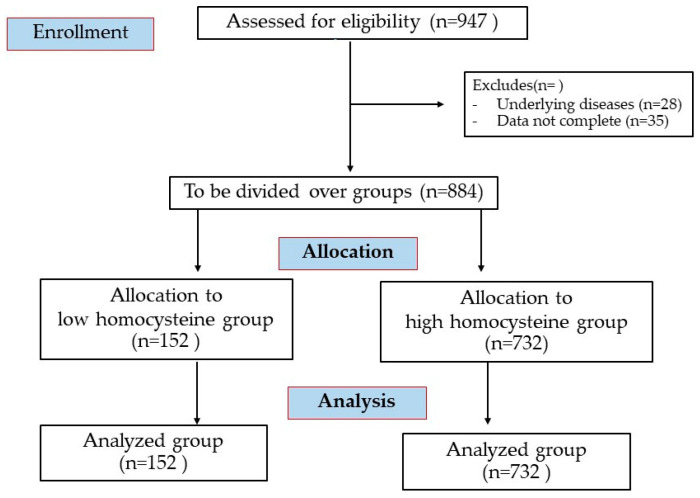
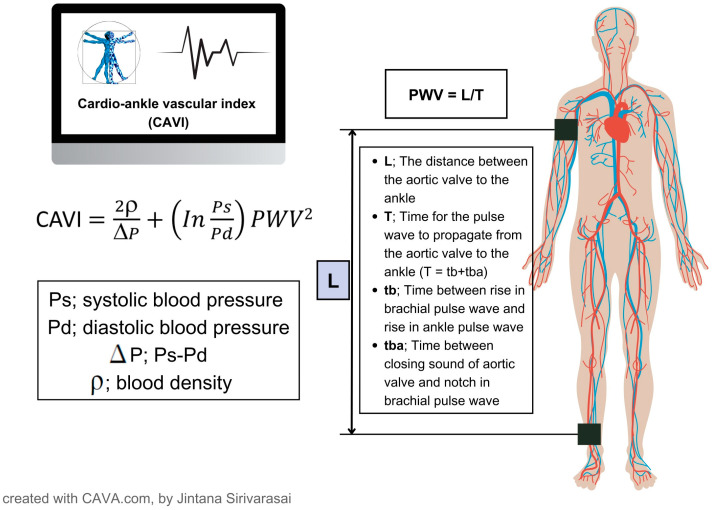
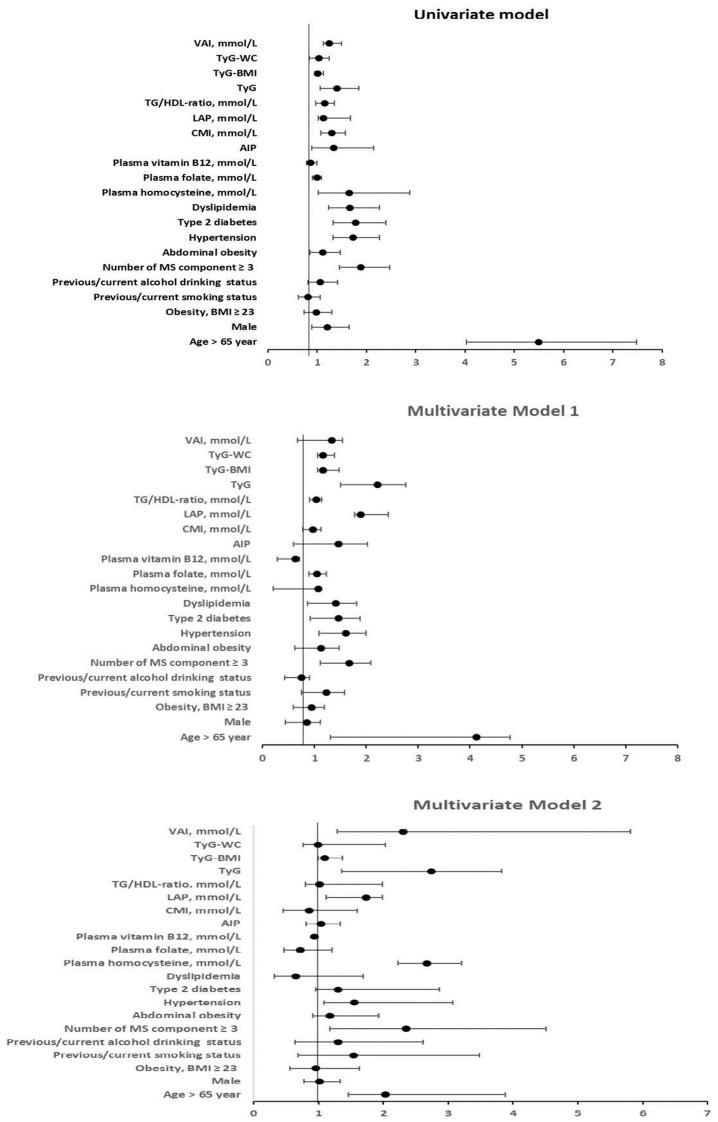
Background/Objectives: Arterial stiffness is a prevalent age-related condition that can significantly increase the risk of cardiovascular disease and mortality in older adults. Understanding the factors that contribute to vascular health, including metabolic dysfunction and hyperhomocysteinemia, alongside vitamin B status, is essential for developing effective interventions. This study aimed to explore the relationship between plasma levels of homocysteine, folate, and vitamin B12, as well as various indices of metabolic dysfunction, in elderly individuals with arterial stiffness. Methods: We conducted a cross-sectional analysis involving 884 participants aged 65 and older, assessing arterial stiffness using the cardio/ankle vascular index method. Additionally, we collected fasting blood samples to evaluate plasma homocysteine, folate, vitamin B12 levels, and other relevant biochemical markers. Results: Higher plasma homocysteine levels are significantly correlated with elevated CAVI scores and increased indices of metabolic dysfunction (p < 0.05). Furthermore, a multivariate logistic regression analysis demonstrated that elevated plasma homocysteine levels, along with higher levels of lipid accumulation product (LAP), triglyceride/glucose index (TyG), and visceral adiposity index (VAI), are associated with increased arterial stiffness. Conclusions: These findings suggest that monitoring and optimizing homocysteine, folate, and vitamin B12 levels may be beneficial for preventing or managing arterial stiffness and related metabolic disorders in the elderly population.
Keywords: arterial stiffness; cardio/ankle vascular index; elderly; hyperhomocysteinemia; metabolic dysfunction indices.
Conflict of interest statement
The authors declare no conflicts of interest.
Figures
References
-
- Matsushita K., Ding N., Kim E.D., Budoff M., Chirinos J.A., Fernhall B., Hamburg N.M., Kario K., Miyoshi T., Tanaka H., et al. Cardio-ankle vascular index and cardiovascular disease: Systematic review and meta-analysis of prospective and cross-sectional studies. J. Clin. Hypertens. 2019;21:16–24. doi: 10.1111/jch.13425. - DOI - PMC - PubMed
-
- Bäck M., Topouchian J., Labat C., Gautier S., Blacher J., Cwynar M., de la Sierra A., Pall D., Duarte K., Fantin F., et al. Cardio-ankle vascular index for predicting cardiovascular morbimortality and determinants for its progression in the prospective advanced approach to arterial stiffness (TRIPLE-A-Stiffness) study. EBioMedicine. 2024;103:105107. doi: 10.1016/j.ebiom.2024.105107. - DOI - PMC - PubMed
Grants and funding
LinkOut - more resources
Full Text Sources
Research Materials
