


The Impact of Diabetes on Outcomes in Anterior Cervical Discectomy and Fusion (ACDF)
- PMID: 40364070
- PMCID: PMC12073059
- DOI: 10.3390/jcm14093039
The Impact of Diabetes on Outcomes in Anterior Cervical Discectomy and Fusion (ACDF)
Abstract
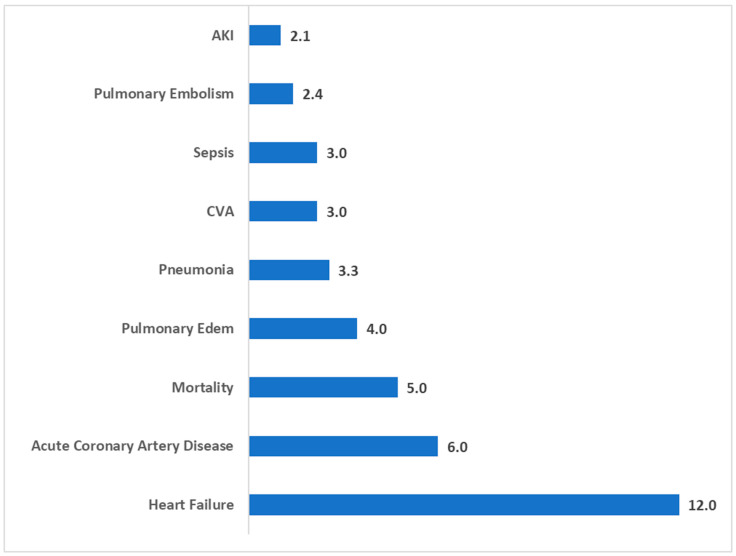
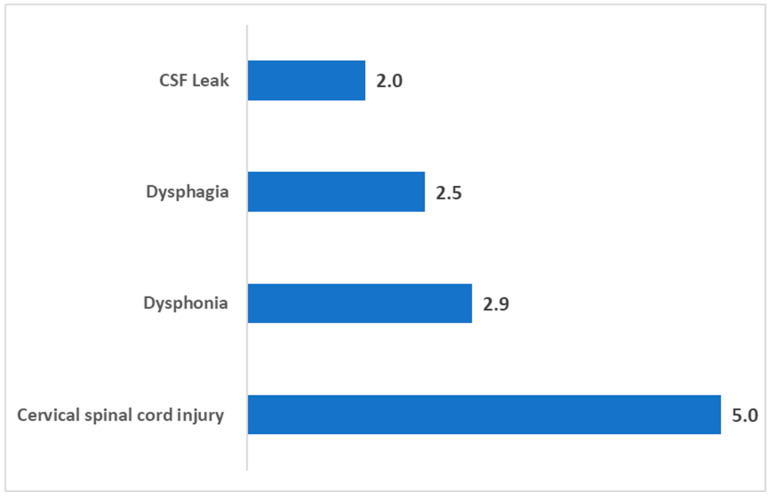
Background: Anterior cervical discectomy and fusion (ACDF) is a common treatment for cervical radiculopathy and myelopathy. While generally effective, diabetes mellitus may increase postoperative complications and healthcare costs. This study evaluated the impact of type 2 diabetes on perioperative outcomes in ACDF patients. Methods: A retrospective cohort study was conducted using the Nationwide Inpatient Sample (2016-2019), including 85,585 single-level ACDF patients. Propensity score matching (PSM) was applied, creating two balanced cohorts (16,260 diabetic and 16,260 non-diabetic patients). Outcomes analyzed included postoperative complications, length of stay, hospital charges, and mortality. Results: Diabetic patients had significantly higher risks of ACDF-specific complications, including cerebrospinal fluid leaks (2×), dysphagia (2.5×), dysphonia (2.9×), and cervical spinal cord injury (5×). General complications were also increased, with higher rates of pulmonary embolism (2.4×), sepsis (3×), stroke (3×), pneumonia (3.3×), and heart failure (12×). Diabetic patients had longer hospital stays (1.99 vs. 1.79 days, p < 0.001) and higher hospital charges (USD 71,884 vs. USD 67,998, p = 0.004). Conclusions: T2DM significantly increases postoperative risks, length of stay, and costs for ACDF patients. Optimized perioperative management and glucose control are essential to improve outcomes in this high-risk population.
Keywords: anterior cervical discectomy and fusion; healthcare costs; length of stay; postoperative complications; type 2 diabetes.
Conflict of interest statement
The authors declare no conflicts of interest.
Figures
References
-
- Luo M., Cao Q., Wang D., Tan R., Shi Y., Chen J., Chen R., Tang G., Chen L., Mei Z., et al. The impact of diabetes on postoperative outcomes following spine surgery: A meta-analysis of 40 cohort studies with 2.9 million participants. Int. J. Surg. 2022;104:106789. doi: 10.1016/j.ijsu.2022.106789. - DOI - PubMed
-
- Hamilton T., Bartlett S., Deshpande N., Hadi M., Reese J.C., Mansour T.R., Telemi E., Springer K., Schultz L., Nerenz D.R., et al. Association of prolonged symptom duration with poor outcomes in lumbar spine surgery: A Michigan Spine Surgery Improvement Collaborative study. J. Neurosurg. Spine. 2023;39:452–461. doi: 10.3171/2023.5.SPINE23249. - DOI - PubMed
-
- Gregg E.W., Buckley J., Ali M.K., Davies J., Flood D., Mehta R., Griffiths B., Lim L.L., Manne-Goehler J., Pearson-Stuttard J., et al. Improving health outcomes of people with diabetes: Target setting for the WHO Global Diabetes Compact. Lancet. 2023;401:1302–1312. doi: 10.1016/S0140-6736(23)00001-6. - DOI - PMC - PubMed
LinkOut - more resources
Full Text Sources
Miscellaneous
