


Medication adherence scales in non-communicable diseases: A scoping review of design gaps, constructs and validation processes
- PMID: 40367131
- PMCID: PMC12077792
- DOI: 10.1371/journal.pone.0321423
Medication adherence scales in non-communicable diseases: A scoping review of design gaps, constructs and validation processes
Abstract
Introduction: NCDs arise from complex interactions of modifiable factors such as unhealthy lifestyles, poor diet, and psychosocial challenges, along with non-modifiable factors like age and genetics. Notably, medication non-adherence is a widespread and growing concern, significantly contributing to disease progression and poor outcomes globally.
Objective: This scoping review aims to synthesize evidence on medication adherence scales used for selected non communicable diseases. It examines their development methods, psychometric properties, and assessed domains, while identifying gaps or limitations in their design and application.
Materials and methods: The Joanna Briggs Institute methodological framework guided this scoping review and the protocol was registered prospectively to ensure methodological transparency and rigor. Electronic databases, the reference list of included articles, and grey literature were searched. Studies published in English from January 1950 to June 2024 were included. Two reviewers independently screened all articles, and a third reviewer settled any conflicts between the reviewers. Critical appraisal of the screened-in articles was done using JBI critical appraisal scales. The data was compiled into tables and a narrative summary that is consistent with the review's goal.
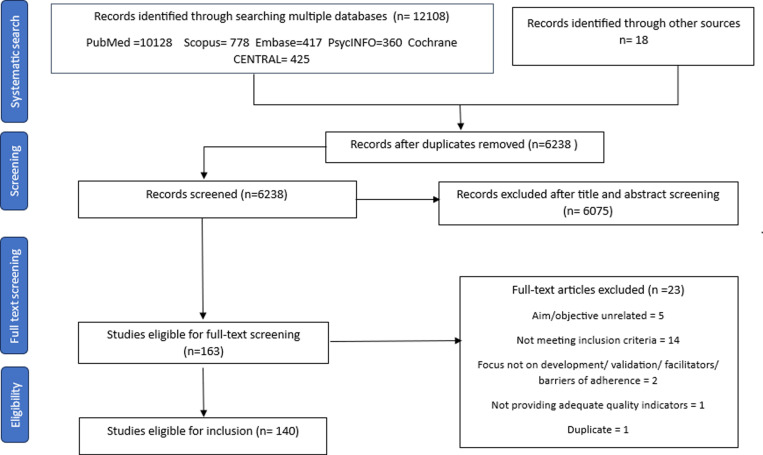
Results: Our study included 140 articles, identifying 57 medication adherence scales. These scales, developed using qualitative methods (10.8%), literature review (32.4%), and mixed methods (45.9%), primarily focus on behavior, often neglecting cost-related non-adherence, self-efficacy, and systemic barriers. Psychometric findings varied widely, reflecting heterogeneity in study designs and scale development approaches. Many scales lack validation in diverse settings, underscoring the need for comprehensive, context-sensitive tools.
Conclusion: This scoping review highlights gaps in existing medication adherence scales for NCDs, particularly their limited consideration of socioeconomic and cultural factors and incomplete adherence assessment. Future research should focus on developing more holistic, contextually relevant adherence scales that integrate these dimensions. Strengthening adherence measurement methodologies can enhance patient-centered care, inform policy interventions, and improve health outcomes.
Copyright: © 2025 Jose et al. This is an open access article distributed under the terms of the Creative Commons Attribution License, which permits unrestricted use, distribution, and reproduction in any medium, provided the original author and source are credited.
Conflict of interest statement
The authors have declared that no competing interests exist.
References
-
- Non communicable diseases. [2023 Dec 13]. https://www.who.int/news-room/fact-sheets/detail/noncommunicable-diseases
-
- Omotayo O, Maduka CP, Muonde M, Olorunsogo TO, Ogugua JO. The rise of non-communicable diseases: A global health review of challenges and prevention strategies. Int Med Sci Res J. 2024;4(1):74–88.
-
- Miranda SAD, Aguilar RR. Related factors with NCD in developing countries: Economic, diet and risk factors dimensions. EAI Endorsed Transactions on Pervasive Health Technologies. 2024. [2024 Dec 9];10. Available from: https://publications.eai.eu/index.php/phat/article/view/3499
Publication types
MeSH terms
LinkOut - more resources
Full Text Sources
