


A systematic review and meta-analysis of the diagnostic accuracy after preimplantation genetic testing for aneuploidy
- PMID: 40367147
- PMCID: PMC12077728
- DOI: 10.1371/journal.pone.0321859
A systematic review and meta-analysis of the diagnostic accuracy after preimplantation genetic testing for aneuploidy
Abstract
Objective: Aneuploidy accounts for many pregnancy failures and congenital anomalies. Preimplantation genetic testing for aneuploidy (PGT-A) is a screening test applied to embryos created from in vitro fertilization to diminish the chance of an aneuploid conception. The rate of misdiagnosis for both false aneuploidy (false positive) and false euploidy (false negative) test results is unknown. The objective of this study was to determine the rate of misclassification of both aneuploidy and euploidy after PGT-A.
Data sources: We conducted a systematic review and meta-analysis. We searched Medline, Embase, Cochrane Central, CINAHL and WHO Clinical Trials Registry from inception until April 10, 2024. The protocol was registered in International Prospective Register of Systematic Reviews (PROSPERO CRD 42020219074).
Methods of study selection: We included studies that conducted either a pre-clinical validation of the genetic platform for PGT-A using a cell line, studies that compared the embryo biopsy results to those from the whole dissected embryo or its inner cell mass (WE/ICM), and studies that compared the biopsy results to prenatal or postnatal genetic testing.
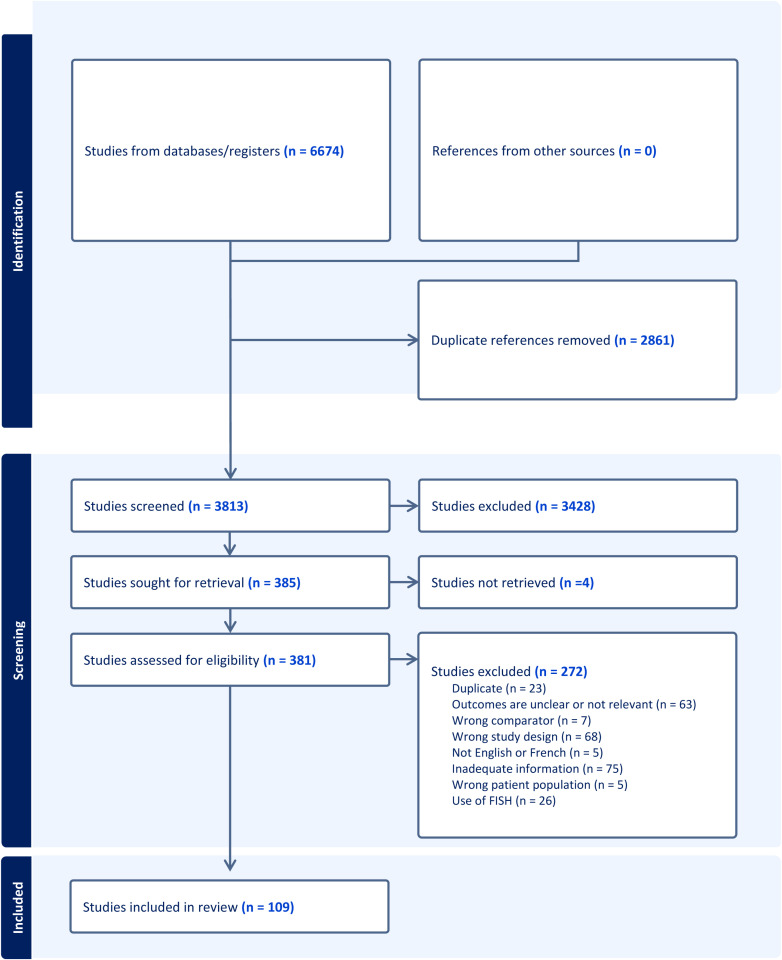
Tabulation, integration, and results: Two independent reviewers extracted true and false positives and negatives comparing biopsy results to the reference standard (known karyotype, WE/ICM, pregnancy outcome). For preclinical studies, the main outcome was the positive and negative predictive values. Misdiagnosis rate was the outcome for pregnancy outcome studies. The electronic search yielded 6674 citations, of which 109 were included. For WE/ICM studies (n=40), PPV was 89.2% (95% CI 83.1-94.0) and NPV was 94.2% (95% CI 91.1-96.7, I2=42%) for aneuploid and euploid embryos, respectively. The PPV for mosaic embryos of either a confirmatory mosaic or aneuploid result was 52.8% (95% CI 37.9-67.5). For pregnancy outcome studies (n=43), the misdiagnosis rate after euploid embryo transfer was 0.2% (95% CI 0.0-0.7%, I2=65%). However, the rate for mosaic transfer, with a confirmatory euploid pregnancy outcome, was 21.7% (95% CI: 9.6-36.9, I2=95%).
Conclusion: The accuracy of an aneuploid result from PGT-A is excellent and can be relied upon as a screening tool for embryos to avoid aneuploid pregnancies. Similarly, the misdiagnosis rate after euploid embryo transfer is less than 1%. However, there is a significant limitation in the accuracy of mosaic embryos.
Copyright: © 2025 Bacal et al. This is an open access article distributed under the terms of the Creative Commons Attribution License, which permits unrestricted use, distribution, and reproduction in any medium, provided the original author and source are credited.
Conflict of interest statement
The authors have declared that no competing interests exist.
Figures


References
-
- Maxwell SM, Colls P, Hodes-Wertz B, McCulloh DH, McCaffrey C, Wells D, et al.. Why do euploid embryos miscarry? A case–control study comparing the rate of aneuploidy within presumed euploid embryos that resulted in miscarriage or live birth using next-generation sequencing. Fertil Steril. 2016;106(6):1414-1419.e5. doi: 10.1016/j.fertnstert.2016.08.017 - DOI - PubMed
Publication types
MeSH terms
LinkOut - more resources
Full Text Sources
Medical
Research Materials
Miscellaneous
