


Origin, trophic transfer and recycling of particulate organic matter in two upwelling bays of Humboldt Current System: Insights from compound-specific isotopic compositions of amino acids
- PMID: 40367205
- PMCID: PMC12077699
- DOI: 10.1371/journal.pone.0306674
Origin, trophic transfer and recycling of particulate organic matter in two upwelling bays of Humboldt Current System: Insights from compound-specific isotopic compositions of amino acids
Abstract
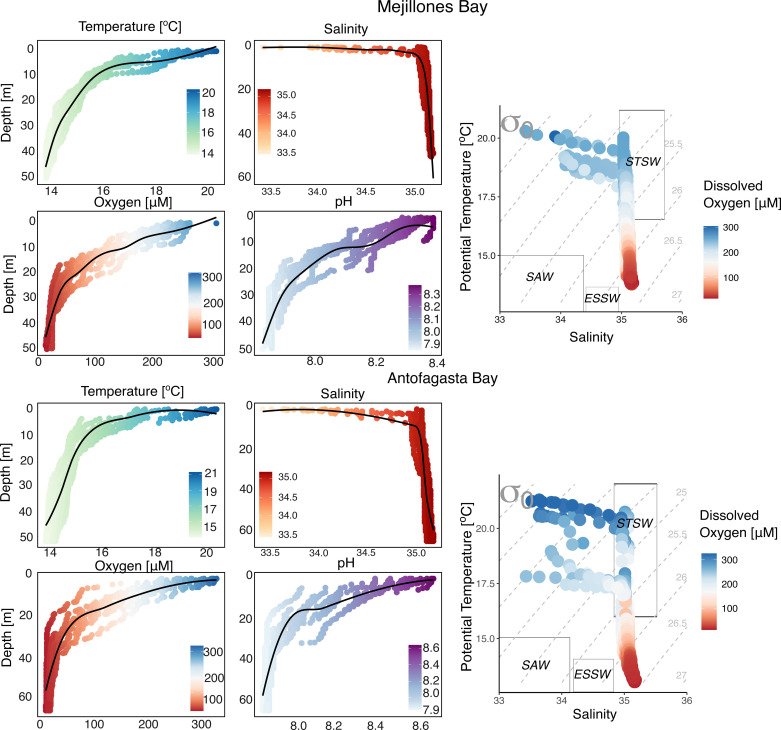
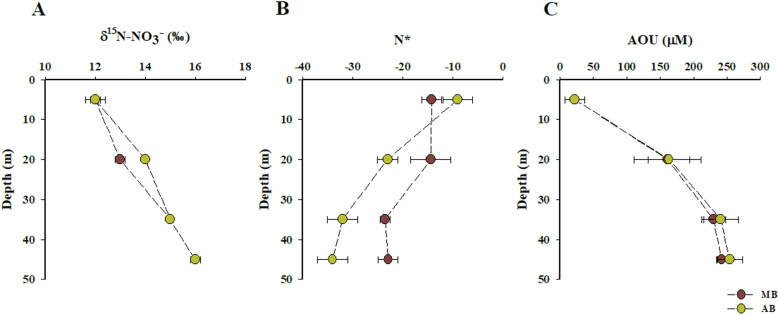
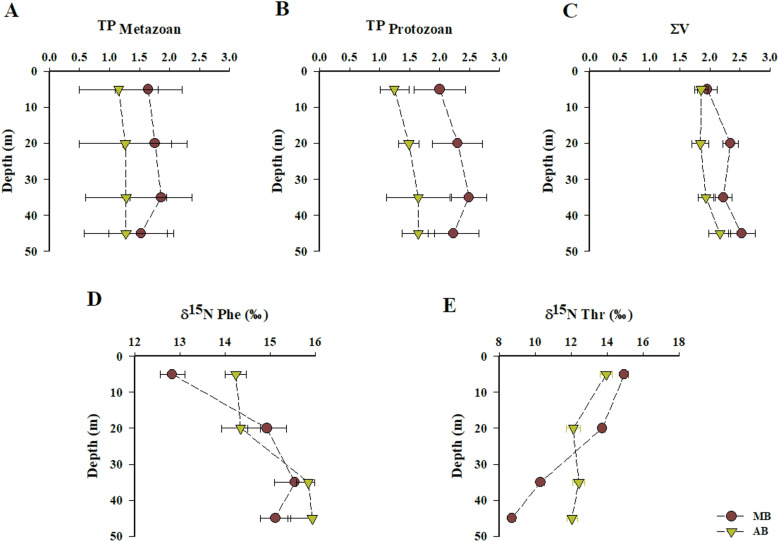
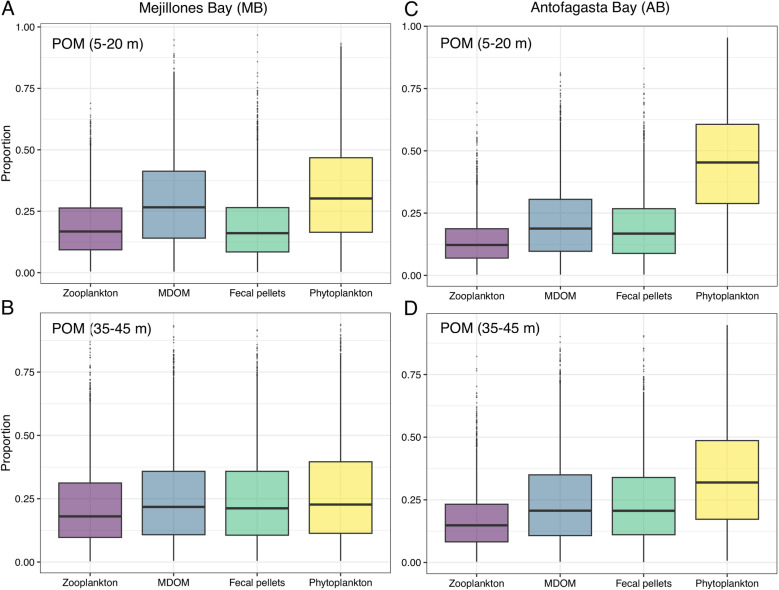
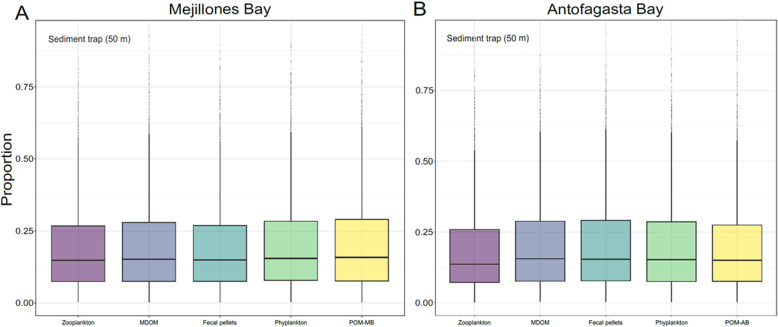
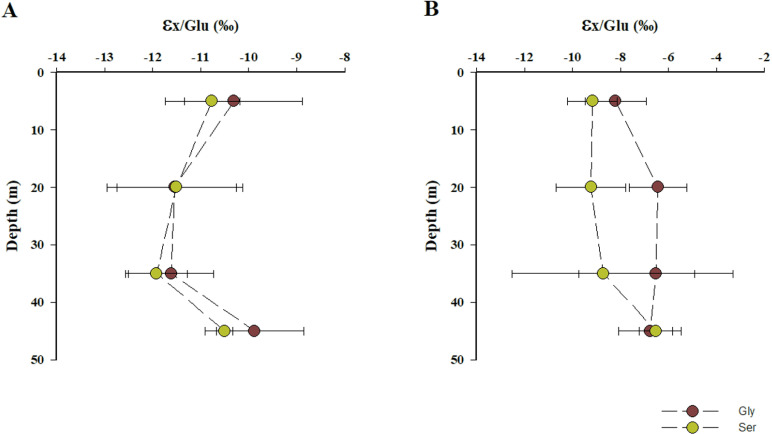
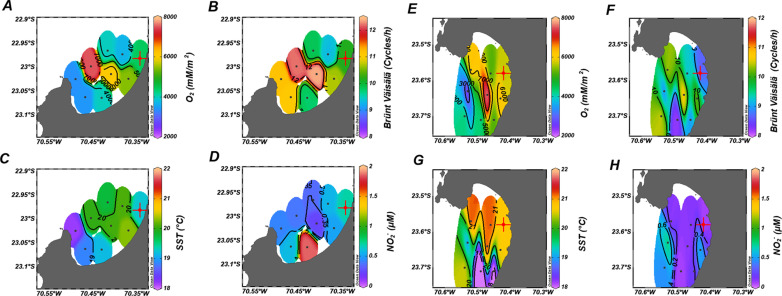
The Chilean upwelling bays are highly productive ecosystems shaped by their interactions with the open ocean. Although significant knowledge exists regarding their hydrodynamic and ecological processes, the spatial dynamics of trophic transfer and heterotrophic resynthesis of organic matter remain insufficiently understood. To address these knowledge gaps, we conducted a compound-specific isotope analysis of amino acids (CSIAA) on suspended and sinking particulate organic matter from Mejillones and Antofagasta bays, two oceanographic environments characterized by contrasting hydrodynamic conditions and topographic orientations. In Mejillones Bay, the CSIAA trophic positions for metazoan (1.7 ± 0.5) and protozoan (2.3 ± 0.3) were significantly higher compared to those in Antofagasta Bay (metazoans: 1.3 ± 0.6; protozoans: 1.5 ± 0.3), highlighting protozoans as primary trophic vectors. MixSIAR analysis indicated that phytoplankton is a key source of particulate organic matter in both bays; however, Mejillones Bay exhibited a greater proportion of microbially degraded organic matter. Enhanced heterotrophic resynthesis in Mejillones Bay (ΣV: 1.9-2.5) was associated with lower oxygen levels, increased concentrations of NO₂ ⁻ , and heightened stratification of the water column. Additionally, depth-dependent variations in δ15N for phenylalanine and threonine indicated a greater solubilization of particles, which contributed to a reduction in the export of particulate organic matter (averaging 9 ± 2 mg C/m²/d). These findings underscore the critical role of the intricate interactions between the bay's topographic features and the physical and biological processes that ultimately influence the cycling trajectories of particulate organic matter in upwelling bays.
Copyright: © 2025 Srain et al. This is an open access article distributed under the terms of the Creative Commons Attribution License, which permits unrestricted use, distribution, and reproduction in any medium, provided the original author and source are credited.
Conflict of interest statement
The authors have declared that no competing interests exist.
Figures

References
-
- Bakun A.Global climate change and intensification of coastal ocean upwelling. Science. 1990. - PubMed
-
- Pauly D, Christensen V. Primary production required to sustain global fisheries. Nature. 1995;
-
- Carr ME, Kearns EJ. Production regimes in four Eastern Boundary Current systems. Deep Res Part II Top Stud Oceanogr. 2003.
-
- Escribano R, Rosales SA, Blanco JL. Understanding upwelling circulation off Antofagasta (northern Chile): A three-dimensional numerical-modeling approach. Cont Shelf Res. 2004.
-
- Blanco JL, Thomas AC, Carr ME, Strub PT. Seasonal climatology of hydrographic conditions in the upwelling region off northern Chile. J Geophys Res Ocean. 2001.
MeSH terms
Substances
LinkOut - more resources
Full Text Sources
