


Therapeutic and diagnostic potential of extracellular vesicle (EV)-mediated intercellular transfer of mitochondria and mitochondrial components
- PMID: 40367392
- PMCID: PMC12078269
- DOI: 10.1177/0271678X251338971
Therapeutic and diagnostic potential of extracellular vesicle (EV)-mediated intercellular transfer of mitochondria and mitochondrial components
Abstract
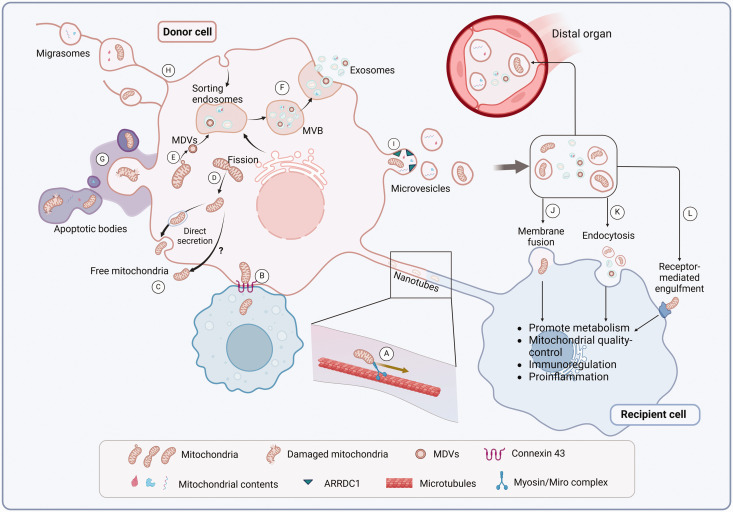
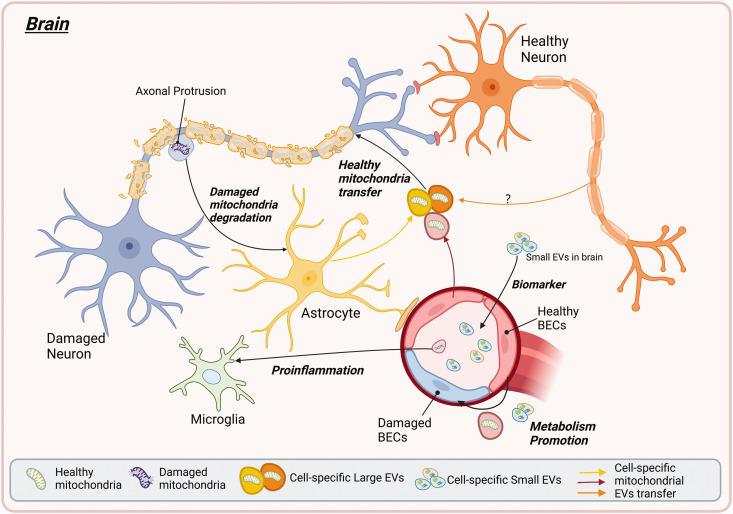
Extracellular vesicles (EVs) facilitate the transfer of biological materials between cells throughout the body. Mitochondria, membrane-bound organelles present in the cytoplasm of nearly all eukaryotic cells, are vital for energy production and cellular homeostasis. Recent studies highlight the critical role of the transport of diverse mitochondrial content, such as mitochondrial DNA (mt-DNA), mitochondrial RNA (mt-RNA), mitochondrial proteins (mt-Prots), and intact mitochondria by small EVs (<200 nm) and large EVs (>200 nm) to recipient cells, where these cargos contribute to cellular and mitochondrial homeostasis. The interplay between EVs and mitochondrial components has significant implications for health, metabolic regulation, and potential as biomarkers. Despite advancements, the mechanisms governing EV-mitochondria crosstalk and the regulatory effect of mitochondrial EVs remain poorly understood. This review explores the roles of EVs and their mitochondrial cargos in health and disease, examines potential mechanisms underlying their interactions, and emphasizes the therapeutic potential of EVs for neurological and systemic conditions associated with mitochondrial dysfunction.
Keywords: Extracellular vesicles; energy metabolism; mitochondria; mitochondrial components.
Conflict of interest statement
The author(s) declared no potential conflicts of interest with respect to the research, authorship, and/or publication of this article.
Figures
References
Publication types
Grants and funding
LinkOut - more resources
Full Text Sources
