


Mechanistic strategies for secondary prevention of developmental and epileptic encephalopathy in children with tuberous sclerosis complex
- PMID: 40367637
- PMCID: PMC12141942
- DOI: 10.1016/j.ebiom.2025.105740
Mechanistic strategies for secondary prevention of developmental and epileptic encephalopathy in children with tuberous sclerosis complex
Abstract
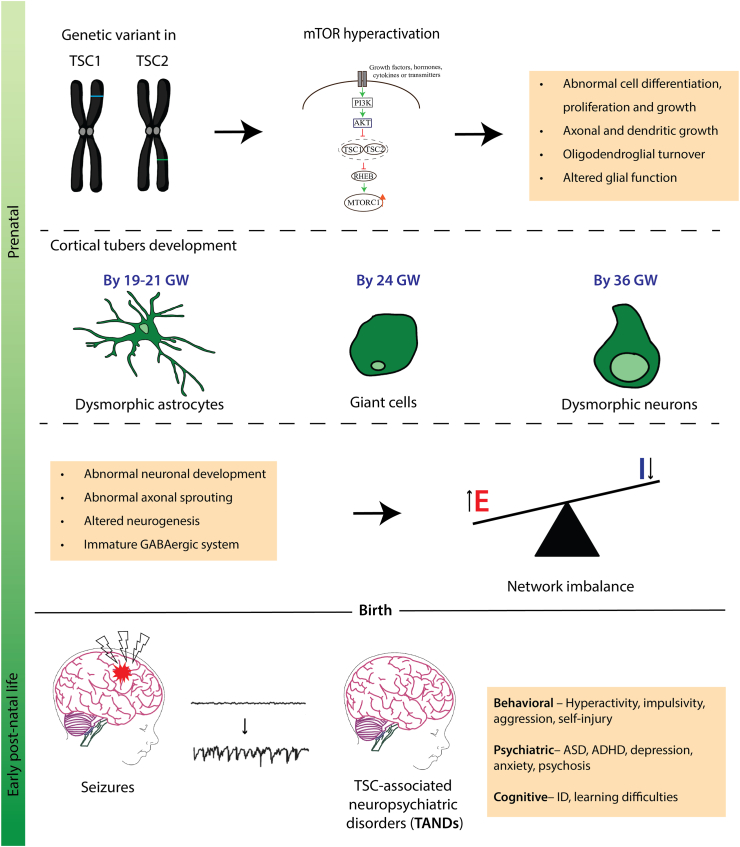
Tuberous sclerosis complex (TSC) is an autosomal dominant disorder caused by pathogenic variants in TSC1 or TSC2, leading to mTOR pathway dysregulation and a spectrum of systemic and neurological manifestations. Tuberous Sclerosis Complex (TSC) is a multisystem genetic disorder frequently associated with early-onset, drug-resistant epilepsy, intellectual disability, and autism spectrum disorder-collectively known as TSC-associated developmental and epileptic encephalopathy (DEE). Advances in prenatal diagnostics and biomarker research now enable presymptomatic identification of high-risk infants. This review aims to synthesize current evidence on biomarker-informed, mechanism-based strategies for secondary prevention of DEE in TSC, offering a framework for personalized early interventions. Biomarkers, such as interictal epileptiform discharges, pathogenic TSC2 variants, and advanced neuroimaging metrics, predict epilepsy risk and neurodevelopmental trajectories. Preventive approaches include early initiation of vigabatrin and mTOR inhibitors, which show potential in reducing epilepsy severity and improving outcomes. Emerging strategies, including gene therapy, multi-omic profiling, and environmental enrichment, offer promise for disease modification. By linking predictive biomarkers to disease-modifying strategies, this review outlines a proactive and personalised approach to prevent or mitigate TSC-associated DEE. These insights help advance clinical decision-making and promote a shift toward precision prevention in paediatric epilepsy.
Keywords: Biomarkers and precision medicine; Developmental and epileptic encephalopathy (DEE); Presymptomatic intervention; Tuberous sclerosis complex (TSC); mTOR pathway dysregulation.
Copyright © 2025 The Authors. Published by Elsevier B.V. All rights reserved.
Conflict of interest statement
Declaration of interests NS received payment or honoraria for lectures, presentations, speakers’ bureaus, manuscript writing or educational events from GW Pharma, BioMarin, Arvelle, Marinus, Takeda, Eisai, Biomarin, Livanova, Sanofi, Zogenix, Jazz, UCB, and received support for attending meetings and/or travel from UCB and Jazz. EA received grant from ZonMw, Programme Translational Research no. 95105004. EA had consulting fees from UCB and Nutricia. All other authors declares no competing interests.
Figures
References
Publication types
MeSH terms
Substances
LinkOut - more resources
Full Text Sources
Medical
Miscellaneous
