


Differential memory enrichment of cytotoxic CD4 T cells in Parkinson's disease patients reactive to α-synuclein
- PMID: 40368950
- PMCID: PMC12078614
- DOI: 10.1038/s41531-025-00981-6
Differential memory enrichment of cytotoxic CD4 T cells in Parkinson's disease patients reactive to α-synuclein
Abstract
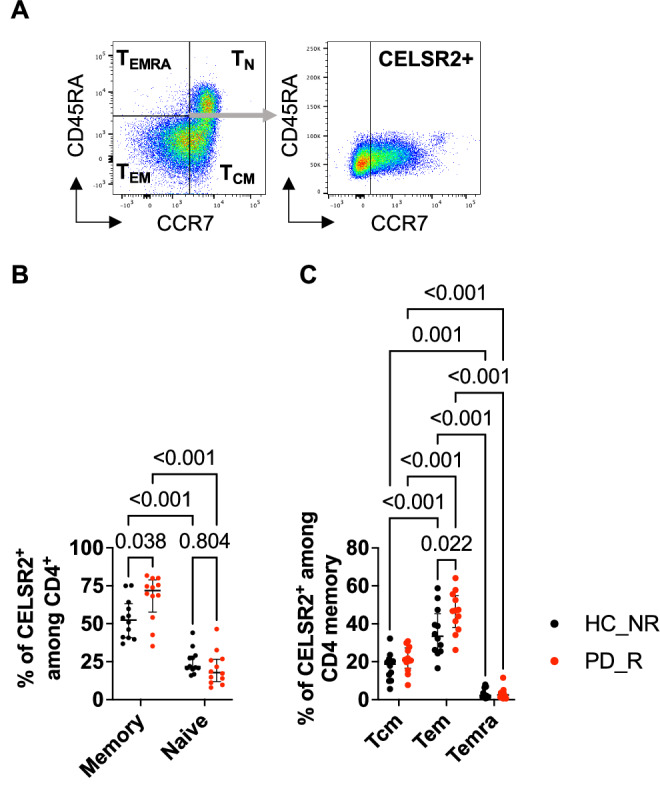
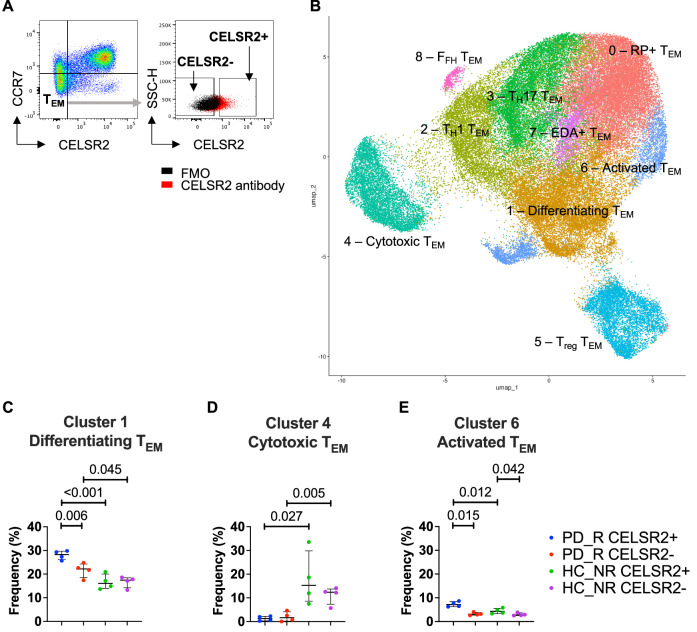
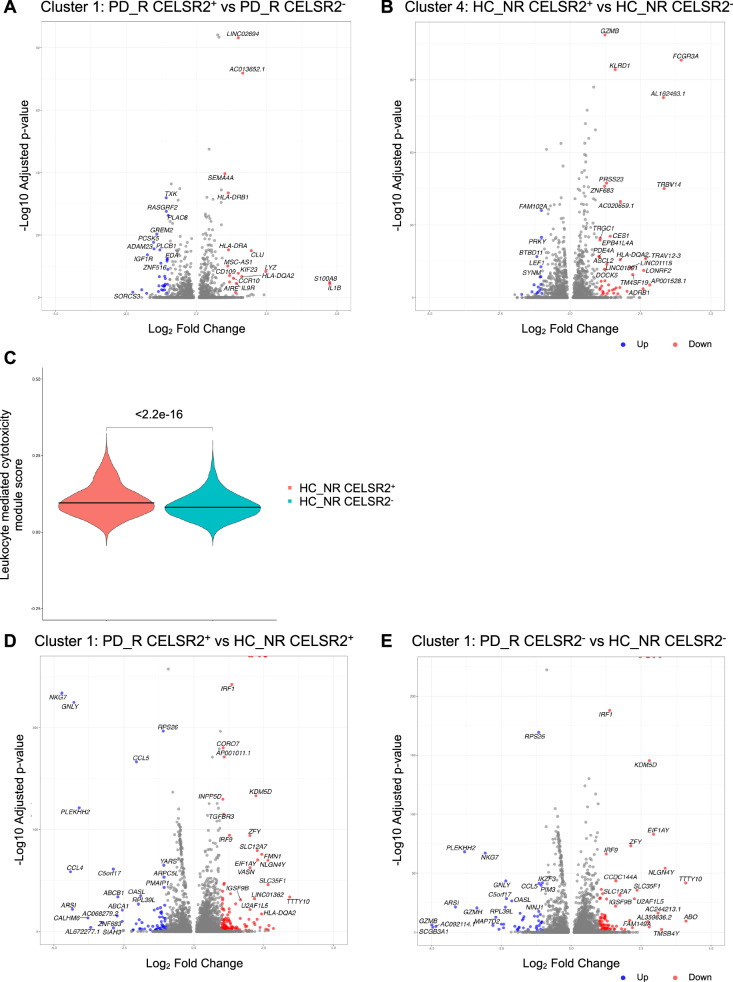
Parkinson's disease (PD) is a complex neurodegenerative disease with a largely unknown etiology. Although the loss of dopaminergic neurons in the substantia nigra pars compacta is the pathological hallmark of PD, neuroinflammation also plays a fundamental role in PD pathology. We have previously reported that PD patients have increased frequencies of T cells reactive to peptides from α-synuclein (α-syn). However, not all PD participants respond to α-syn. Furthermore, we have previously found that CD4 T cells from PD participants responding to α-syn (PD_R) are transcriptionally distinct from PD participants not responding to α-syn (PD_NR). To gain further insight into the pathology of PD_R participants, we investigated surface protein expression of 11 proteins whose genes had previously been found to be differentially expressed when comparing PD_R and healthy control participants not responding to α-syn (HC_NR). We found that Cadherin EGF LAG seven-pass G-type receptor 2 (CELSR2) was expressed on a significantly higher proportion of CD4 effector memory T cells (TEM) in PD_R compared to HC_NR. Single-cell RNA sequencing analysis of cells expressing or not expressing CELSR2 revealed that PD_R participants have elevated frequencies of activated TEM subsets and an almost complete loss of cytotoxic TEM cells. Flow cytometry analyses confirmed that Granulysin+ CD4 cytotoxic TEM cells are reduced in PD_R. Taken together, these results provide further insight into the perturbation of T cell subsets in PD_R, and highlights the need for further investigation into the role of Granulysin+ CD4 cytotoxic TEM in PD pathology.
© 2025. The Author(s).
Conflict of interest statement
Competing interests: The authors declare no competing interests.
Figures

References
-
- PAHO/WHO. Burden of neurological conditions. https://www.paho.org/en/enlace/burden-neurological-conditions (2022).
-
- Soto, C. Unfolding the role of protein misfolding in neurodegenerative diseases. Nat. Rev. Neurosci.4, 49–60 (2003). - PubMed
-
- Jankovic, J. Parkinson’s disease: clinical features and diagnosis. J. Neurol. Neurosurg. Psychiatry79, 368–376 (2008). - PubMed
Grants and funding
LinkOut - more resources
Full Text Sources
Research Materials
Miscellaneous
