


A non-randomized study of sexual health education on the sexual function of primigravid women
- PMID: 40369570
- PMCID: PMC12080019
- DOI: 10.1186/s12905-025-03735-x
A non-randomized study of sexual health education on the sexual function of primigravid women
Abstract
Background: Sexual function is a particularly important aspect of pregnant women's lives that can affect mental health and family cohesion.
Aim: This study aimed to determine the effect of sexual health education on sexual function in primigravida women.
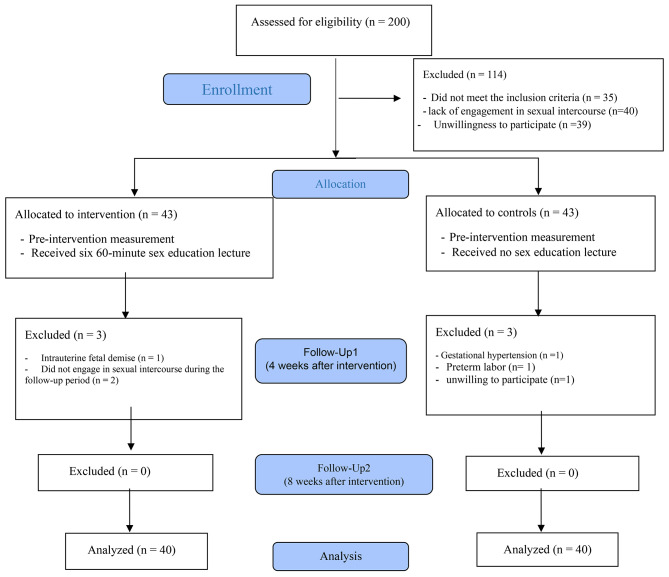
Methods: In a non-randomized study, primigravida women were divided into an intervention group (n = 43) and a control group (n = 43). The intervention group participated in six 60-minute sex education sessions, while the control group received no intervention. Both groups were monitored for 8 weeks. Sexual function was evaluated using the Female Sexual Function Index (FSFI) questionnaire before the intervention, at 4 weeks, and at 8 weeks post-intervention.
Results: Ultimately, data from 80 patients were analyzed. The two groups did not differ significantly in terms of demographic and pre-intervention clinical characteristics. At the 4-week mark post-intervention, there was no statistically significant difference observed in the average score of the overall index of sexual performance between the pregnant women in the two groups. However, upon comparing sexual function before intervention and at 4 and 8 weeks after intervention, significant improvements were noted in desire, arousal, lubrication, orgasm, satisfaction, and pain subscale scores within the intervention group (p < 0.001). Conversely, in the control group, desire (psychological interest or motivation), arousal (physiological and emotional readiness), lubrication, and satisfaction subscale scores decreased, while the pain subscale score slightly increased between pre-intervention and the 8-week follow-up. The mean difference in the overall FSFI score before and 8 weeks after the intervention was notably higher in the intervention group (7.37 points) compared to the control group (-0.87 points (p < 0.001).
Conclusion: The findings of this study highlight the transformative impact of sexual health education during pregnancy. By dispelling misconceptions and enriching knowledge, such interventions have the potential to enhance the sexual function of pregnant women significantly. These results underscore the effectiveness of integrating sexual health education into routine prenatal care, emphasizing its pivotal role in promoting the overall well-being of primiparous pregnant women.
Trial registration: This study retrospectively registered with the Iranian Clinical of Trials Registry with IRCT registration number IRCT20090810002324N20 (08-04-2025) ( https://irct.behdasht.gov.ir/trial/82382 ).
Keywords: Pregnant women; Sexual function; Sexual health education.
© 2025. The Author(s).
Conflict of interest statement
Declarations. Ethics approval and consent to participate: The study protocol was in accordance with the declaration of Helsinki and was approved by the Research Ethics Committee of The IUMS, Tehran, Iran (ethics code: 1398.734). Informed written consent was obtained from all subjects before the start of the study and they were fully informed about the study objectives and methodology. Moreover, the participants ensured the confidentiality of their information, and they were allowed to leave the study at any time. Consent for publication: Not applicable. Competing interests: The authors declare no competing interests.
References
MeSH terms
LinkOut - more resources
Full Text Sources
Medical
