


In-silico discovery of type-2 diabetes-causing host key genes that are associated with the complexity of monkeypox and repurposing common drugs
- PMID: 40370100
- PMCID: PMC12078936
- DOI: 10.1093/bib/bbaf215
In-silico discovery of type-2 diabetes-causing host key genes that are associated with the complexity of monkeypox and repurposing common drugs
Abstract
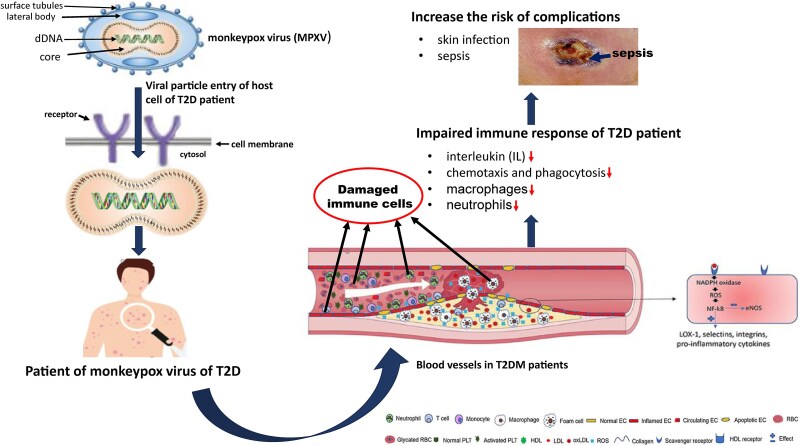
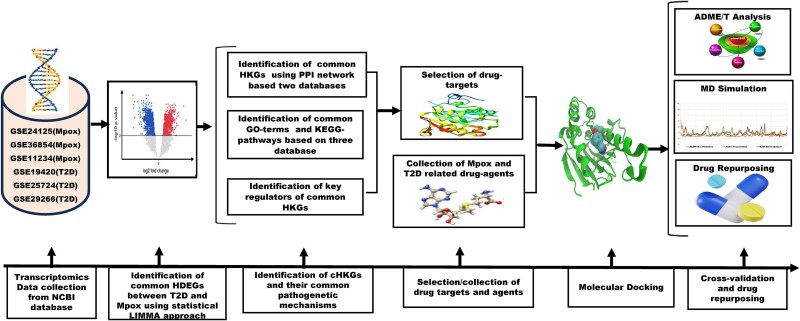
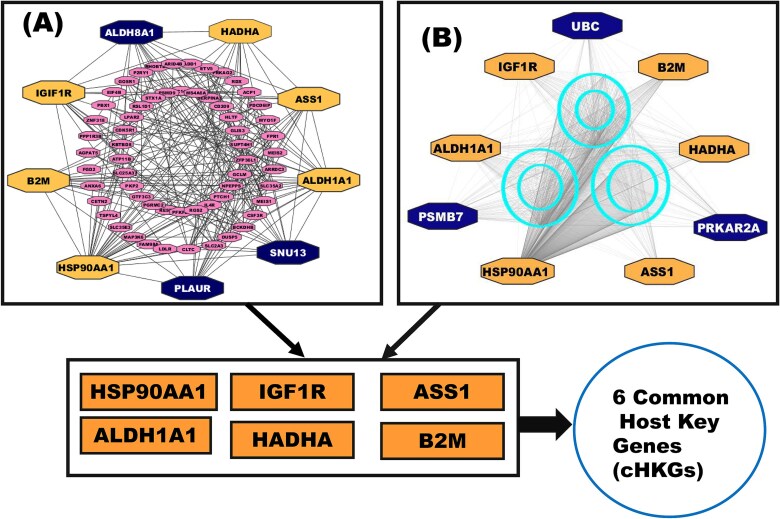
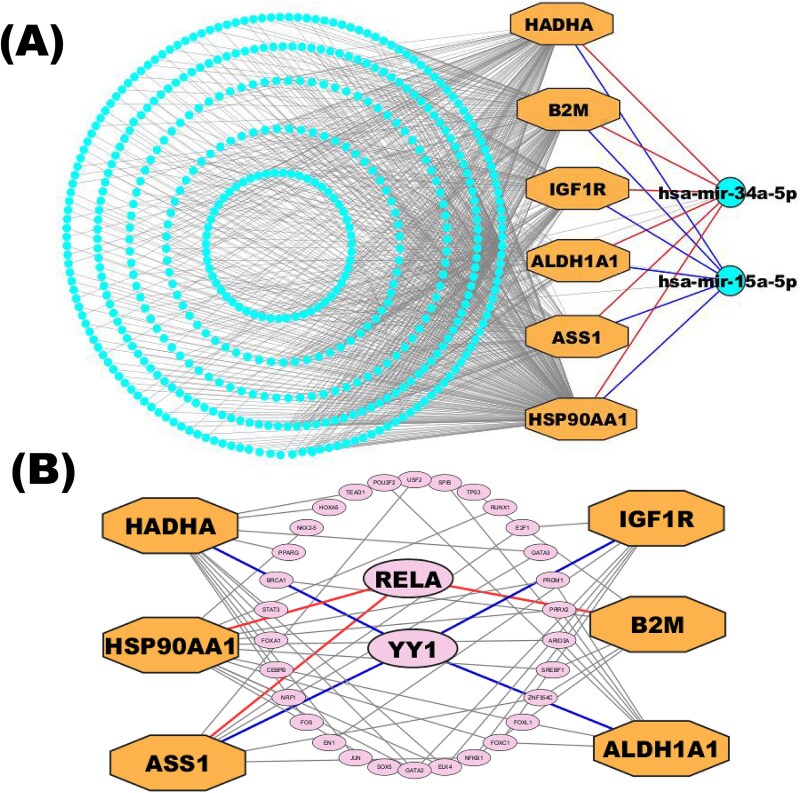
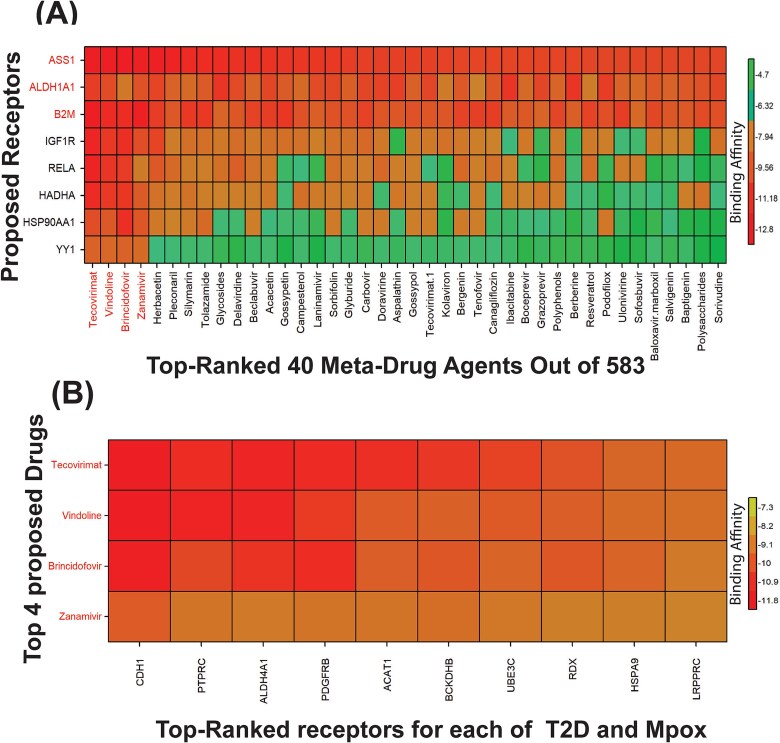
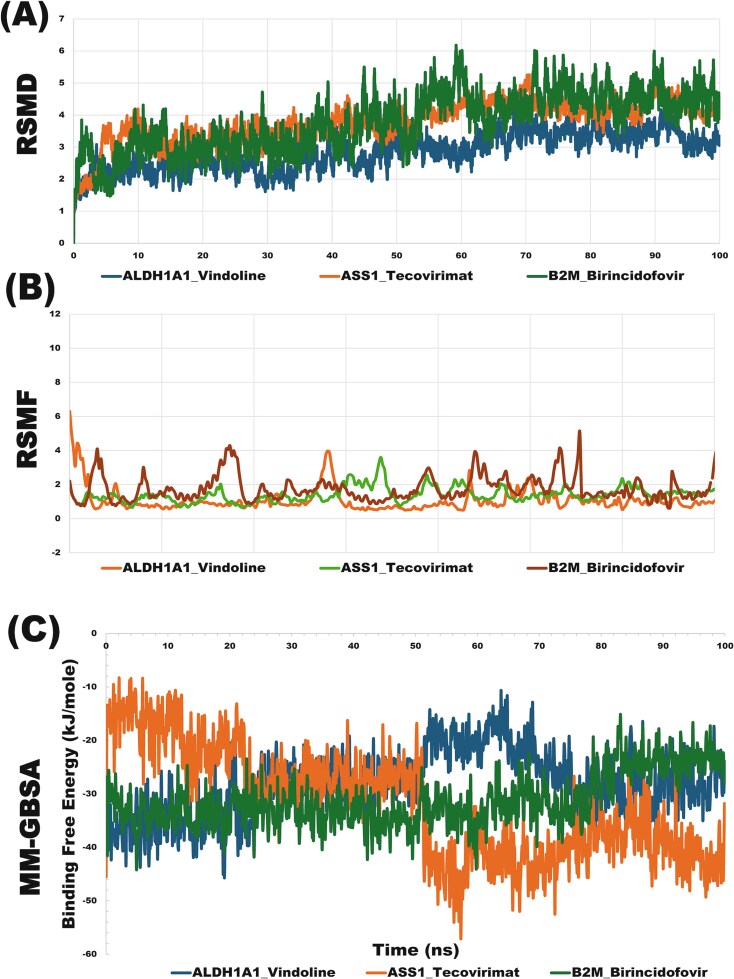
Monkeypox (Mpox) is a major global human health threat after COVID-19. Its treatment becomes complicated with type-2 diabetes (T2D). It may happen due to the influence of both disease-causing common host key genes (cHKGs). Therefore, it is necessary to explore both disease-causing cHKGs to reveal their shared pathogenetic mechanisms and candidate drugs as their common treatments without adverse side effect. This study aimed to address these issues. At first, 3 transcriptomics datasets for each of Mpox and 6 T2D datasets were analyzed and found 52 common host differentially expressed genes (cHDEGs) that can separate both T2D and Mpox patients from the control samples. Then top-ranked six cHDEGs (HSP90AA1, B2M, IGF1R, ALD1HA1, ASS1, and HADHA) were detected as the T2D-causing cHKGs that are associated with the complexity of Mpox through the protein-protein interaction network analysis. Then common pathogenetic processes between T2D and Mpox were disclosed by cHKG-set enrichment analysis with biological processes, molecular functions, cellular components and Kyoto Encyclopedia of Genes and Genomes pathways, and regulatory network analysis with transcription factors and microRNAs. Finally, cHKG-guided top-ranked three drug molecules (tecovirimat, vindoline, and brincidofovir) were recommended as the repurposable common therapeutic agents for both Mpox and T2D by molecular docking. The absorption, distribution, metabolism, excretion, and toxicity and drug-likeness analysis of these drug molecules indicated their good pharmacokinetics properties. The 100-ns molecular dynamics simulation results (root mean square deviation, root mean square fluctuation, and molecular mechanics generalized born surface area) with the top-ranked three complexes ASS1-tecovirimat, ALDH1A1-vindoline, and B2M-brincidofovir exhibited good pharmacodynamics properties. Therefore, the results provided in this article might be important resources for diagnosis and therapies of Mpox patients who are also suffering from T2D.
Keywords: common drugs and toxicity; monkeypox; statistics and bioinformatics analysis; transcriptomics profiles and common host key genes; type-2 diabetes.
© The Author(s) 2025. Published by Oxford University Press.
Figures
References
-
- D’Souza JN, Adesola RO. Amid COVID-19 and monkeypox: tomato flu outbreak in India. IJS: Glob Health 2023;6:e110. 10.1097/GH9.0000000000000110. - DOI
-
- Centers for Disease Control and Prevention. 2022–2023 Mpox Outbreak Global Map. 2024. [accessed 16 August 2024]. https://www.cdc.gov/poxvirus/mpox/response/2022/world-map.html.
-
- 2022–2023 Mpox Outbreak Global Map Data as of 06 Aug 2024 5:30 PM EDT. https://stacks.cdc.gov/view/cdc/151967/cdc_151967_DS1.pdf.
MeSH terms
LinkOut - more resources
Full Text Sources
Medical
Research Materials
Miscellaneous
