


Unveiling drug resistance pathways in high-grade serous ovarian cancer(HGSOC): recent advances and future perspectives
- PMID: 40370464
- PMCID: PMC12075240
- DOI: 10.3389/fimmu.2025.1556377
Unveiling drug resistance pathways in high-grade serous ovarian cancer(HGSOC): recent advances and future perspectives
Abstract
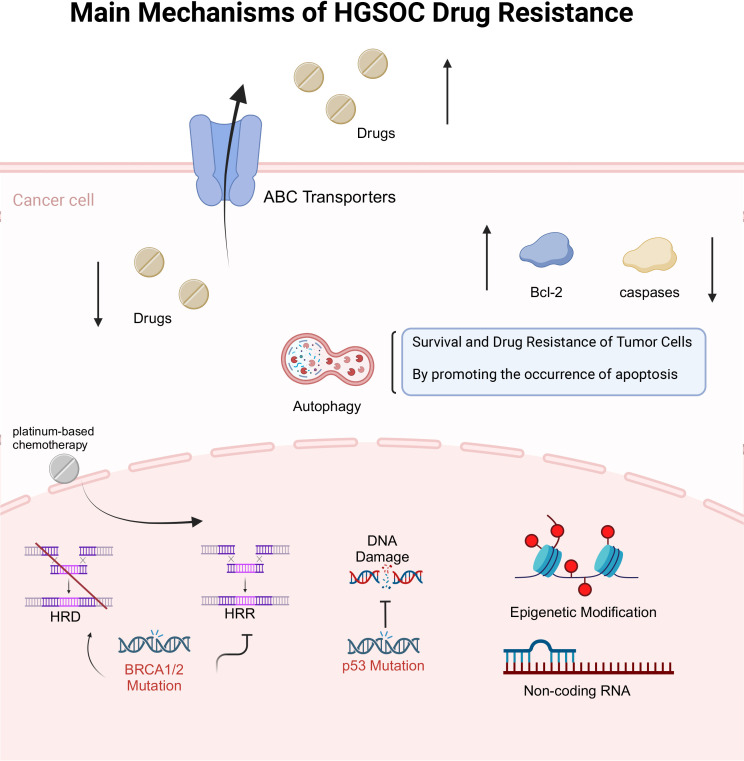
High-Grade Serous Ovarian Carcinoma (HGSOC) represents the most prevalent and lethal subtype of ovarian cancer, with approximately 225,000 new cases reported globally each year and a five-year survival rate of merely 49.1%. The clinical management of HGSOC encounters substantial challenges, primarily attributable to its intricate drug resistance mechanisms, which involve multiple biological processes, including tumor cell heterogeneity, microenvironment remodeling, gene mutations, and drug efflux. This study systematically reviews the most recent advancements in HGSOC drug resistance research, concentrating on the molecular biological foundations of resistance mechanisms, innovative detection strategies, and potential therapeutic approaches. The research indicates that HGSOC drug resistance constitutes a complex process characterized by multifactorial interactions, involving aberrant cell signaling pathways, dynamic alterations in the tumor microenvironment, and specific expressions of molecular markers. In this review, we systematically analyzed and investigated the intricate biological behaviors associated with HGSOC drug resistance, which not only enhances the understanding of disease progression but also provides essential theoretical foundations for the development of more precise and effective targeted therapies. This review firstly illustrated the detailed drug resistance cellular and molecular mechanisms underlying HGSOC chemotherapy, which can pave the way for future studies in HGSOC drug resistance practices.
Keywords: drug resistance mechanisms; high-grade serous ovarian carcinoma (HGSOC); molecular markers; personalized treatment; tumor microenvironment.
Copyright © 2025 Fu, Hu, Li, Lv, Zhao and Li.
Conflict of interest statement
The authors declare that the research was conducted in the absence of any commercial or financial relationships that could be construed as a potential conflict of interest.
Figures

References
-
- Folsom SM, Berger J, Soong TR, Rangaswamy B. Comprehensive review of serous tumors of tubo-ovarian origin: clinical behavior, pathological correlation, current molecular updates, and imaging manifestations. Curr Probl Diagn Radiol. (2023) 52:425–38. doi: 10.1067/j.cpradiol.2023.05.010 - DOI - PubMed
Publication types
MeSH terms
Substances
LinkOut - more resources
Full Text Sources
Medical
