


In vitro electrophysiological characterization of Parkinson's disease: challenges, advances, and future directions
- PMID: 40370660
- PMCID: PMC12075271
- DOI: 10.3389/fnins.2025.1584555
In vitro electrophysiological characterization of Parkinson's disease: challenges, advances, and future directions
Abstract
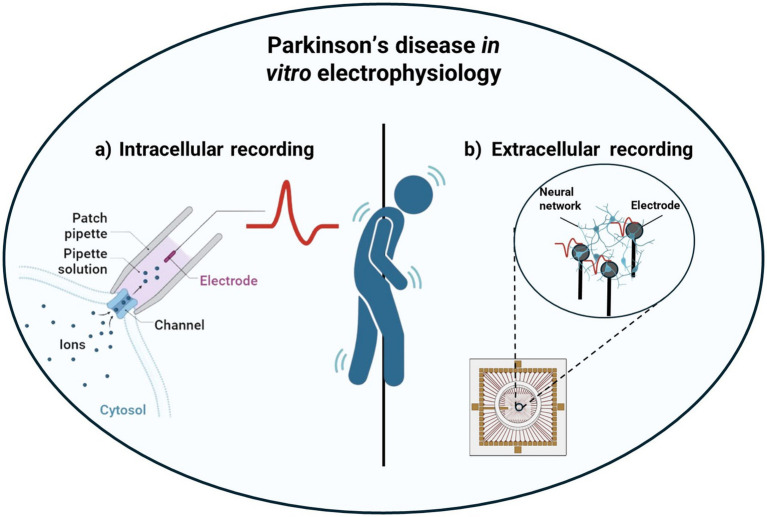
Parkinson's disease is the second most common neurodegenerative disorder, characterized by the progressive loss of dopaminergic neurons in the substantia nigra and the accumulation of α-synuclein aggregates. While significant progress has been made in understanding the genetic and biological aspects of Parkinson's disease, its complex pathophysiology remains poorly understood, and current therapeutic approaches are largely symptomatic. Advanced in vitro models have emerged as essential tools for studying Parkinson's disease related mechanisms and developing new therapeutic strategies. However, the electrophysiological characterization of neurons in these models remains underexplored. This review highlights the importance of employing electrophysiological techniques, such as patch-clamp recordings and microelectrode arrays, in providing critical insights into neuronal dysfunction, synaptic impairments, and network disruptions in Parkinson's disease. The aim is to summarize the key discoveries in the electrophysiological characterization of the pathology and the related progress made in recent years, underlying the main challenges, including the lack of standardized protocols, and the heterogeneity of cellular sources and culture systems. Addressing these limitations is crucial for improving reproducibility and facilitating cross-study comparisons, allowing for a deeper understanding of Parkinson's disease pathophysiology. By refining and standardizing electrophysiological approaches, these efforts will enhance our understanding of Parkinson's disease's underlying mechanisms, ultimately accelerating the discovery of robust biomarkers and the development of more effective therapeutic strategies.
Keywords: Parkinson’s disease; electrophysiology; in vitro models; microelectrode arrays; patch-clamp.
Copyright © 2025 Grasselli, Andolfi, Di Lisa and Pastorino.
Conflict of interest statement
The authors declare that the research was conducted in the absence of any commercial or financial relationships that could be construed as a potential conflict of interest. The author(s) declared that they were an editorial board member of Frontiers, at the time of submission. This had no impact on the peer review process and the final decision.
Figures
References
Publication types
LinkOut - more resources
Full Text Sources
