


Decarbonizing Health Care: Measuring the Carbon Footprint Impact of a National VA Telehealth Program
- PMID: 40371179
- PMCID: PMC12077254
- DOI: 10.1056/CAT.24.0149
Decarbonizing Health Care: Measuring the Carbon Footprint Impact of a National VA Telehealth Program
Abstract
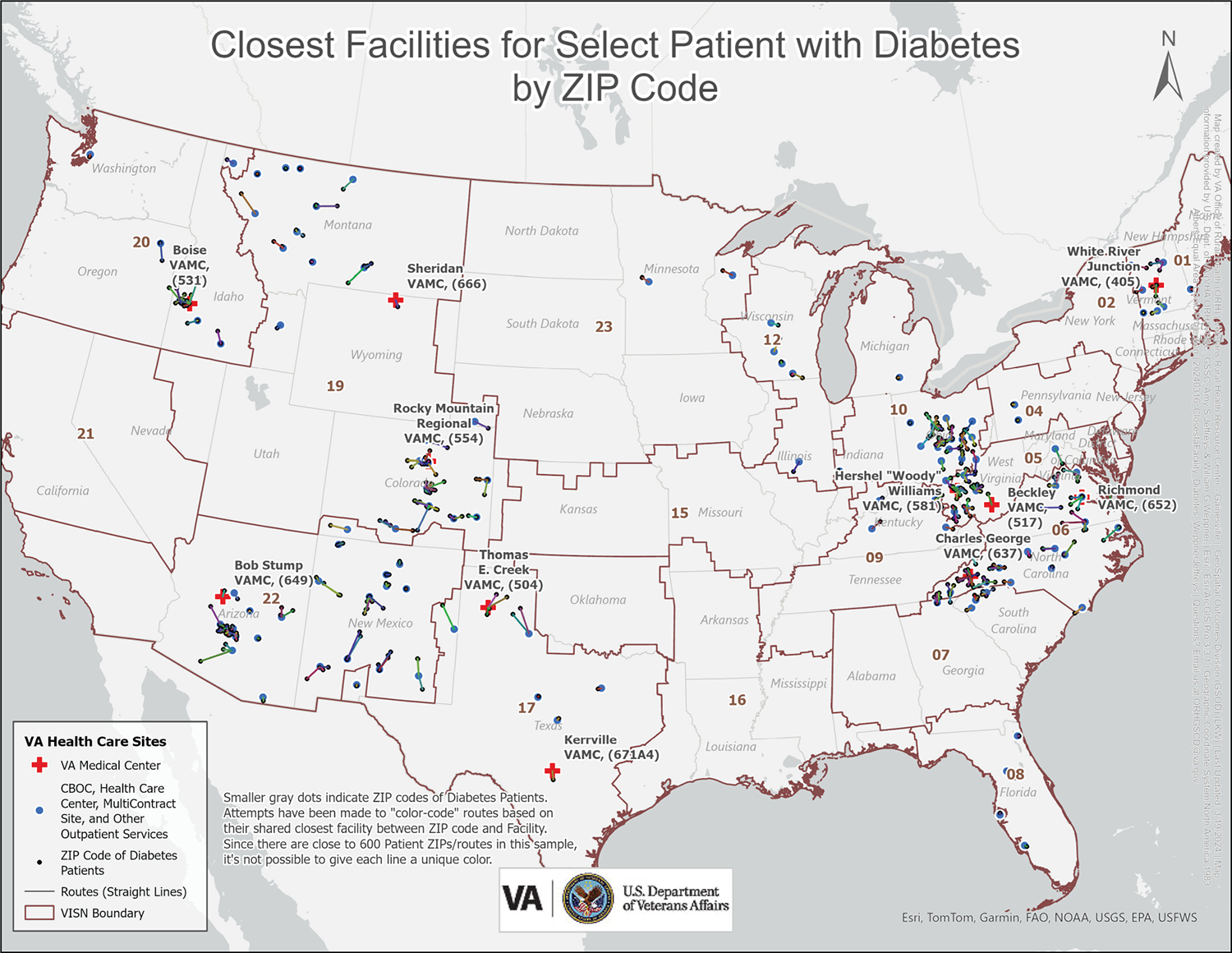
Health care systems are increasingly recognizing the environmental harms generated by medical care and are seeking to reduce their carbon footprints. They can accomplish measurable reductions in greenhouse gas emissions while maintaining high quality and even improving care by pursuing cobenefits - programs that simultaneously reduce environmental harm and benefit patients' health. The authors describe Advanced Comprehensive Diabetes Care (ACDC), an evidence-based telehealth program for diabetes patients in the U.S. Department of Veterans Affairs (VA) system that has concurrently improved patient care and reduced the VA's carbon footprint. Designed for patients with poor diabetes control, the program leverages existing clinical infrastructure to provide nurse-delivered telemonitoring, self-management support, and provider-aided medication management. ACDC has improved patient outcomes while reducing patient travel time, out-of-pocket costs, and greenhouse gas emissions. ACDC served 576 patients between 2017 and 2022. The authors estimate that the program has prevented over 200,000 miles of driving, saving around US$20,000 in gasoline costs for patients and 82 metric tons of carbon dioxide emission compared with equivalent in-person care. ACDC provides a template for improving health outcomes and patient as well as provider satisfaction while saving money and producing measurable reductions in carbon footprint.
Figures
References
-
- Eckelman MJ, Huang K, Lagasse R, Senay E, Dubrow R, Sherman JD. Health care pollution and public health damage in the United States: an update. Health Aff (Millwood) 2020;39:2071–2079. https://pubmed.ncbi.nlm.nih.gov/33284703/. 10.1377/hlthaff.2020.01247 - DOI - PubMed
-
- Atwoli L, Baqui AH, Benfield T, et al. Call for emergency action to limit global temperature increases, restore biodiversity, and protect health. N Eng J Med 2021;385:1134–1137. https://www.nejm.org/doi/10.1056/NEJMe2113200. 10.1056/NEJMe2113200 - DOI - DOI - PubMed
-
- World Health Organization. Climate change — key facts. October 12, 2023. Accessed February 14, 2024. https://www.who.int/news-room/fact-sheets/detail/climate-change-and-health.
-
- Ganatra S, Dani SS, Al-Kindi SG, Rajagopalan S. Health care and climate change: challenges and pathways to sustainable health care. Ann IM 2022;175:1599–1600. https://pubmed.ncbi.nlm.nih.gov/36279542/. 10.7326/M22-1241 - DOI - PubMed
-
- U.S. Department of Health and Human Services. HHS launches pledge initiative to mobilize health care sector to reduce emissions. April 22, 2022. Accessed February 14, 2024. https://www.hhs.gov/about/news/2022/04/22/hhs-launches-pledge-initiative....
Grants and funding
LinkOut - more resources
Full Text Sources
Miscellaneous