


Short-term memory retrieval enhances brain functional connectivity
- PMID: 40371399
- PMCID: PMC12075360
- DOI: 10.3389/fnbeh.2025.1578415
Short-term memory retrieval enhances brain functional connectivity
Abstract
Introduction: Short-term memory poses a significant challenge, involving complex processes of image perception, memory formation, and execution. However, the mechanisms underlying the formation, storage, and execution of short-term memory remain poorly understood.
Methods: In this study, 41 healthy college students participated in a memory challenge test designed to investigate these processes. Functional near-infrared spectroscopy (fNIRS) was employed to measure dynamic changes in hemoglobin concentrations in specific cortical regions, while facial expressions and vital signs were recorded in real-time during the tests.
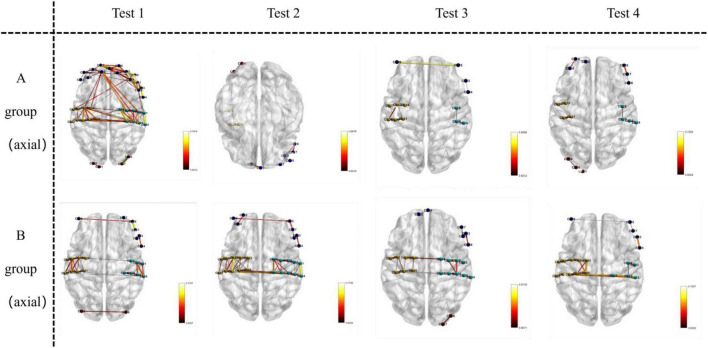
Results: The results revealed heightened activity in the inferior prefrontal gyrus, visual association cortex, pre-motor cortex, and supplementary motor cortex. Functional connectivity between these regions was significantly enhanced during the tasks, and inter-group differences decreased over time. Participants with superior short-term memory exhibited lower levels of negative emotional expressions and higher heart rates compared to those with weaker memory performance. These findings suggest that cortical interconnectivity and adequate cerebral blood oxygenation play critical roles in enhancing short-term memory capacity. This has important implications for education, as it highlights strategies for cultivating attention, training memory skills, and improving memory integration abilities.
Keywords: cognitive neuroscience; fNIRS (functional near infrared spectroscopy); functional connectivity; short-term memory; working memory; young adults.
Copyright © 2025 Duan, Yan, Wang, Wu, Zhang, Shu, Liu, Xu and Han.
Conflict of interest statement
The authors declare that the research was conducted in the absence of any commercial or financial relationships that could be construed as a potential conflict of interest.
Figures




References
LinkOut - more resources
Full Text Sources
