


Trends of antibiotic use for acute upper respiratory infections in Chinese emergency departments and the impact of COVID-19: a cross-sectional study
- PMID: 40375100
- PMCID: PMC12083139
- DOI: 10.1186/s13756-025-01567-w
Trends of antibiotic use for acute upper respiratory infections in Chinese emergency departments and the impact of COVID-19: a cross-sectional study
Abstract
Background: The emergence of Coronavirus Disease 2019 (COVID-19) has impacted antibiotic use; however, studies on antibiotic use for acute upper respiratory infections (AURIs) in Chinese emergency department (ED) settings are still scarce.
Objective: This study aimed to explore trends and patterns in antibiotic use and the impact of COVID-19 in Chinese ED settings.
Methods: A cross-sectional, retrospective analysis was conducted using prescriptions for ED visits due to AURIs through the Hospital Prescription Analysis Cooperative Project Database between 2018 and 2023. We examined patterns of antibiotic use for AURIs and employed an interrupted time series analysis to assess the impact of the COVID-19 pandemic on antibiotic use. The proportion of antibiotic prescriptions adhering to first-line guideline recommendations was also evaluated.
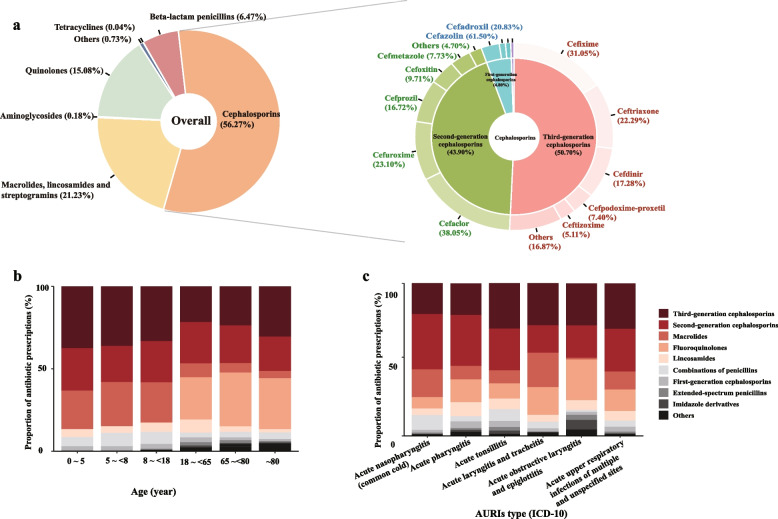
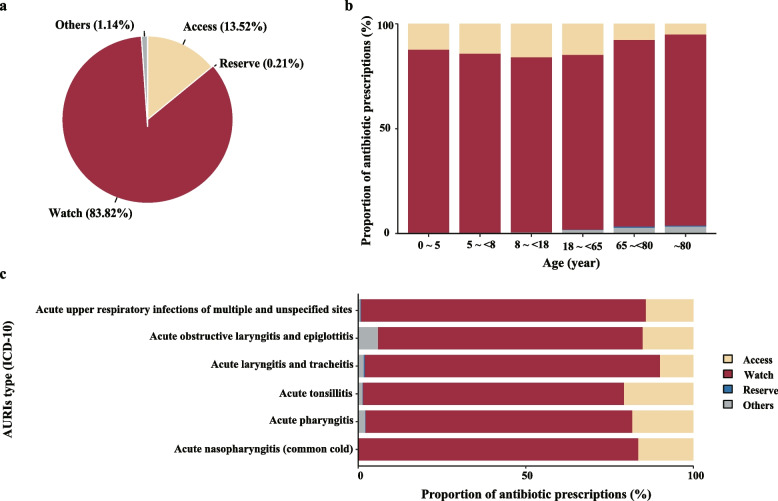
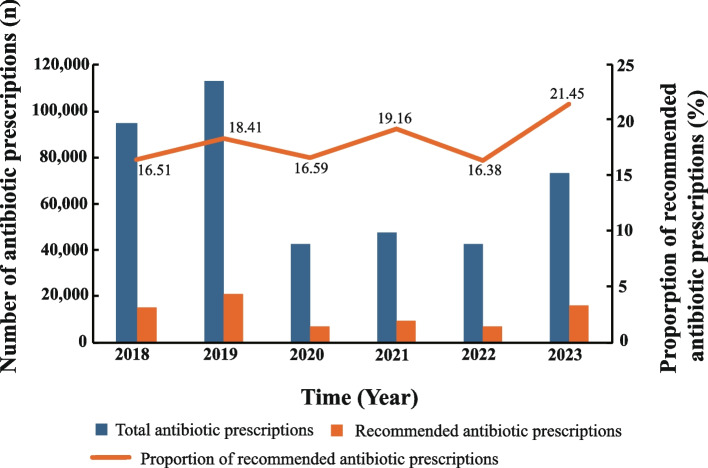
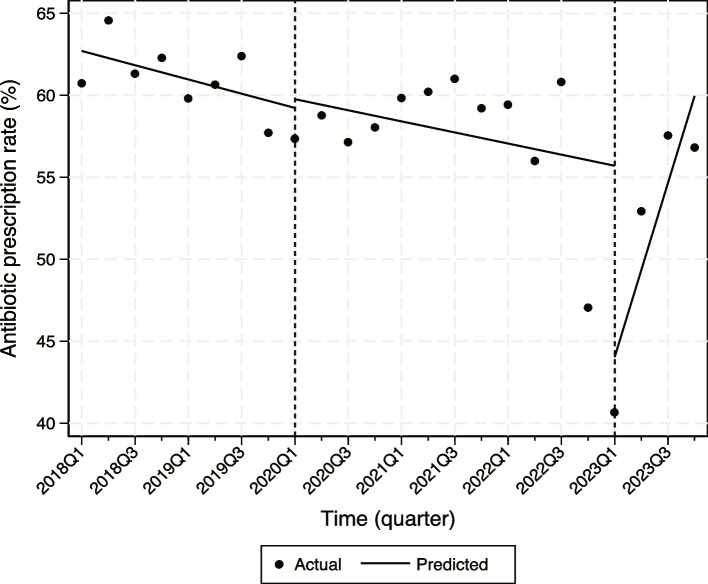
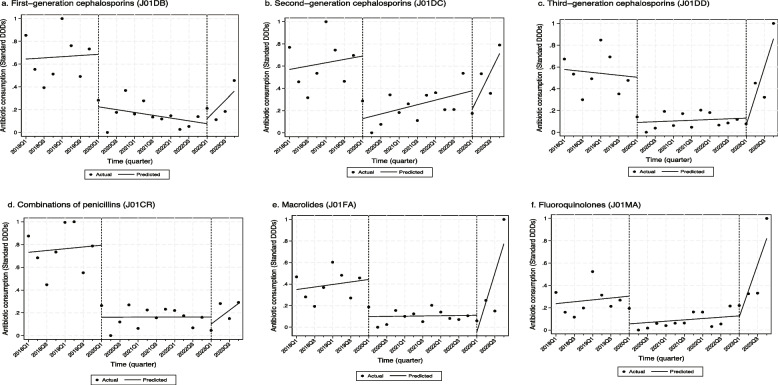
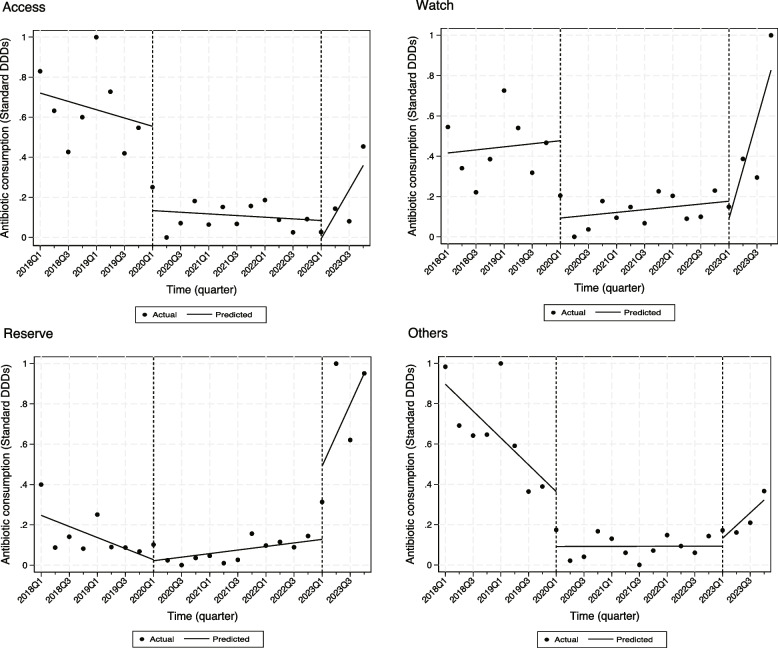
Results: A total of 1,972,270 prescriptions for AURIs from 108 hospitals in EDs were extracted. The antibiotic prescription rate (APR) was 58.44%. The predominant antibiotics prescribed for AURIs were second- and third-generation cephalosporins and azithromycin. Among these prescriptions, only 22.26% adhered to first-line guideline recommendations, while 83.82% involved Watch-group antibiotics. A substantial decrease in antibiotic consumption was observed at the onset of the pandemic, but no significant changes were found in the APR. After the relaxation of anti-COVID-19 measures, both antibiotic consumption and the APR exhibited an upward trend. However, neither returned to pre-pandemic levels.
Conclusion: Antibiotic use for AURIs was prevalent in ED settings, with a predominant use of broad-spectrum and Watch-group antibiotics. After the lifting of pandemic control measures, both antibiotic consumption and the APR exhibited an upward trend, underscoring the need to reinforce antimicrobial stewardship, particular targeting broad-spectrum and Watch-group antibiotic use.
Keywords: Acute upper respiratory infections; Antibiotics; COVID-19; Emergency department; Interrupted time series.
© 2025. The Author(s).
Conflict of interest statement
Declarations. Ethics approval and consent to participate: An ethics review exemption was applicable to this study, as it utilized fully anonymized data obtained from the Hospital Prescription Analysis Cooperative Project Database. Consent to publication: Not applicable. Competing interest: The authors declare no competing interests.
Figures
References
-
- Nair H, Simões EA, Rudan I, Gessner BD, Azziz-Baumgartner E, Zhang JSF, Feikin DR, Mackenzie GA, Moiïsi JC, Roca A, et al. Global and regional burden of hospital admissions for severe acute lower respiratory infections in young children in 2010: a systematic analysis. Lancet. 2013;381(9875):1380–90. - DOI - PMC - PubMed
MeSH terms
Substances
Supplementary concepts
LinkOut - more resources
Full Text Sources
Medical
Miscellaneous
