


Comprehensive evaluation of coagulability using thromboelastography in four patients with essential thrombocythemia
- PMID: 40381108
- PMCID: PMC12085433
- DOI: 10.1186/s40981-025-00789-6
Comprehensive evaluation of coagulability using thromboelastography in four patients with essential thrombocythemia
Abstract
Background: Essential thrombocythemia (ET) is a myeloproliferative neoplasm characterized by increased platelet count and risk of thrombosis and bleeding, which necessitates careful perioperative management. However, there are no standardized guidelines for perioperative antithrombotic therapy, and optimal preoperative evaluation remains unclear. In this report, we evaluate the utility of thromboelastography (TEG®6 s) for assessing coagulation and platelet function in ET patients undergoing surgery.
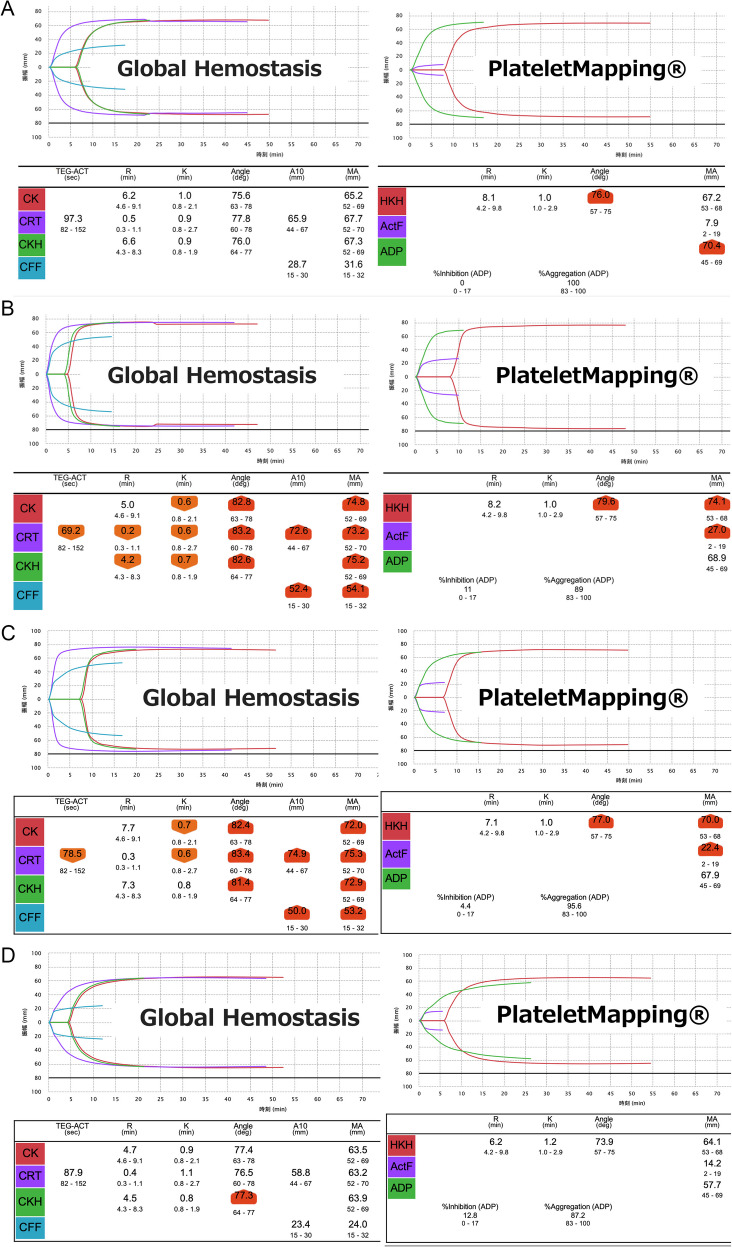
Case presentation: Four ET patients (platelet counts: 289,000-833,000/µL) underwent thromboelastography at anesthesia induction. Two had normal coagulation, while two had a hypercoagulable state undetected by conventional tests. Hypercoagulability was observed in patients who discontinued anticoagulants or antiplatelets preoperatively.
Conclusions: Thromboelastography identified thrombotic tendencies not evident with conventional coagulation tests, suggesting its potential for perioperative risk assessment in ET patients. This approach may improve individualized coagulation management beyond use of platelet counts and standard tests. Further studies are needed to establish the role of thromboelastography in optimizing perioperative antithrombotic strategies.
Keywords: Coagulation; Essential thrombocythemia; Platelet; Thromboelastography.
© 2025. The Author(s).
Conflict of interest statement
Declarations. Ethics approval and consent to participate: This work was conducted in the Department of Anesthesia, Kyoto University Hospital, with the approval of the Ethics Committee of Kyoto University Hospital (No. R4875). The work was carried out according to the guidelines of the Declaration of Helsinki. Consent for publication: Written consent was obtained from all the patients for publication of this case series. Competing interests: The authors declare that they have no competing interests.
Figures
References
LinkOut - more resources
Full Text Sources