


Diagnosis of necrotic and non-necrotic small bowel strangulation: The importance of intestinal congestion
- PMID: 40385344
- PMCID: PMC12080211
- DOI: 10.1002/ags3.12894
Diagnosis of necrotic and non-necrotic small bowel strangulation: The importance of intestinal congestion
Abstract
Background: Despite the prevalence of laparoscopic techniques in abdominal surgeries today, bowel obstruction remains a potentially serious complication. Small bowel strangulation (SBS), in particular, is a critical condition that can lead to patient mortality. However, the prognosis for SBS is favorable if surgery is performed before the onset of necrosis. Non-necrotic SBS is a reversible condition in which blood flow can be restored by relieving the strangulation. The purpose of this study was to identify sensitive and specific contrast-enhanced computed tomography (CT) findings that are useful for diagnosis of both non-necrotic and necrotic SBS.
Methods: We included patients diagnosed with SBS and simple bowel obstruction (SBO) who underwent contrast-enhanced CT followed by surgery from 2006 to 2023. Two gastrointestinal surgeons independently assessed the images retrospectively.
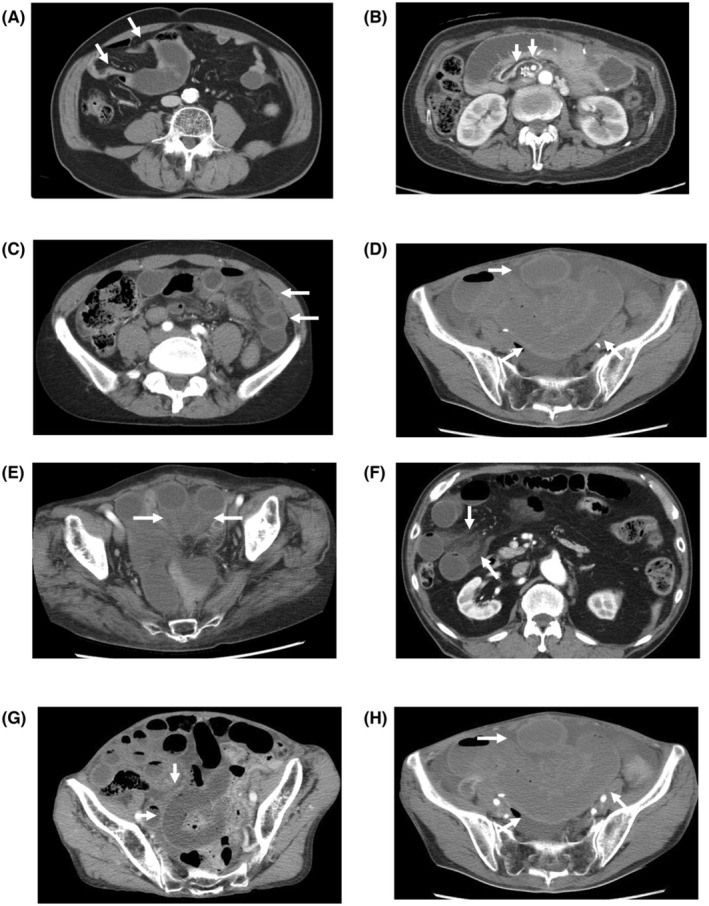
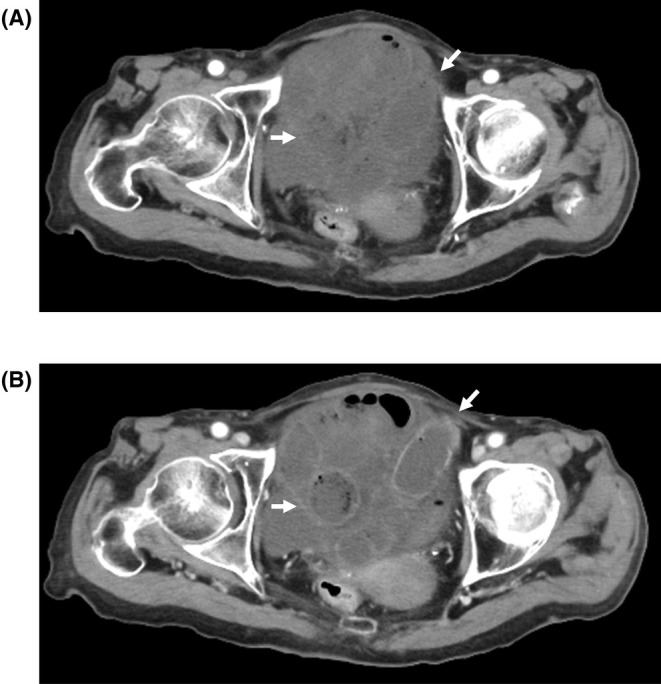
Results: Eighty SBO and 141 SBS patients were included. Eighty-seven had non-necrotic SBS and 54 had necrotic SBS. Mesenteric edema was most frequently observed in both necrotic and non-necrotic SBS cases followed by abnormal bowel wall thickening. These two findings were observed significantly less frequently in SBO. Bowel hypo-enhancement is identified in only about half of the non-necrotic SBS cases, and it was detected at significantly higher rates in necrotic SBS compared to non-necrotic.
Conclusion: Mesenteric edema and abnormal bowel wall thickening are sensitive and specific signs of both non-necrotic and necrotic SBS. These two findings indicate mesenteric and bowel congestion. Detecting intestinal congestion can lead to an accurate diagnosis of SBS, particularly in case of non-necrotic SBS, where bowel hypo-enhancement may sometimes be absent.
Keywords: acute abdomen; small bowel obstruction; strangulation.
© 2024 The Author(s). Annals of Gastroenterological Surgery published by John Wiley & Sons Australia, Ltd on behalf of The Japanese Society of Gastroenterological Surgery.
Conflict of interest statement
Kay Uehara is an editorial member of Annals of Gastroenterological Surgery. The other authors have no potential conflicts of interest to declare.
Figures
References
-
- Millet I, Taourel P, Ruyer A, Molinari N. Value of CT findings to predict surgical ischemia in small bowel obstruction: a systematic review and meta‐analysis. Eur Radiol. 2015;25:1823–1835. - PubMed
-
- Hayakawa K, Tanikake M, Yoshida S, Yamamoto A, Yamamoto E, Morimoto T. CT findings of small bowel strangulation: the importance of contrast enhancement. Emerg Radiol. 2013;20:3–9. - PubMed
-
- Elsayes KM, Menias CO, Smullen TL, Platt JF. Closed‐loop small‐bowel obstruction: diagnostic patterns by multidetector computed tomography. J Comput Assist Tomogr. 2007;31:697–701. - PubMed
LinkOut - more resources
Full Text Sources
