This is a preprint.
Younger Age Is Associated with Favorable Outcomes in Adult Dogs with Hemangiosarcoma Receiving Adjuvant Doxorubicin Chemotherapy: Results from the PRO-DOX Study
- PMID: 40386412
- PMCID: PMC12083661
- DOI: 10.21203/rs.3.rs-6573099/v1
Younger Age Is Associated with Favorable Outcomes in Adult Dogs with Hemangiosarcoma Receiving Adjuvant Doxorubicin Chemotherapy: Results from the PRO-DOX Study
Abstract
Background: Canine hemangiosarcoma is a common and aggressive vascular malignancy predominantly affecting dogs over six years of age. Despite surgical resection followed by adjuvant chemotherapy, median survival remains around 4-6 months. Propranolol, a beta-adrenergic receptor (b-AR) antagonist, has shown efficacy in human angiosarcoma, a tumor with similar clinical and morphological characteristics, when combined with chemotherapy.
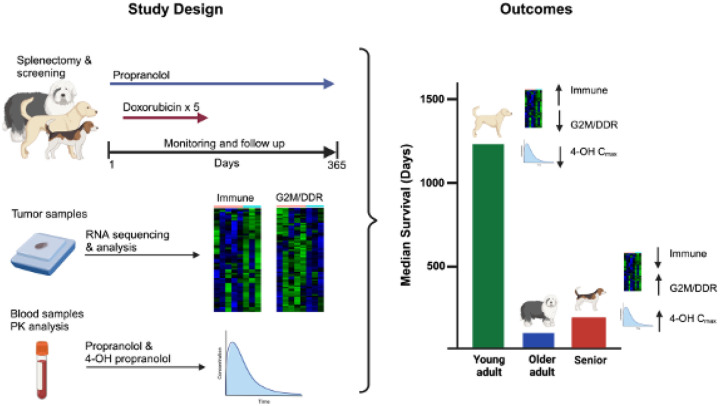
Methods: To determine if propranolol could be repurposed as an effective adjunct to chemotherapy, we conducted a phase I clinical study evaluating the safety and efficacy of propranolol combined with doxorubicin (PRO-DOX) in 20 dogs with stage 1 or stage 2 splenic hemangiosarcoma.Plasma from 19 dogs was analyzed for propranolol pharmacokinetics and RNA was extracted from tumors from 13 of the dogs for transcriptional profiling.
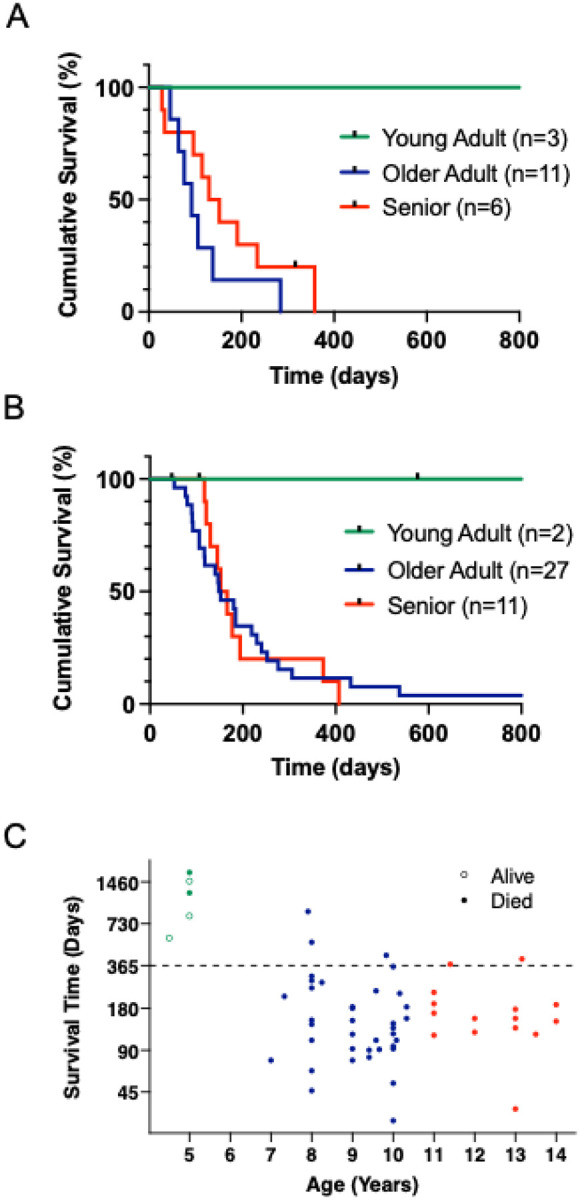
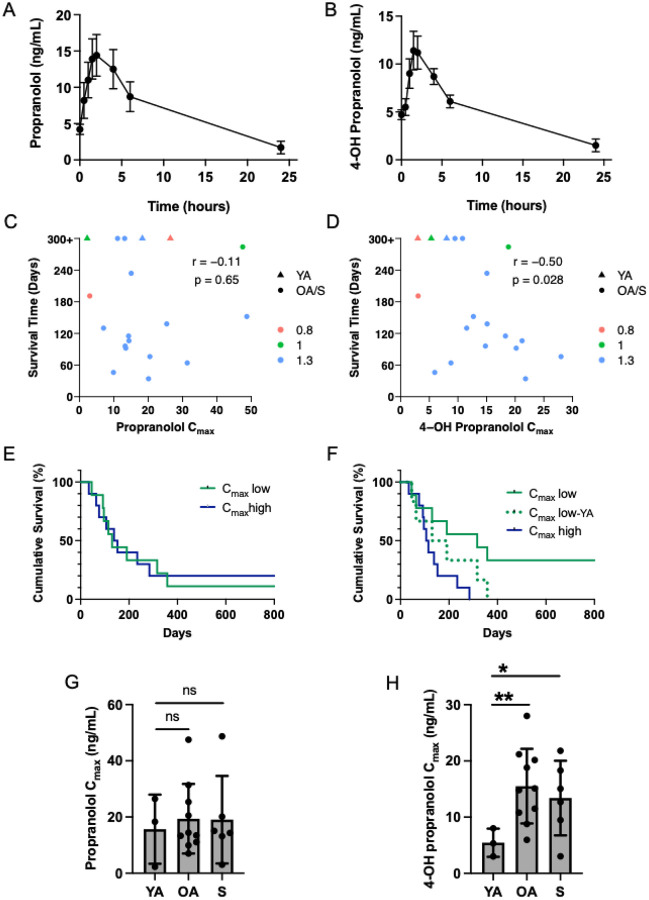
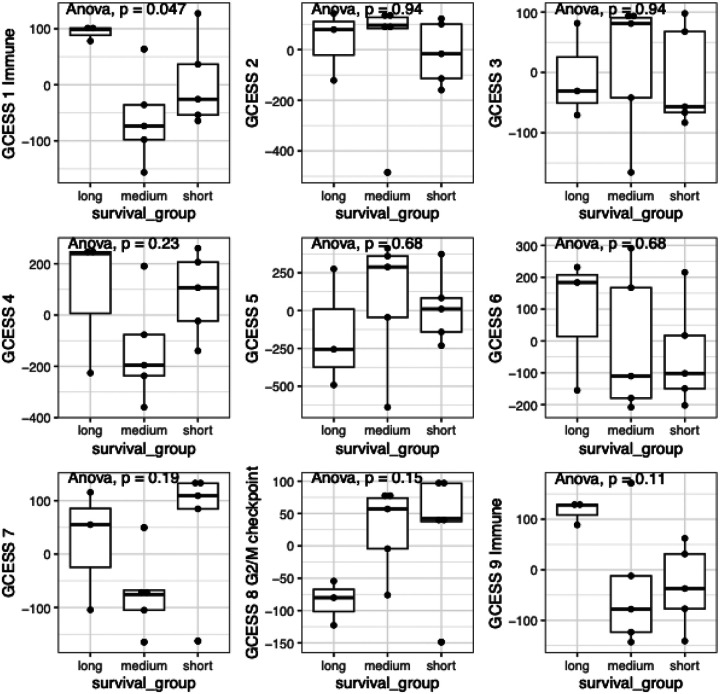
Results: Although propranolol did not appear to influence treatment outcomes, our results revealed long-term survival in young adult dogs (less than 6 years of age), suggesting the possibility of a better response to doxorubicin. Faster clearance of 4-OH propranolol also correlated with long-term survival in younger dogs, but this appeared to be associated with drug metabolism due to age rather than effects of the drug on survival outcomes. Gene expression analysis identified distinct age-associated tumor signatures, with young dogs exhibiting increased immune-related gene expression and older dogs showing elevated expression of genes associated with the cell cycle and the DNA damage response and repair.
Conclusions: These findings highlight several hallmarks of cellular aging in hemangiosarcoma that may influence treatment responses and long-term survival. Our findings suggest that young adult dogs with splenic hemangiosarcoma treated with doxorubicin have a better prognosis and underscore the need for further research into age-related molecular mechanisms of disease. These insights could refine therapeutic strategies and clinical decision-making in hemangiosarcoma management.
Keywords: Aging; DNA damage response; canine; doxorubicin; hemangiosarcoma; immunity; propranolol; senescence.
Conflict of interest statement
Competing interests The authors declare no competing interests.
Figures

References
-
- Brown NO, Patnaik AK, MacEwen EG. Canine hemangiosarcoma: retrospective analysis of 104 cases. J Am Vet Med Assoc. 1985;186(1):56–8. - PubMed
-
- Oksanen A. Haemangiosarcoma in dogs. J Comp Pathol. 1978;88(4):585–95. - PubMed
-
- Sorenmo KU, Jeglum KA, Helfand SC. Chemotherapy of canine hemangiosarcoma with doxorubicin and cyclophosphamide. J Vet Intern Med. 1993;7(6):370–6. - PubMed
-
- Wendelburg KM, Price LL, Burgess KE, Lyons JA, Lew FH, Berg J. Survival time of dogs with splenic hemangiosarcoma treated by splenectomy with or without adjuvant chemotherapy: 208 cases (2001–2012). J Am Vet Med Assoc. 2015;247(4):393–403. - PubMed
Publication types
Grants and funding
LinkOut - more resources
Full Text Sources
Research Materials