


Extending dynamic and operational range of the biosensor responding to l-carnitine by directed evolution
- PMID: 40386442
- PMCID: PMC12083890
- DOI: 10.1016/j.synbio.2025.04.012
Extending dynamic and operational range of the biosensor responding to l-carnitine by directed evolution
Abstract
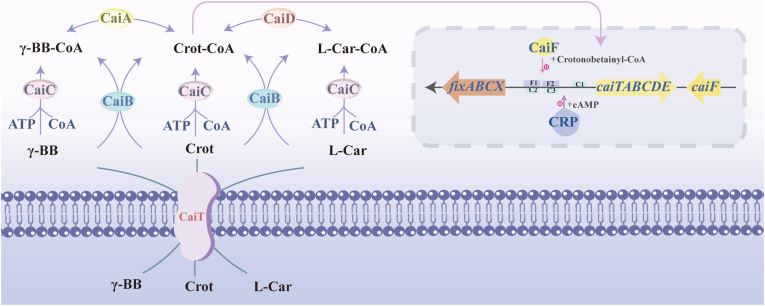
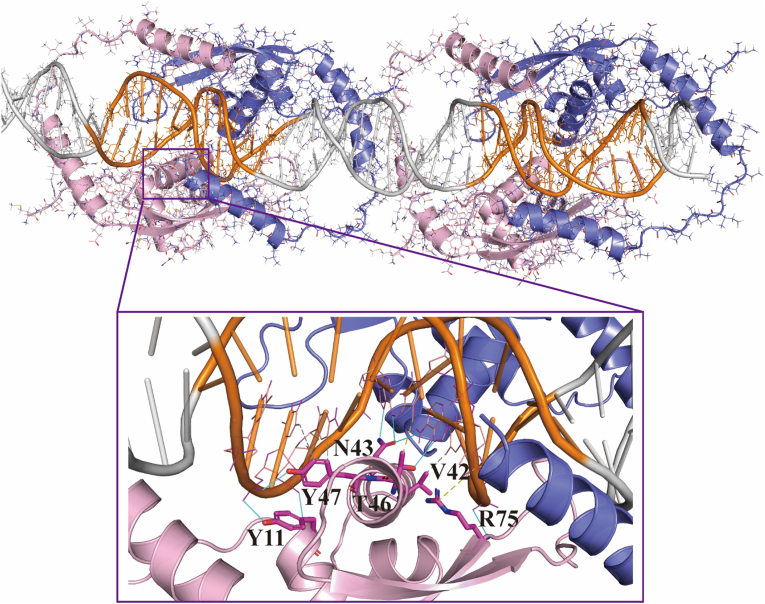
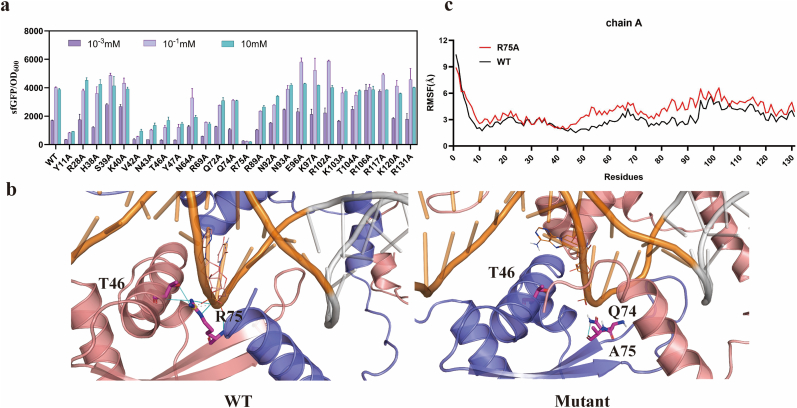
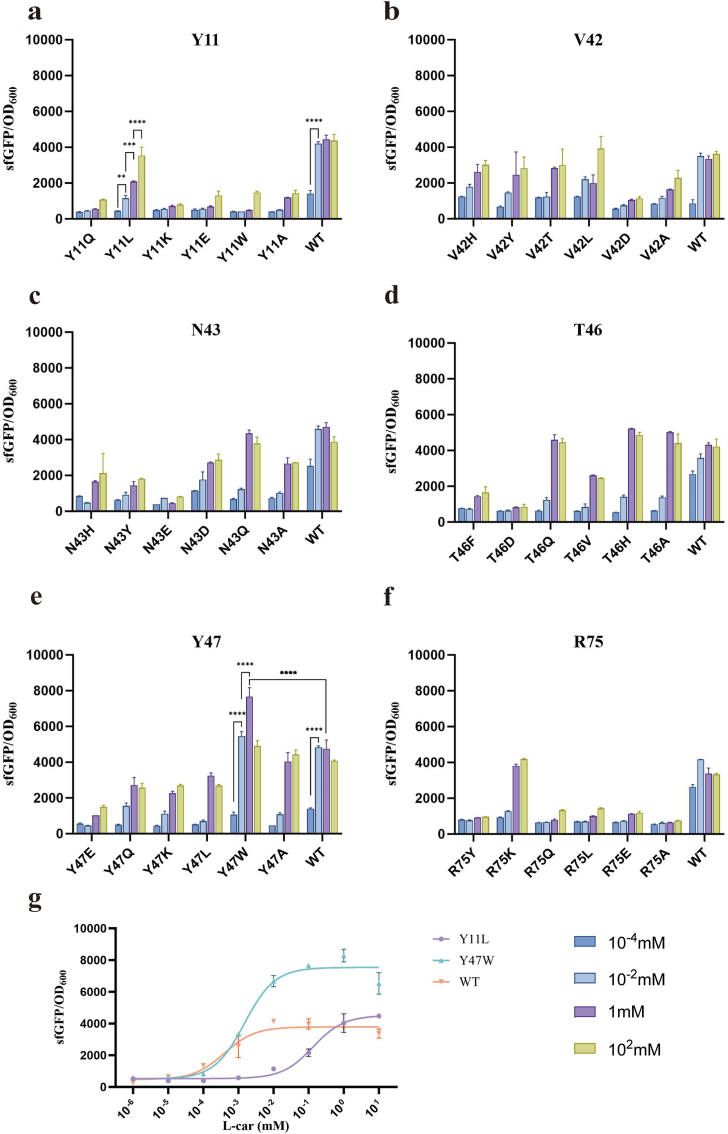
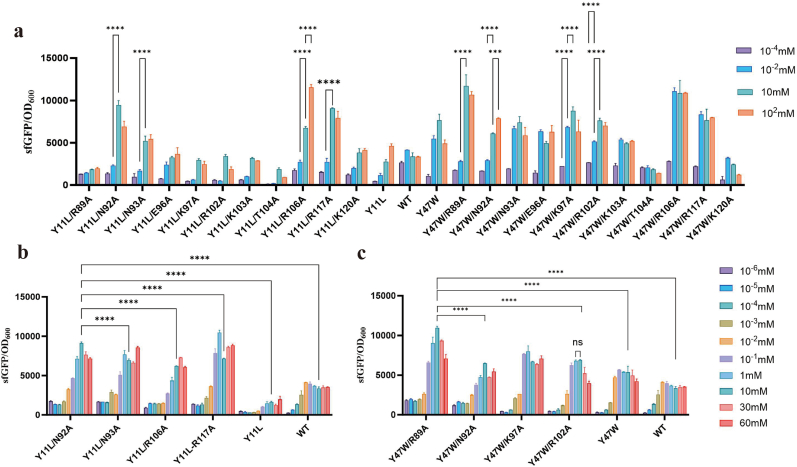
l-carnitine is a quaternary amine compound essential for eukaryotic metabolism. It is mainly involved in the oxidative decomposition of medium-and long-chain fatty acids and provides energy for the body. Therefore, it is widely used in health care and food additives. As a pivotal transcriptional activator of l-carnitine metabolism, CaiF is notably activated by crotonobetainyl-CoA, a key intermediate product in the carnitine metabolic pathway. Capitalizing on this mechanism, a sophisticated biosensor was ingeniously developed. Nevertheless, it is worth mentioning that the biosensor currently exhibits a relatively restricted detection range, which results in some specific limitations in practical application scenarios. In this paper, we constructed a biosensor based on CaiF and developed a strategy for modifying this biosensor. The structural configuration of CaiF was formulated by computer-aided design, and the DNA binding site was simulated, which was verified by alanine scanning. Functional Diversity-Oriented Volume-Conservative Substitution Strategy of the key sites of CaiF was conducted to extend the dynamic range of the biosensor. The biosensor based on CaiFY47W/R89A, which exhibited a considerably expanded concentration response range, from 10-4 mM-10 mM, was obtained. The response range was 1000-fold wider and the output signal intensity was 3.3-fold higher to that of the control biosensor. These variants may have great value in improving the l-carnitine production process.
Keywords: Biosensor; CaiF; Detection range; Transcription factor; l-carnitine.
© 2025 The Authors.
Conflict of interest statement
The authors declare that they have no known competing financial interests or personal relationships that could have appeared to influence the work reported in this paper.
Figures

References
-
- Bernal V., Arense P., Cánovas M., Biopigments, et al. Industrial Biotechnology of Vitamins, Biopigments, and Antioxidants. Wiley‐VCH; 2016. l‐Carnitine, the vitamin BT: uses and production by the secondary metabolism of bacteria; pp. 389–419.
LinkOut - more resources
Full Text Sources
Research Materials
