Diagnostic accuracy of serum biomarkers MMP11 and SPP1 in non-small cell lung cancer: an analysis of sensitivity, specificity, and area under the curve
- PMID: 40386736
- PMCID: PMC12082244
- DOI: 10.21037/tlcr-2024-1068
Diagnostic accuracy of serum biomarkers MMP11 and SPP1 in non-small cell lung cancer: an analysis of sensitivity, specificity, and area under the curve
Abstract
Background: Non-small cell lung cancer (NSCLC) represents the vast majority of lung cancer cases, comprising 80-85% of all diagnoses, and continues to be a primary contributor to cancer-related deaths. Early detection is essential for improving patient outcomes, yet current diagnostic markers lack both sensitivity and specificity. This study aims to identify novel biomarkers that could enhance early diagnosis.
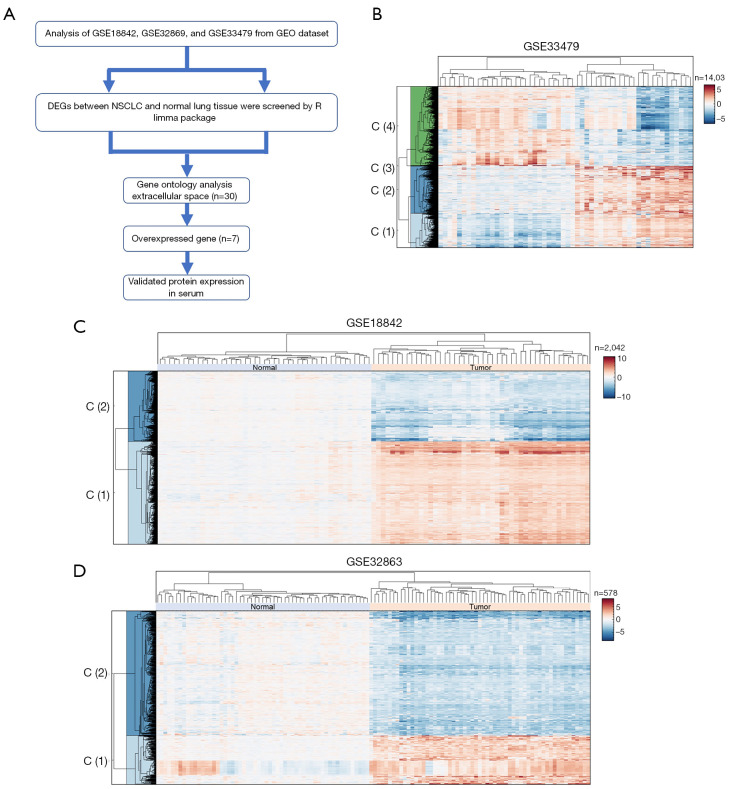
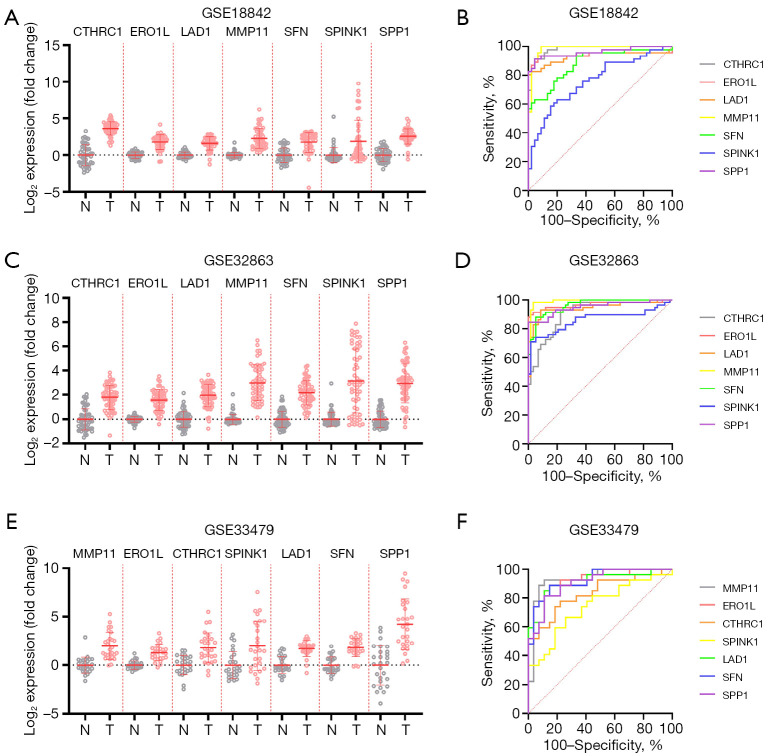
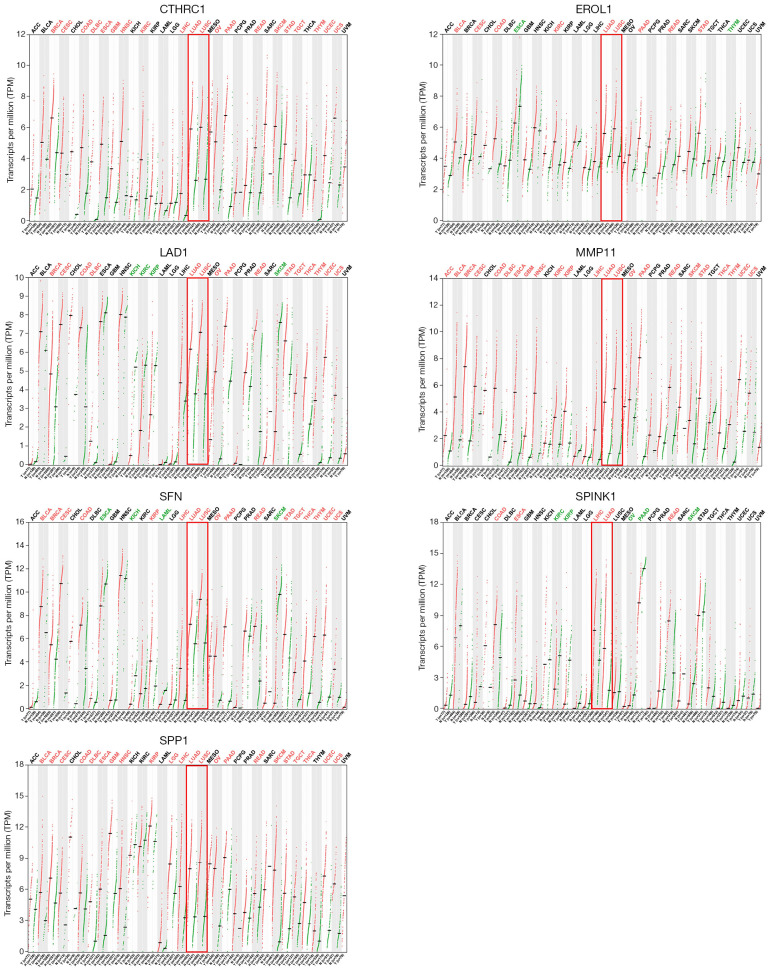
Methods: We conducted a comprehensive gene expression analysis of three NSCLC datasets (GSE33479, GSE18842, and GSE32863) and identified seven genes with relevance to the extracellular region and space: MMP11, SPP1, ERO1L, CTHRC1, SPINK1, LAD1, and SFN. We further assessed these markers through serum protein analysis involving 200 NSCLC patients and 200 healthy controls, employing receiver operating characteristic (ROC) curve analysis to evaluate their diagnostic efficacy.
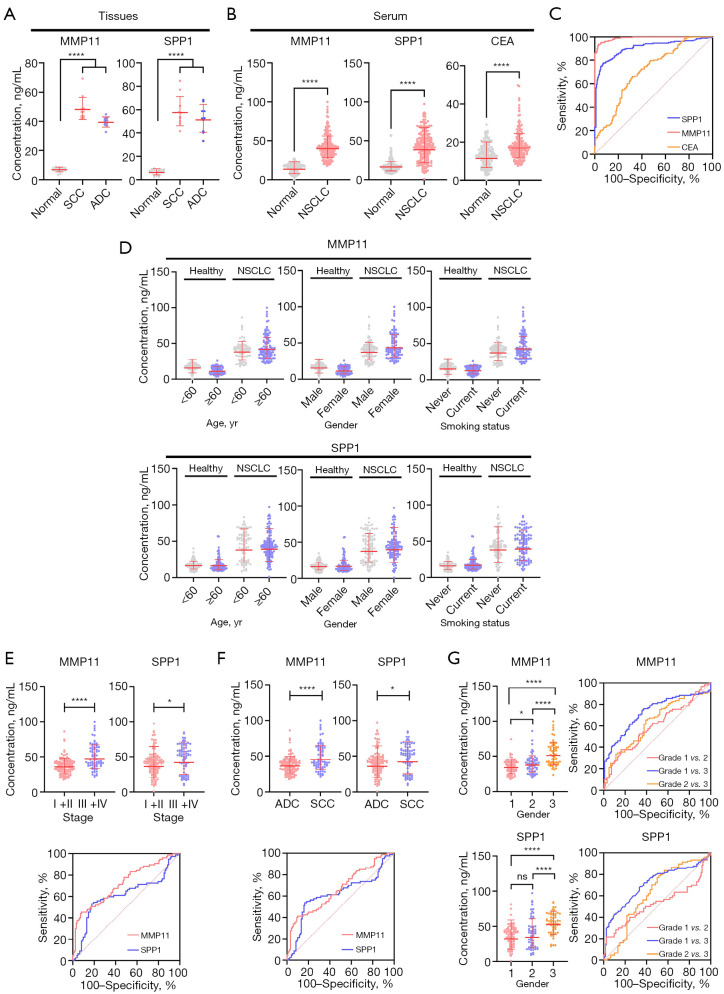
Results: Among the identified genes, MMP11 and SPP1 exhibited significant upregulation and strong discriminatory power in NSCLC tissues, achieving area under the curve (AUC) values exceeding 0.9. Serum protein levels of MMP11 and SPP1 were significantly higher in NSCLC patients compared to healthy controls. ROC curve analysis confirmed the diagnostic potential of MMP11 (AUC: 0.9896) and SPP1 (AUC: 0.9053), both outperforming the existing marker carcinoembryonic antigen (CEA) (AUC: 0.7109). MMP11 demonstrated sensitivity of 94.53% and specificity of 94.97%, while SPP1 showed sensitivity of 83.17% and specificity of 83.84%. In contrast, CEA exhibited a sensitivity of 66.83% and specificity of 67.69%.
Conclusions: The results indicate that MMP11 and SPP1, detectable in serum, may serve as valuable non-invasive biomarkers for the early diagnosis of NSCLC, particularly within health screening contexts. However, further research within larger and more diverse cohorts is imperative to validate these biomarkers and investigate the mechanisms underlying MMP11 and SPP1 expression in NSCLC. This study highlights the potential of these biomarkers to enhance diagnostic accuracy and improve patient outcomes in NSCLC.
Keywords: MMP11; Non-small cell lung cancer (NSCLC); SPP1; early detection; serum biomarker.
Copyright © 2025 AME Publishing Company. All rights reserved.
Conflict of interest statement
Conflicts of Interest: All authors have completed the ICMJE uniform disclosure form (available at https://tlcr.amegroups.com/article/view/10.21037/tlcr-2024-1068/coif). The authors have no conflicts of interest to declare.
Figures
References
LinkOut - more resources
Full Text Sources
Research Materials
Miscellaneous