


Plate-augmented fixation of comminuted Letenneur type II Hoffa fractures provides favorable stability compared to isolated posteroanterior screw fixation - a biomechanical study
- PMID: 40387941
- PMCID: PMC12089159
- DOI: 10.1007/s00402-025-05920-x
Plate-augmented fixation of comminuted Letenneur type II Hoffa fractures provides favorable stability compared to isolated posteroanterior screw fixation - a biomechanical study
Abstract
Introduction: Current literature lacks recommendations regarding proper fixation of comminuted coronal plane fractures of the posterior femoral condyles (Hoffa fractures). Therefore, the aim of this study was to compare the biomechanical characteristics of different plate-augmented constructs to isolated posteroanterior screw fixation in comminuted lateral Hoffa fractures.
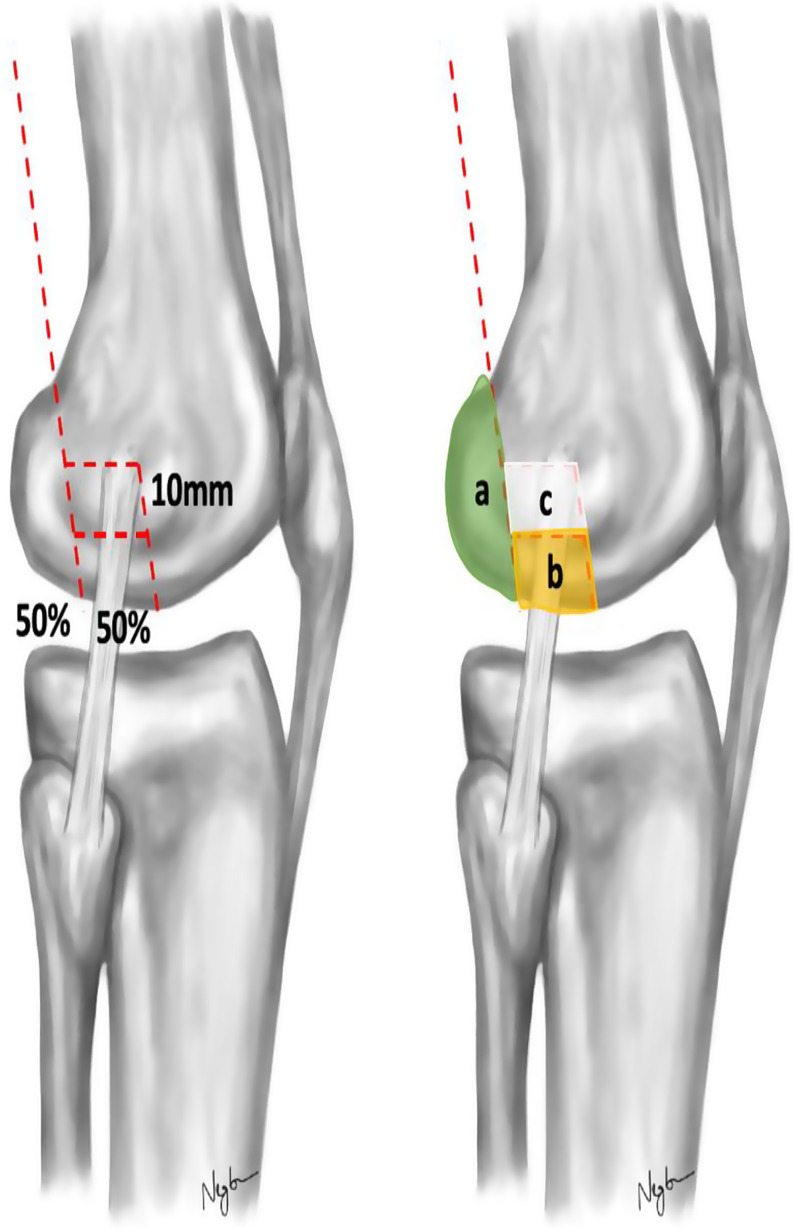
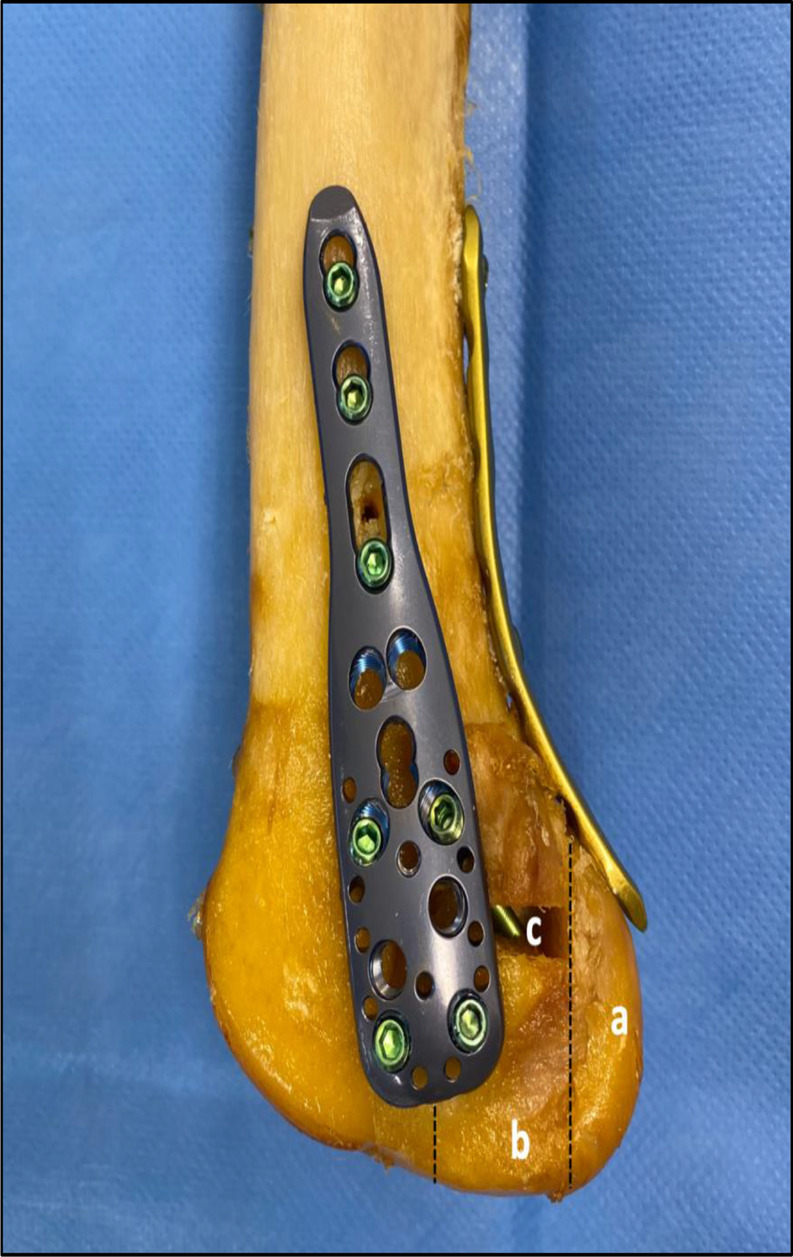
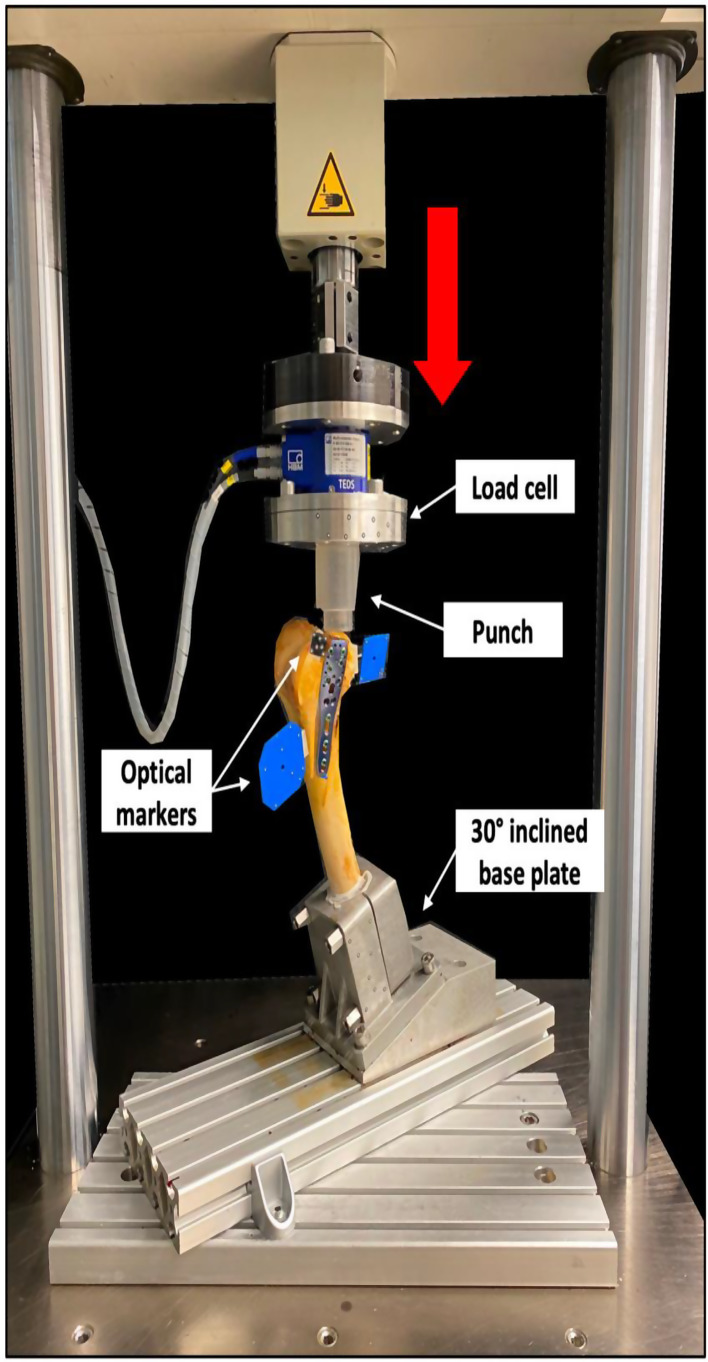
Materials and methods: Comminuted Letenneur type IIb lateral Hoffa fractures were simulated in 24 human cadaveric distal femora. The fractures were fixed with either isolated crossed posteroanterior screws or additionally with either a posterior plate, a lateral locking plate, or combined posterior and lateral locking plates. All specimens were biomechanically tested under progressively increasing cyclic loading until failure, while capturing the interfragmentary movements of the Hoffa and intercalary fragments via motion tracking.
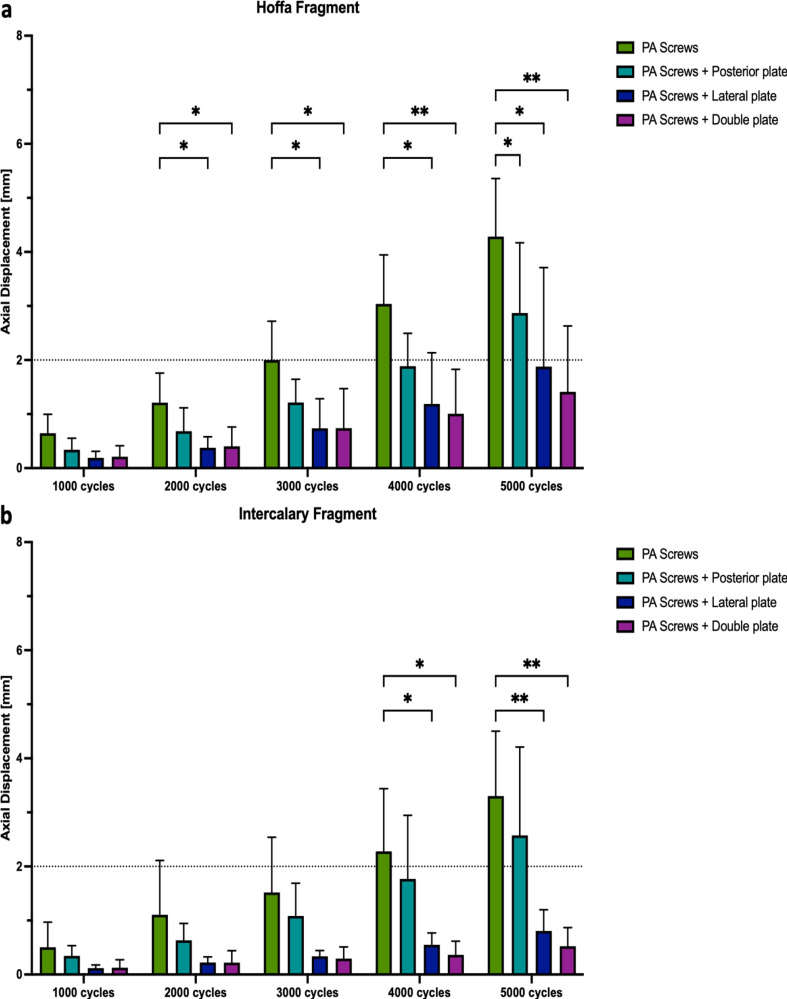
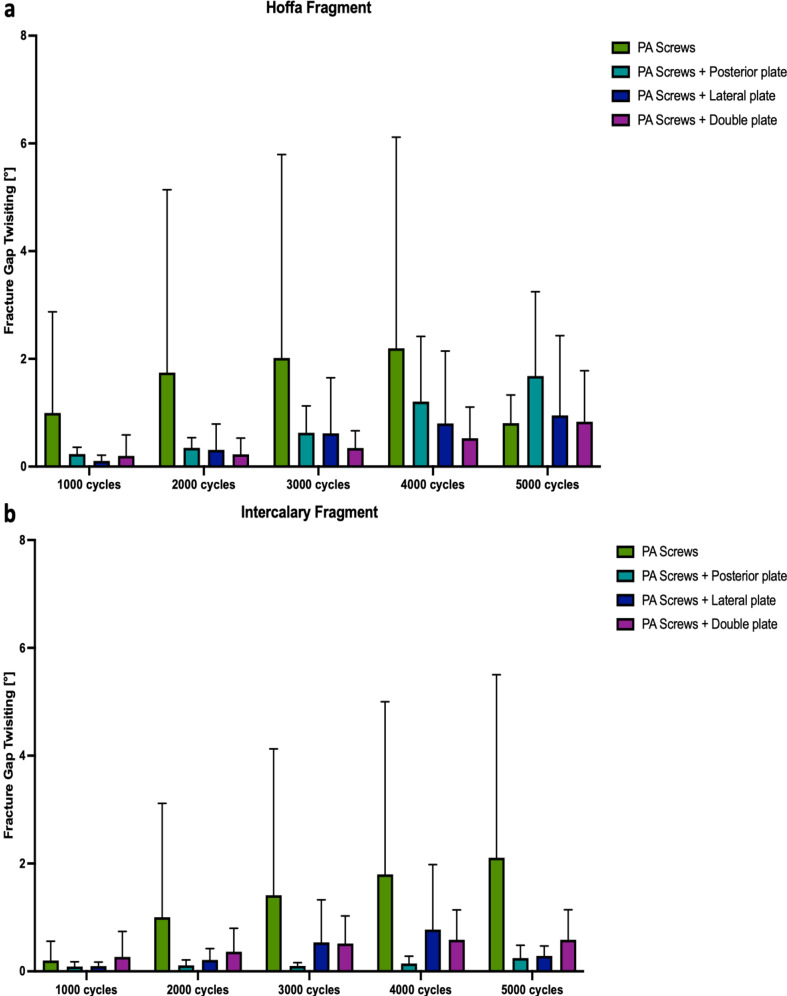
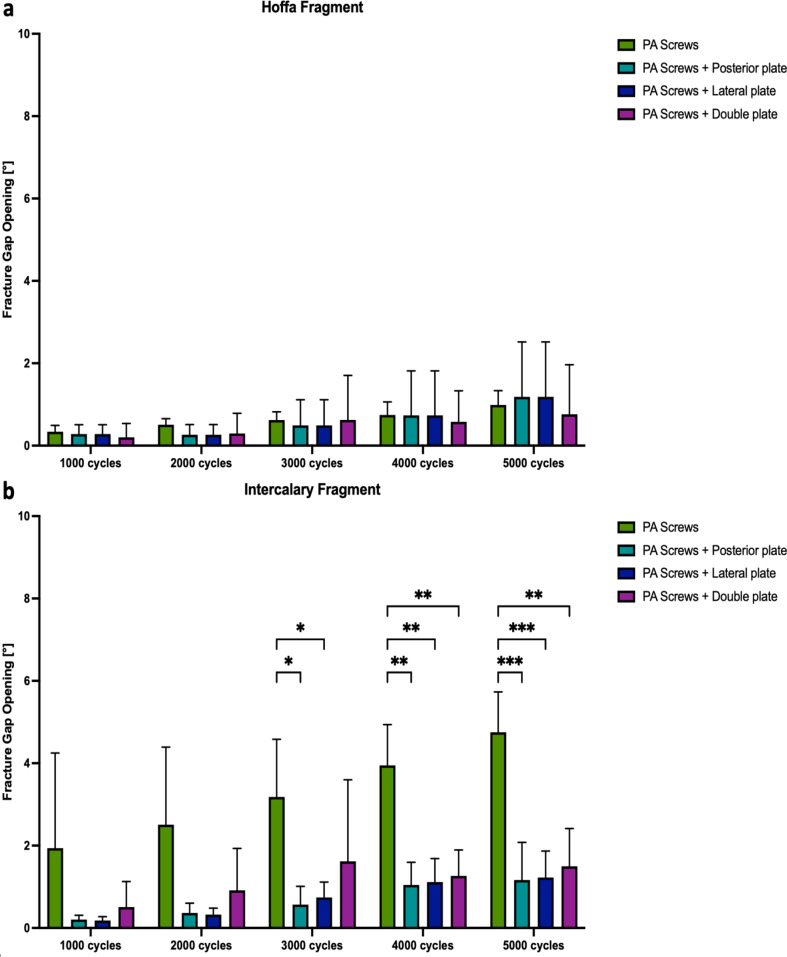
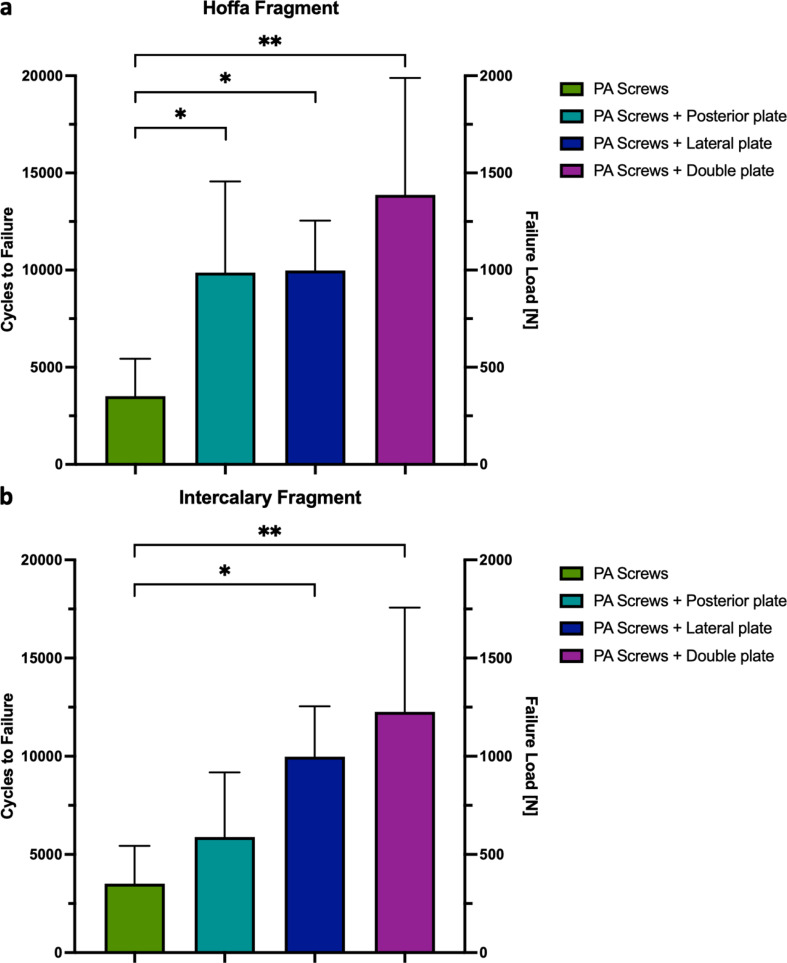
Results: Plate-augmented posteroanterior screw fixation of the Hoffa fragment exhibited higher cycles to failure, higher failure loads (p < 0.05) and less axial displacements (p < 0.05) compared to isolated posteroanterior screw fixation. Both additional lateral locking and double plate fixations of the intercalary fragment provided higher cycles to failure, higher failure loads (p < 0.05) and less axial displacement (p < 0.05) than isolated posteroanterior screw fixation, whereas additional posterior plate fixation did not significantly increase cycles to failure, failure loads and axial displacement (n.s.). Fracture gap twisting and opening did not differ significantly between the four constructs for the Hoffa fragment, while plate-augmented constructs provided less fracture opening of the intercalary fragment compared to isolated posteroanterior screw fixation (p < 0.01).
Conclusions: Plate-augmented posteroanterior screw fixation of comminuted Letenneur type IIb Hoffa fractures provided greater biomechanical stability than isolated posteroanterior screw fixation. While additional lateral or double plate fixation improves the stability of both the intercalary and Hoffa fragment, posterior plating stabilized only the Hoffa fragment.
Keywords: Biomechanical testing; Hoffa fracture; Letenneur classification; Motion tracking; Plate-augmented fixation; Posteroanterior screw fixation.
© 2025. The Author(s).
Conflict of interest statement
Declarations. Ethics approval: The donors (Science Care, Phoenix, Arizona, USA) bequeathed in informed consent their corpse for use in medical science during their lifetime. Competing interests: The authors declare no competing interests.
Figures

References
-
- Busch F, Fall V (1869) Mehrere fälle Seltener Knochenverletzungen. Arch Klin Chir 10:703–719
Publication types
MeSH terms
LinkOut - more resources
Full Text Sources
Medical
Miscellaneous
