


Microbiota alterations leading to amino acid deficiency contribute to depression in children and adolescents
- PMID: 40390033
- PMCID: PMC12087099
- DOI: 10.1186/s40168-025-02122-w
Microbiota alterations leading to amino acid deficiency contribute to depression in children and adolescents
Abstract
Background: Major depressive disorder (MDD) in children and adolescents is a growing global public health concern. Metabolic alterations in the microbiota-gut-brain (MGB) axis have been implicated in MDD pathophysiology, but their specific role in pediatric populations remains unclear.
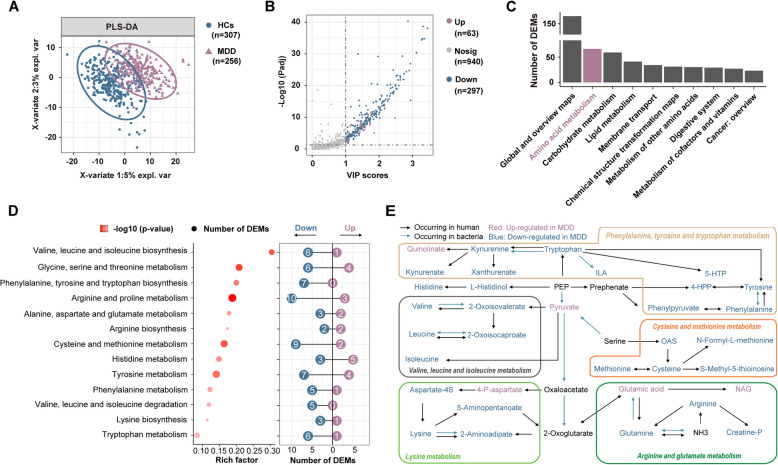
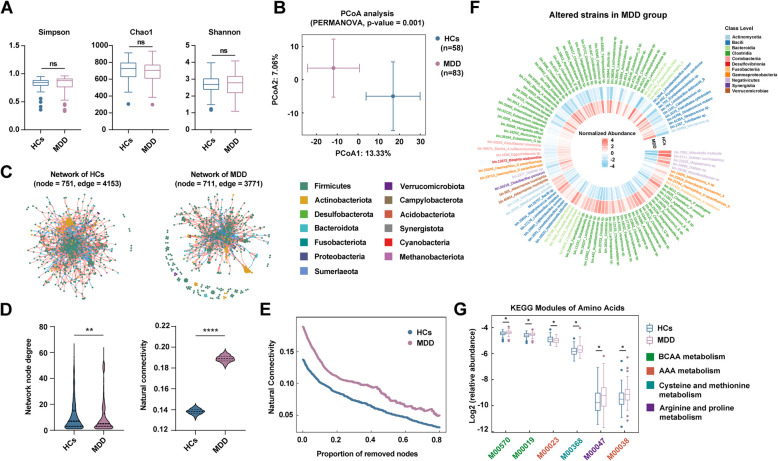
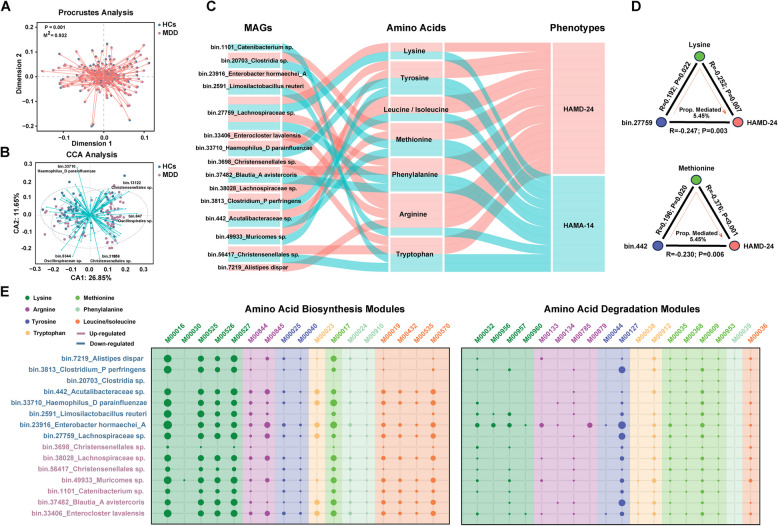
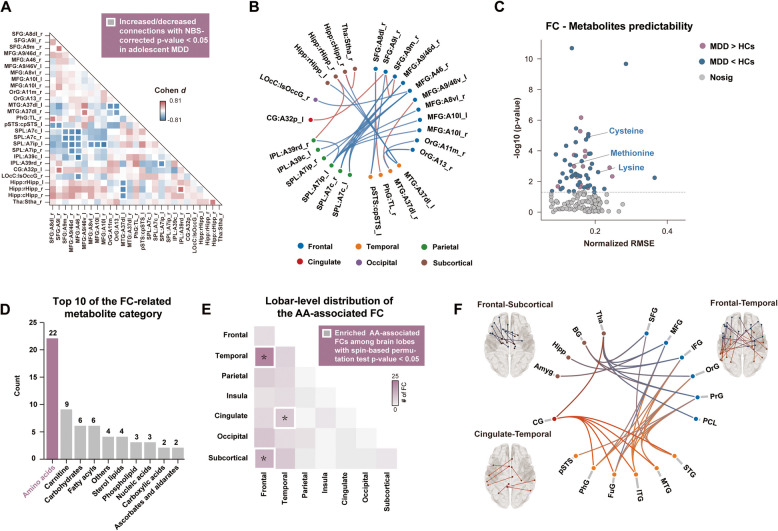
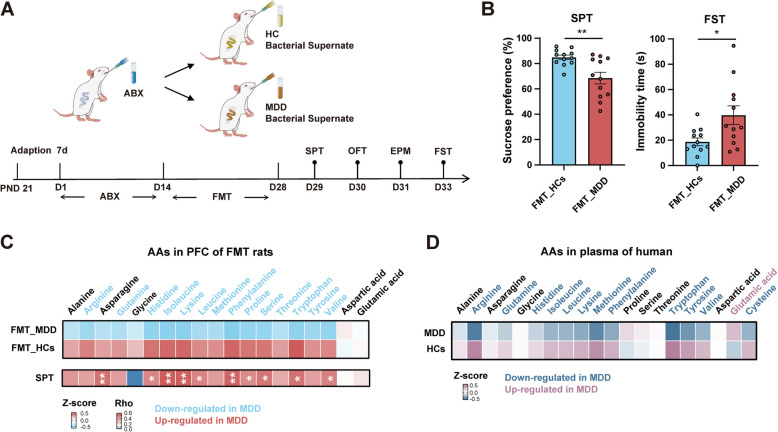
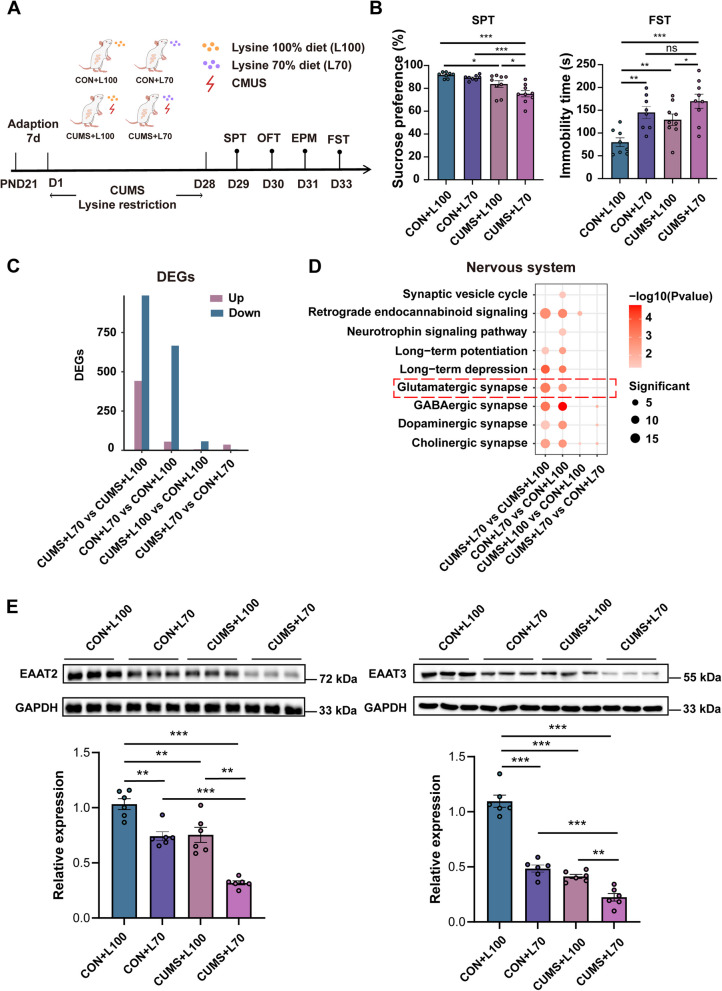
Results: We conducted a multi-omics study on 256 MDD patients and 307 healthy controls in children and adolescents, integrating plasma metabolomics, fecal metagenomics, and resting-state functional magnetic resonance imaging (rs-fMRI) of the brain. KEGG enrichment analysis of 360 differential expressed metabolites (DEMs) indicated significant plasma amino acid (AA) metabolism deficiencies (p-value < 0.0001). We identified 58 MDD-enriched and 46 MDD-depleted strains, as well as 6 altered modules in amino acid metabolism in fecal metagenomics. Procrustes analysis revealed the association between the altered gut microbiome and circulating AA metabolism (p-value = 0.001, M2 = 0.932). Causal analyses suggested that plasma AAs might mediate the impact of altered gut microbiota on depressive and anxious symptoms. Additionally, rs-fMRI revealed that connectivity deficits in the frontal lobe are associated with depression and 22 DEMs in AA metabolism. Furthermore, transplantation of fecal microbiota from MDD patients to adolescent rats induced depressive-like behaviors and 14 amino acids deficiency in the prefrontal cortex (PFC). Moreover, the dietary lysine restriction increased depression susceptibility in adolescent rats by reducing the expression of excitatory amino acid transporters in the PFC.
Conclusions: Our findings highlight that gut microbiota alterations contribute to AAs deficiency, particularly lysine, which plays a crucial role in MDD pathogenesis in children and adolescents. Targeting AA metabolism may offer novel therapeutic strategies for pediatric depression. Video Abstract.
Keywords: Amino acid; Children and adolescents; Depression; Glutaminergic synapse; MGB axis; Microbiota.
© 2025. The Author(s).
Conflict of interest statement
Declarations. Ethics approval and consent to participate: This study was approved by the Ethics Committee of the First Affiliated Hospital of Chongqing Medical University. All participants have signed the consent form. All rat experiments were approved by the Institutional Animal Care and Use Committee of Chongqing Medical University. Consent for publication: Not applicable. Competing interests: The authors declare no competing interests.
Figures
References
-
- Mokdad AH, Forouzanfar MH, Daoud F, Mokdad AA, El Bcheraoui C, Moradi-Lakeh M, et al. Global burden of diseases, injuries, and risk factors for young people’s health during 1990–2013: a systematic analysis for the global burden of disease study 2013. Lancet. 2016;387(10036):2383–401. 10.1016/S0140-6736(16)00648-6. - DOI - PubMed
-
- World Health Organization. Depression and other common mental disorders: global health estimates. World Health Organization; 2017. Licence: CC BY-NC-SA 3.0 IGO. https://iris.who.int/bitstream/handle/10665/254610/WHO-MSD-MER-2017.2-en....
-
- World Health Organization. Adolescent and young adult health. 2024. https://www.who.int/newsroom/fact-sheets/detail/adolescents-health-risks....
-
- Sarchiapone M, D’Aulerio M, Iosue M. Suicidal ideation, suicide attempts and completed suicide in adolescents: neuro-biological aspects. Biol Aspects Suicidal Behav. 2015;30:11–20. - DOI
MeSH terms
Substances
Grants and funding
LinkOut - more resources
Full Text Sources
Medical
Miscellaneous
