


Impact of an antimicrobial time-out program on antimicrobial consumption rate in hospitalized patients: a quasi-experimental study on the national antimicrobial stewardship program in Iran : Iranian antimicrobial stewardship program
- PMID: 40390037
- PMCID: PMC12090655
- DOI: 10.1186/s40780-025-00451-4
Impact of an antimicrobial time-out program on antimicrobial consumption rate in hospitalized patients: a quasi-experimental study on the national antimicrobial stewardship program in Iran : Iranian antimicrobial stewardship program
Abstract
Background: This study evaluated the impact of the national antimicrobial stewardship program (NASP) on the consumption of antimicrobial agents.
Methods: A quasi-experimental study was conducted on hospitalized patients at a referral hospital in Tehran, Iran. We compared the antimicrobial-defined daily dose (DDD) and antimicrobial consumption index (ACI) between the third quarter of 2022 (before the implementation of NASP after the COVID-19 pandemic in October 2022) and the same timeframe in 2023, following the NASP implementation. The NASP was based on antimicrobial time-out assessment. Within 72 h of prescribing meropenem, imipenem, linezolid, vancomycin, voriconazole, caspofungin, and amphotericin B liposomal, infectious disease specialists audited the clinical and microbiological evidence of patients to assess whether it was consistent with the correct prescription.
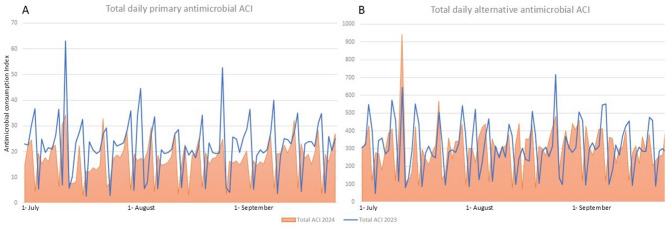
Results: The antimicrobial consumption rate was assessed in 13,794 and 15,030 hospitalized patients during the third quarter of 2022 and the third quarter of 2023, respectively. The mean length of hospital stay and mortality rate showed no significant differences. The consumption of all restricted antimicrobials decreased. This reduction was significant for imipenem, caspofungin, vancomycin, and linezolid. The total cost of antimicrobial agents had a 22.24% reduction after the NASP implementation (P = 0.01).
Conclusions: The antimicrobial time-out program was associated with a reduction in the use of antimicrobials, including imipenem, linezolid, and vancomycin and antifungals, such as caspofungin without increasing the length of stay and mortality rate. The NASP implementation can be recommended as a beneficial method for reducing the use of broad-spectrum antimicrobials.
Keywords: Antibiotic consumption; Antimicrobial stewardship; Antimicrobial time-out; Hospitals; Iran; Therapeutic use.
© 2025. The Author(s).
Conflict of interest statement
Declarations. Ethics approval and consent to participate: The study was approved by the Research Ethics Committee of Tehran University of Medical Sciences (Approval number: IR.TUMS.IKHC.REC.1399.288). This study did not include individual patients’ data and thus, consent to participation was not applicable. Consent to participate: Not applicable. Consent for publication: Not applicable. Competing interests: The authors declare no competing interests.
Figures
References
-
- Charani E, Cooke J, Holmes, AJJoac. Antibiotic stewardship programmes—what’s missing? J Antimicrob Chemother. 2010;65(11):2275–7. - PubMed
-
- Livermore DM. Minimising antibiotic resistance. Lancet Infect Dis. 2005;5(7):450–9. - PubMed
-
- Carling P, Fung T, Killion A, Terrin N, Barza M. Favorable impact of a multidisciplinary antibiotic management program conducted during 7 years. Infect Control Hosp Epidemiol. 2003;24(9):699–706. - PubMed
LinkOut - more resources
Full Text Sources
Research Materials
Miscellaneous
