


Surgical alteration of uterine space influences embryonic loss and fetal growth in the contemporary pig
- PMID: 40390048
- PMCID: PMC12090578
- DOI: 10.1186/s12917-025-04820-x
Surgical alteration of uterine space influences embryonic loss and fetal growth in the contemporary pig
Abstract
Background: Litter size is a key economic trait in the swine industry, and ongoing selection for this trait has increased ovulation rates without producing a corresponding increase in uterine capacity. Overcrowding, intensifies competition between fetuses, increasing within-litter variation and the occurrence of intrauterine growth restriction (IUGR).
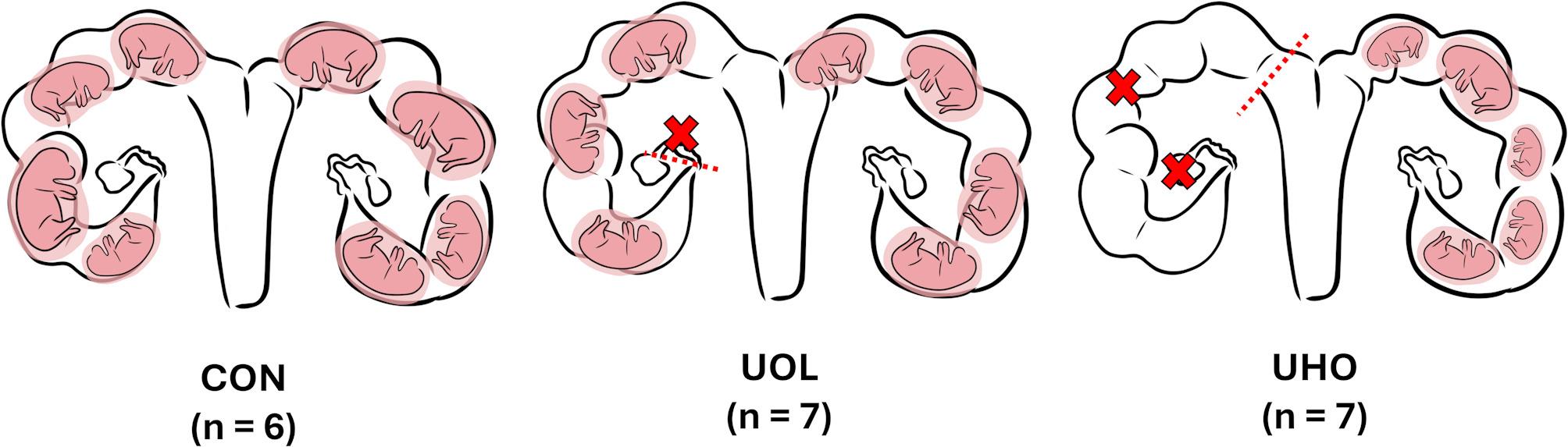
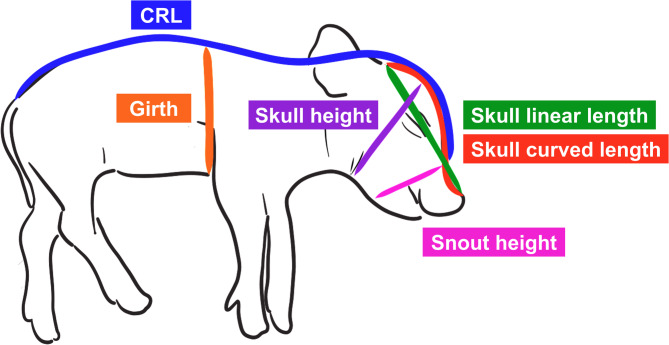
Methods: We utilized a combination of unilateral oviductal ligation (UOL) and unilateral hysterectomy-ovariectomy (UHO), to create apposing biological extremes of intrauterine crowding. A total of twenty gilts including N = 7 UHO, N = 7 UOL and N = 6 unaltered controls (CON) were synchronized and bred via artificial insemination. Embryonic loss and fetal viability were evaluated on gestation day 95. The fetal population intensively phenotyped including morphometric assessment of skull shape.
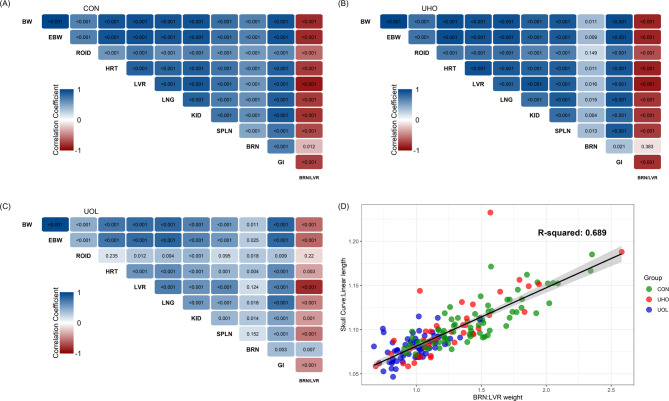
Results: As expected, UOL significantly reduced litter size, but increased embryonic survival, fetal viability, body weight and uniformity compared to CON. In contrast, UHO significantly increased early embryonic loss, but did not alter fetal viability, body weight or uniformity within litter. UOL increased the absolute weight of all organs compared to UHO and CON, with the exception of the brain (BRN) resulting in a significant reduction in BRN consistent with the established brain-sparing effect. The ratio of skull curve-to-linear length (C: L) was significantly reduced in UOL fetuses and found to be strongly correlated with brain-to-liver weight ratio (BRN: LVR).
Conclusions: The results of this study confirm the negative effects of uterine crowding on fetal growth. They further suggest that contemporary gilts approach the limit of uterine capacity, such that increased crowding results in additional early embryonic loss.
Keywords: Fetus; IUGR; Swine model; UHO; UOL.
© 2025. The Author(s).
Conflict of interest statement
Declarations. Ethics approval and consent to participate: All animal work, was conducted in strict accordance with Institutional Animal Care and Use Committee (IACUC) guidelines and were approved by the Purdue Animal Care and Use Committee (Protocol # 1222002327). Consent for publication: Not applicable. Competing interests: The authors declare no competing interests.
Figures
References
-
- Wolf J, Zakova E, Groeneveld E. Within-litter variation of birth weight in hyperprolific Czech Large White sows and its relation to litter size traits, stillborn piglets and losses until weaning - ScienceDirect. Livestock Science [Internet]. 2008 [cited 2024 Oct 28];115(2–3):195–205. Available from: https://www.sciencedirect.com/science/article/pii/S1871141307004209
-
- Wu G, Bazer FW, Wallace JM, Spencer TE. Board-invited review: Intrauterine growth retardation: Implications for the animal sciences1. Journal of Animal Science [Internet]. 2006 Sep 1 [cited 2024 Oct 29];84(9):2316–37. Available from: 10.2527/jas.2006-156 - PubMed
-
- Bazer FW, Clawson AJ, Robison OW, Ulberg LC. Uterine capacity in gilts. 1969 Feb 1 [cited 2024 Oct 28]; Available from: https://rep.bioscientifica.com/view/journals/rep/18/1/jrf_18_1_017.xml - PubMed
-
- Bazer FW, Robison OW, Clawson AJ, Ulberg LC. Uterine Capacity at two Stages of Gestation in Gilts following Embryo Superinduction. Journal of Animal Science [Internet]. 1969 Jul 1 [cited 2024 Oct 28];29(1):30–4. Available from: 10.2527/jas1969.29130x - PubMed
MeSH terms
Grants and funding
LinkOut - more resources
Full Text Sources
Medical
Research Materials
