


Occupational motions such as kneeling and squatting are associated with the increased development of medial meniscus posterior root tears, regardless of the medial posterior tibial slope angle
- PMID: 40390861
- PMCID: PMC12086786
- DOI: 10.1002/jeo2.70276
Occupational motions such as kneeling and squatting are associated with the increased development of medial meniscus posterior root tears, regardless of the medial posterior tibial slope angle
Abstract
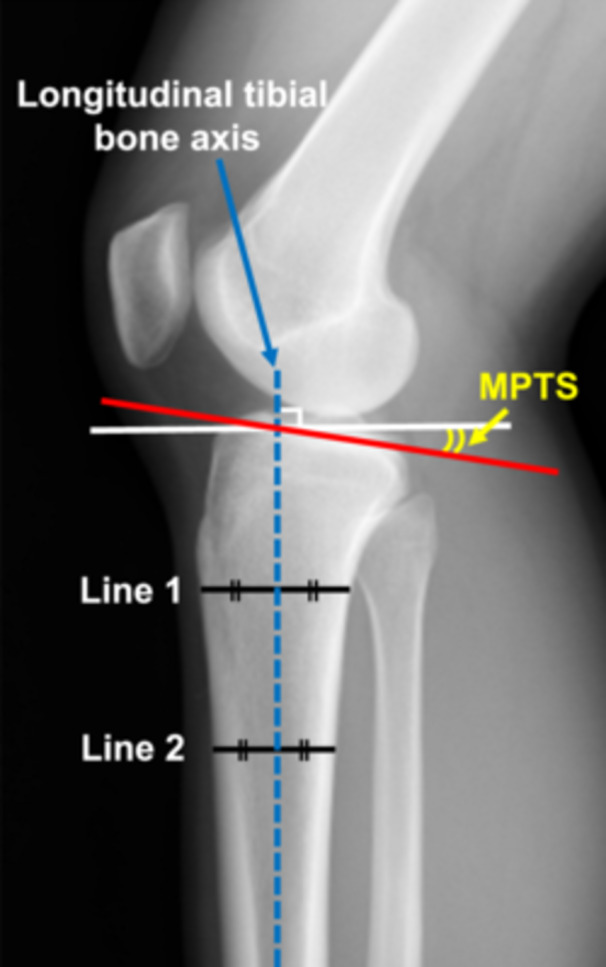
Purpose: The relationship between occupational motions and the medial posterior tibial slope (MPTS) with the development of medial meniscus posterior root tears (MMPRTs) has not been investigated. The development of non-traumatic degenerative MMPRTs may be influenced by repetitive occupational motions and bone morphological characteristics. Herein, we examined the association between occupational motions and MPTS in patients with MMPRT development.
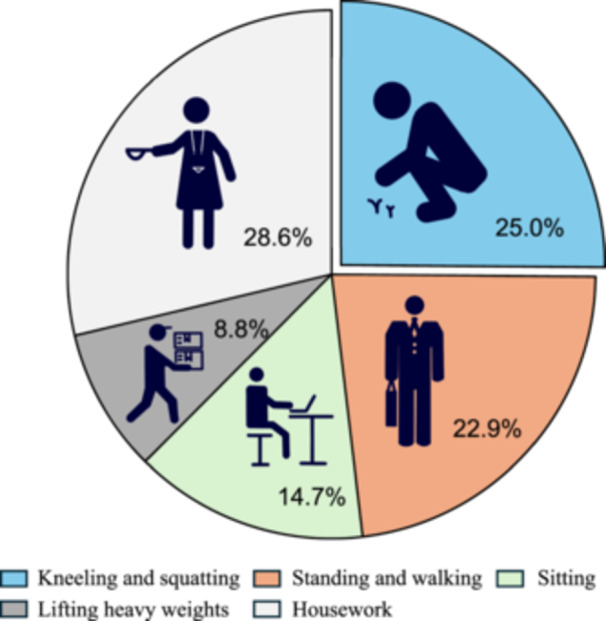
Methods: During the first medical examination, MPTS was measured using lateral knee radiographic images, and occupational motions were investigated in 559 patients (591 knees). Occupational motions were classified as kneeling and squatting, standing and walking, sitting, lifting heavy weights, and housework. Mann-Whitney U test was used to compare patient characteristics between male and female patients and MPTS relative to occupational motion.
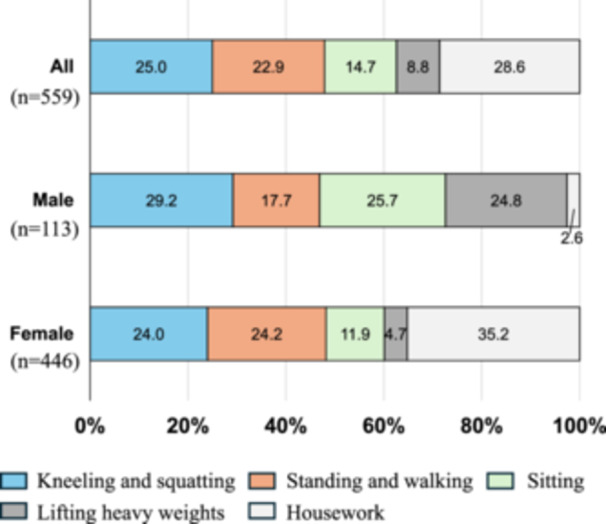
Results: The most frequent occupational motion was housework (160/559 patients, 28.6%), followed by kneeling and squatting (140/559, 25.0%), standing and walking (128/559, 22.9%), sitting (82/559, 14.7%), and lifting heavy weights (49/559, 8.8%). Furthermore, housework (10.0 ± 2.6°) involved significantly greater MPTS than kneeling and squatting (9.3 ± 2.7°; p = 0.012). However, the MPTS associated with other occupational motions was not significantly different from that associated with housework.
Conclusion: The most frequent occupational motion among patients with MMPRTs was housework, followed by kneeling and squatting. Patients who performed housework tended to have a higher MPTS. Occupational motions such as kneeling and squatting potentially increase the development of MMPRTs, even without a high MPTS.
Level of evidence: Level IV.
Keywords: kneeling; meniscus; occupational motion; posterior root tear; posterior tibial slope.
© 2025 The Author(s). Journal of Experimental Orthopaedics published by John Wiley & Sons Ltd on behalf of European Society of Sports Traumatology, Knee Surgery and Arthroscopy.
Conflict of interest statement
The authors declare no conflicts of interest.
Figures
References
-
- Altinayak H, Karatekin YS. Increased medial femoral condyle angle and narrow intercondylar notch are associated with medial meniscus posterior root tear. Arthroscopy. 2023;39:2154–2163. - PubMed
-
- Bogas Droy H, Dardenne T, Djebara A, Pujol N. Long‐term clinical and radiological outcomes after arthroscopic partial meniscectomy on stable knees are better for traumatic tears when compared to degenerative lesions: a systematic review. Knee Surg Sports Traumatol Arthrosc. 2025;33:107–123. - PubMed
-
- Chang PS, Radtke L, Ward P, Brophy RH. Midterm outcomes of posterior medial meniscus root tear repair: a systematic review. Am J Sports Med. 2022;50:545–553. - PubMed
LinkOut - more resources
Full Text Sources
Research Materials
