


Effects of sevoflurane and propofol for elderly patients: A systematic review and meta-analysis
- PMID: 40391341
- PMCID: PMC12087908
- DOI: 10.4103/jrms.jrms_154_24
Effects of sevoflurane and propofol for elderly patients: A systematic review and meta-analysis
Abstract
Background: To evaluate the safety of propofol and sevoflurane for general anesthesia in elderly.
Materials and methods: All studies on sevoflurane, propofol, and hyperamylasemia from the establishment of Embase, Ovid, Cochrane Library, and Google Scholar from database establishment to December 2024 were searched. Literatures were screened, and data were extracted on the grounds of inclusion and exclusion criteria. Review Manager (RevMan) (Version 5.4. The Cochrane Collaboration.) was used for statistical analysis. Outcomes assessed included time to spontaneous eye opening, extubation time, incidence rate of postoperative cognitive dysfunction (POCD), postoperative delirium, agitation, nausea and vomiting.
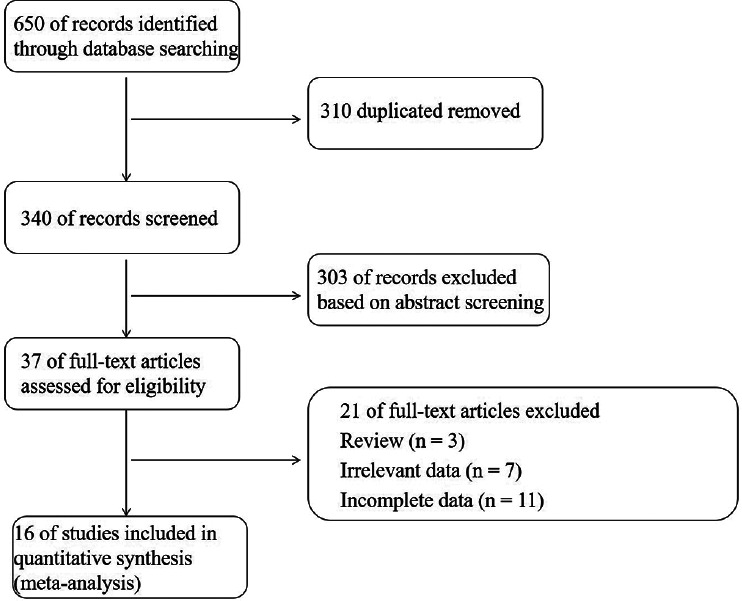
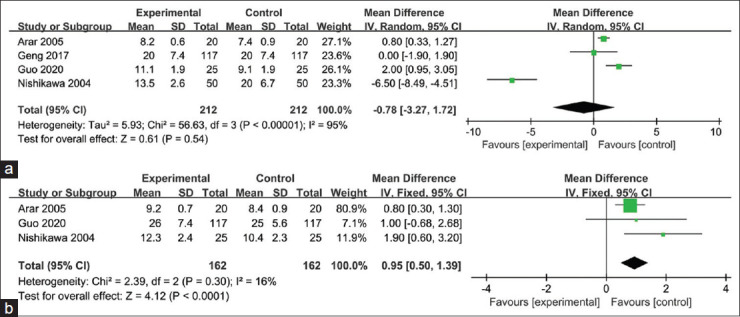
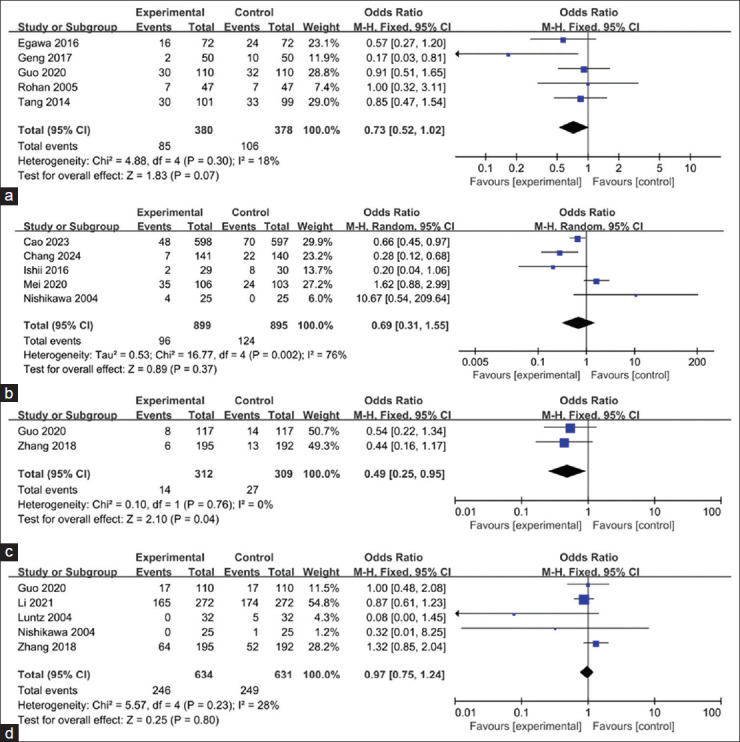
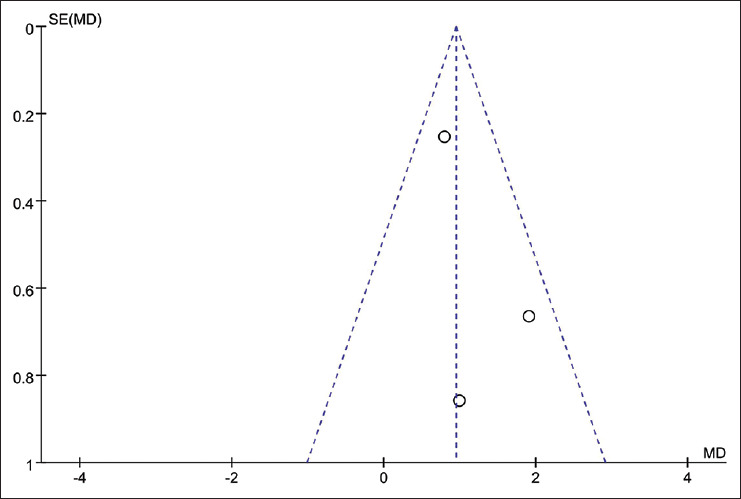
Results: Fourteen trials were identified and included in this meta-analysis. The results showed no significant difference in time to spontaneous eye opening (P = 0.54), the incidence of POCD (P = 0.07), postoperative delirium (P = 0.37), and postoperative nausea and vomiting (P = 0.8) between the sevoflurane and propofol groups. Compared with propofol groups, extubation time (P < 0.0001) was significantly shortened by sevoflurane groups. Conversely, compared with sevoflurane, the incidence of postoperative agitation in the propofol group was significantly reduced (P = 0.04).
Conclusion: There was no difference in time to spontaneous eye-opening, the incidence of POCD, postoperative delirium, postoperative nausea, and vomiting between the sevoflurane and propofol groups. However, compared with propofol, sevoflurane can significantly shorten intubation time. The incidence of postoperative agitation (P = 0.04) was significantly lower in the propofol group compared with sevoflurane.
Keywords: Aged; meta-analysis; postoperative cognitive dysfunction; postoperative nausea and vomiting; propofol; sevoflurane.
Copyright: © 2025 Journal of Research in Medical Sciences.
Conflict of interest statement
There are no conflicts of interest.
Figures
References
-
- Zhang S, Wang J, Ran R, Peng Y, Xiao Y. Efficacy and safety of remimazolam tosylate in hysteroscopy: A randomized, single-blind, parallel controlled trial. J Clin Pharm Ther. 2022;47:55–60. - PubMed
-
- Yu W. Anesthesia with propofol and sevoflurane on postoperative cognitive function of elderly patients undergoing general thoracic surgery. Pak J Pharm Sci. 2017;30:1107–10. - PubMed
Publication types
LinkOut - more resources
Full Text Sources