


Nest location and architecture as primary drivers of variation in UV reflectance in avian eggs
- PMID: 40393482
- PMCID: PMC12092119
- DOI: 10.1098/rspb.2025.0180
Nest location and architecture as primary drivers of variation in UV reflectance in avian eggs
Abstract
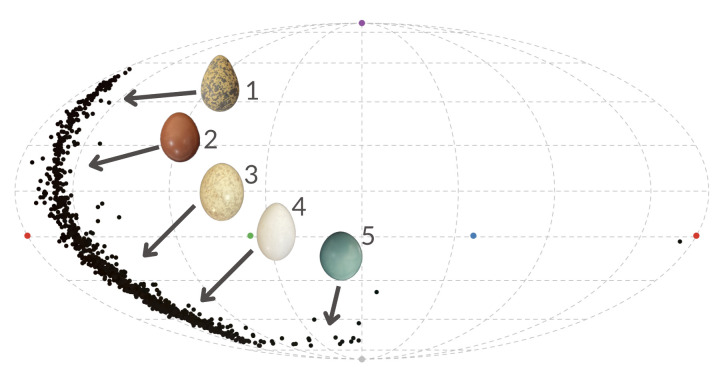
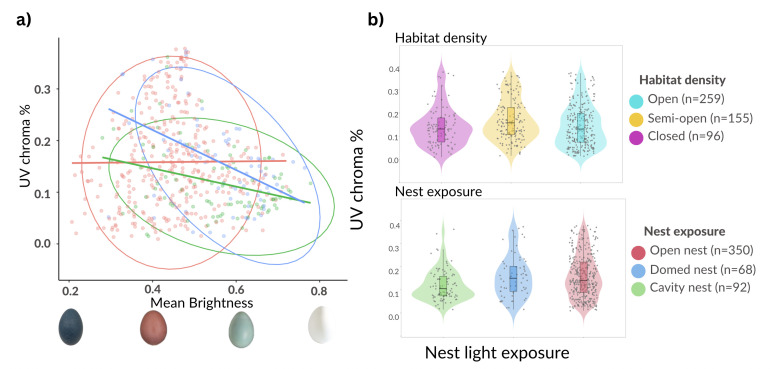
Two main hypotheses have been proposed to explain the function of ultraviolet (UV) reflection in avian eggs. The UV resistance hypothesis suggests that high UV reflectance protects embryos against solar exposure in open nests, whereas the egg detectability hypothesis posits that higher UV reflectance helps eggs stand out against the dark background of the nest, making them easier for parents to locate in enclosed nests. Therefore, eggshell reflection in the UV spectrum may serve multiple (possibly even opposing) forces, including UV protection and visual signalling. We tested these two hypotheses using large-scale comparative analyses of eggshell UV reflection for over 500 avian species while considering the influence of various ecological, life history and environmental traits associated with light exposure. We did not find strong support for either of the two hypotheses across all birds. However, in two clades exhibiting notably high levels of UV reflectance (Passeriformes and Charadriiformes), species with higher UV reflectance values predominantly nest in open nests, suggesting a stronger effect of the UV resistance hypothesis. This research contributes to a deeper understanding of the mechanisms driving UV coloration in avian eggs and unravels the interplay between life history traits potentially associated with UV reflectance in specific clades under variable nesting conditions.
Keywords: UV reflectance; egg; eggshell colour; light exposure; macroecology; nest.
Conflict of interest statement
We declare we have no competing interests.
Figures

References
-
- Riehl C. 2011. Paternal investment and the ‘sexually selected hypothesis’ for the evolution of eggshell coloration: revisiting the assumptions. Auk 128, 175–179. ( 10.1525/auk.2011.10171) - DOI
-
- Jagannath A, Shore RF, Walker LA, Ferns PN, Gosler AG. 2008. Eggshell pigmentation indicates pesticide contamination. J. Appl. Ecol. 45, 133–140. ( 10.1111/j.1365-2664.2007.01386.x) - DOI
-
- Hanley D, Cassey P, Doucet SM. 2013. Parents, predators, parasites, and the evolution of eggshell colour in open nesting birds. Evol. Ecol. 27, 593–617. ( 10.1007/s10682-012-9619-6) - DOI
MeSH terms
Grants and funding
LinkOut - more resources
Full Text Sources
