


Challenges oncologists face when caring for hispanics living in puerto rico with colorectal cancer and multiple chronic conditions
- PMID: 40394534
- PMCID: PMC12090652
- DOI: 10.1186/s12885-025-14271-0
Challenges oncologists face when caring for hispanics living in puerto rico with colorectal cancer and multiple chronic conditions
Abstract
Background: Colorectal cancer (CRC) is the leading cause of cancer-related death in Puerto Rico, posing significant challenges for patients with multiple chronic conditions (MCC). This qualitative study aimed to explore oncologists' perspectives regarding the care of patients with CRC and MCC in Puerto Rico.
Methods: We conducted semi-structured interviews in Spanish with nine oncologists providing care for patients with CRC in Puerto Rico. We reached data saturation. We performed thematic analysis to identify key patterns and themes within the interview data. The coding scheme evolved through team discussions, with discrepancies addressed for consistency. Quotes were translated from Spanish to English.
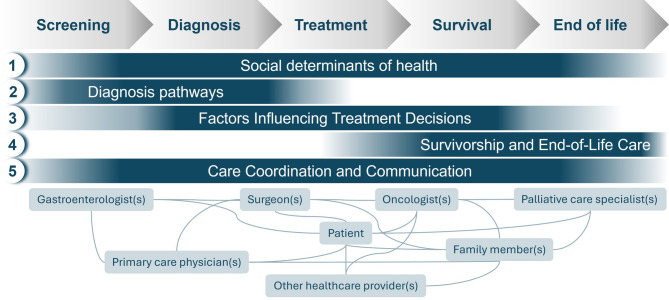
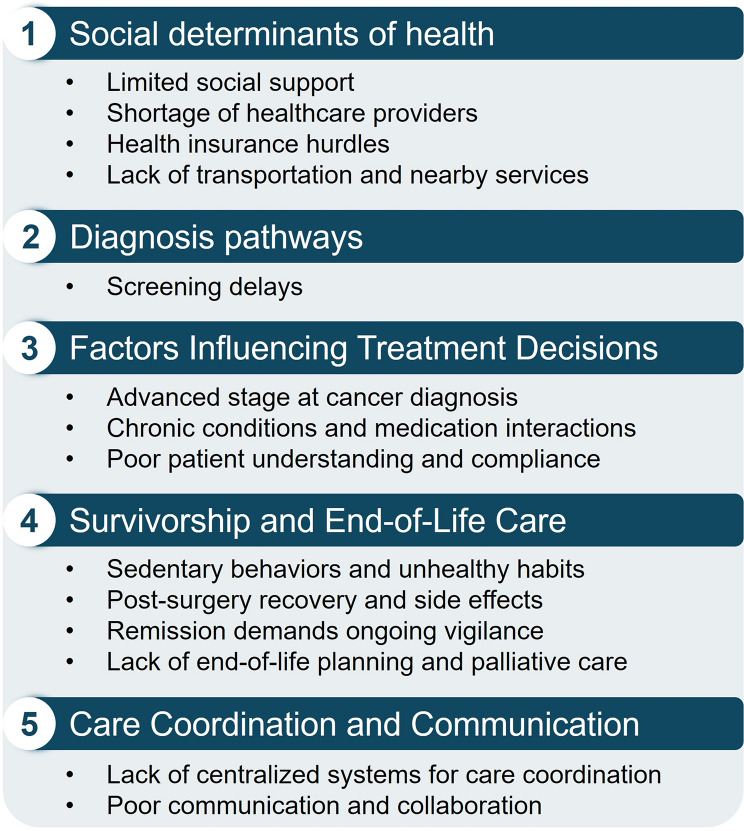
Results: Five key themes were: (1) social determinants of health, (2) diagnosis pathways, (3) factors influencing treatment decisions, (4) survivorship and end-of-life care, and (5) care coordination and communication. Oncologists treating patients with CRC and MCC identified the lack of a social support network as a notable care coordination challenge. The health insurance system's pre-authorization requirements for procedures and treatments further complicated care delivery, particularly for older adults, who faced challenges navigating these administrative processes without sufficient support. A lack of transportation and local specialized care services was a noted barrier to comprehensive patient care. Communication between patients, physician and caregivers proved challenging when multiple physicians and procedures were involved with patient's care, often requiring patients to schedule appointments with different specialists themselves. Inter-provider communication primarily relied on phone calls or notes sent with the patient.
Conclusions: Oncologists caring for Hispanic older adults with CRC and MCC encounter complex challenges influenced by unmet social needs and the presence of comorbidities. Tailored approaches, culturally sensitive care, and improved coordination among physicians are vital to enhance the quality of care for this patient population.
© 2025. The Author(s).
Conflict of interest statement
Declarations. Ethics approval and consent to participate: The Institutional Review Board at the University of Massachusetts Chan Medical School approved this study. All participants provided verbal consent. Consent for publication: Not applicable. Competing interests: The authors declare no competing interests.
Figures
References
-
- Bureau UC. From Pyramid to Pillar: A Century of Change, Population of the U.S.
MeSH terms
Grants and funding
LinkOut - more resources
Full Text Sources
Medical
