


Correlations between depressive symptoms, verbal working memory, and physical activity in university students: evidence based on resting EEG
- PMID: 40394543
- PMCID: PMC12093618
- DOI: 10.1186/s12888-025-06936-8
Correlations between depressive symptoms, verbal working memory, and physical activity in university students: evidence based on resting EEG
Abstract
Background: Depressive symptoms are prevalent among university students and are closely correlated with verbal working memory. An increasing amount of evidence suggests that physical activity can mitigate depressive symptoms through multiple mechanisms. The objective of this study was to explore the correlations among depressive symptoms, verbal working memory, and physical activity in university students and to explore the potential correlations between these factors and EEG indicators.
Methods: A case‒control study design was employed to enroll 136 university students, and convenience samples were used to collect 5-minute resting EEG data with their eyes closed. Physical activity was evaluated using the Physical Activity Scale-3, depressive symptoms were assessed with the Beck Depression Inventory-II, and the N-back task was used to measure the accuracy rate and reaction time of verbal working memory. Pearson's correlation coefficient was calculated to assess the correlation between the variables, the PROCESS macro in SPSS (Model 4) was applied to analyze the mediating role of verbal working memory in the correlation between physical activity and depressive symptoms, and the bootstrap method was used to calculate the mediating effect.
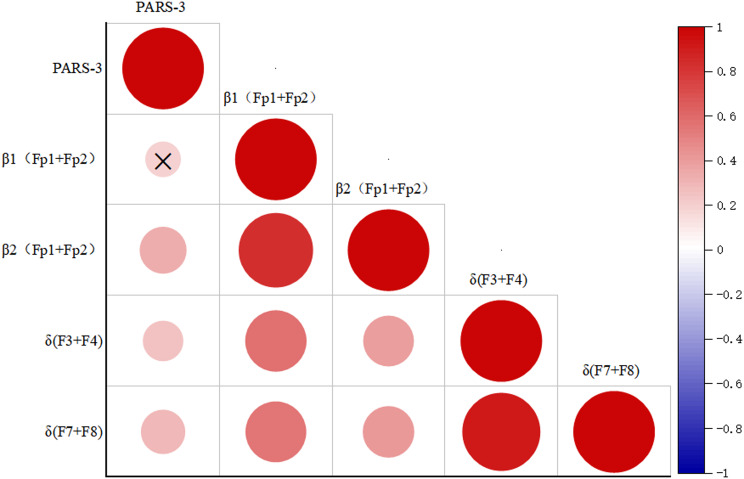
Results: The results showed that the verbal working memory reaction time and physical activity scores of university students with depressive symptoms were significantly different from those of university students without depressive symptoms (P < 0.05), but no difference was found in the accuracy rate of verbal working memory (t = 0.580, P > 0.05). Physical activity was negatively correlated with depressive symptom scores (r=-369, P < 0.05) and with the reaction time of verbal working memory (r=-0.334, P < 0.05). Mediation analyses indicated that the verbal working memory reaction time partially mediated (β = -0.039, 95% CI = -0.096 to -0.001) the correlation between physical activity and depressive symptoms in university students. EEG indicators in the frontal regions of the brain, including beta2 power values for (FP1, FP2) and delta power values for (F3, F4) and (F7, F8), were negatively correlated with depressive symptom scores and verbal working memory reaction time and positively correlated with the level of physical activity (P < 0.05).
Conclusions: Differences in physical activity and VWM reaction time between university students with depressive symptoms and those without depressive symptoms. Three variables, depressive symptom scores, VWM, and physical activity, had mutually related EEG indicators, which may provide a useful addition to the clinical identification and targeting of interventions in the population with depressive symptoms. Verbal working memory partially mediated the relationship between physical activity and depressive symptoms, but the mediating path coefficient accounted for a low percentage.
Clinical trial number: Not applicable.
Keywords: Depressive symptoms; EEG; Physical activity; Verbal working memory.
© 2025. The Author(s).
Conflict of interest statement
Declarations. Ethical approval and consent to participate: For experiments involving human participants, informed consent was obtained from all the subjects (all adults) in this study. Our study was approved by the Ethics Committee of Shanghai University of Sport (102772024RT108). All methods were performed in accordance with relevant guidelines and regulations. Consent for publication: Not applicable. Competing interests: The authors declare no competing interests.
Figures




References
-
- Malhi GS, Mann JJ, Depression. Lancet. 2018;392(10161):2299–312. - PubMed
-
- Thapar A, Eyre O, Patel V, Brent D. Depression in young people. Lancet. 2022;400(10352):617–31. - PubMed
-
- Taghani A, Razavi MR. The effect of metacognitive skills training of study strategies on academic self-efficacy and academic engagement and performance of female students in Taybad. Curr Psychol. 2022;41(12):8784–92.
MeSH terms
LinkOut - more resources
Full Text Sources
Medical
Miscellaneous
